
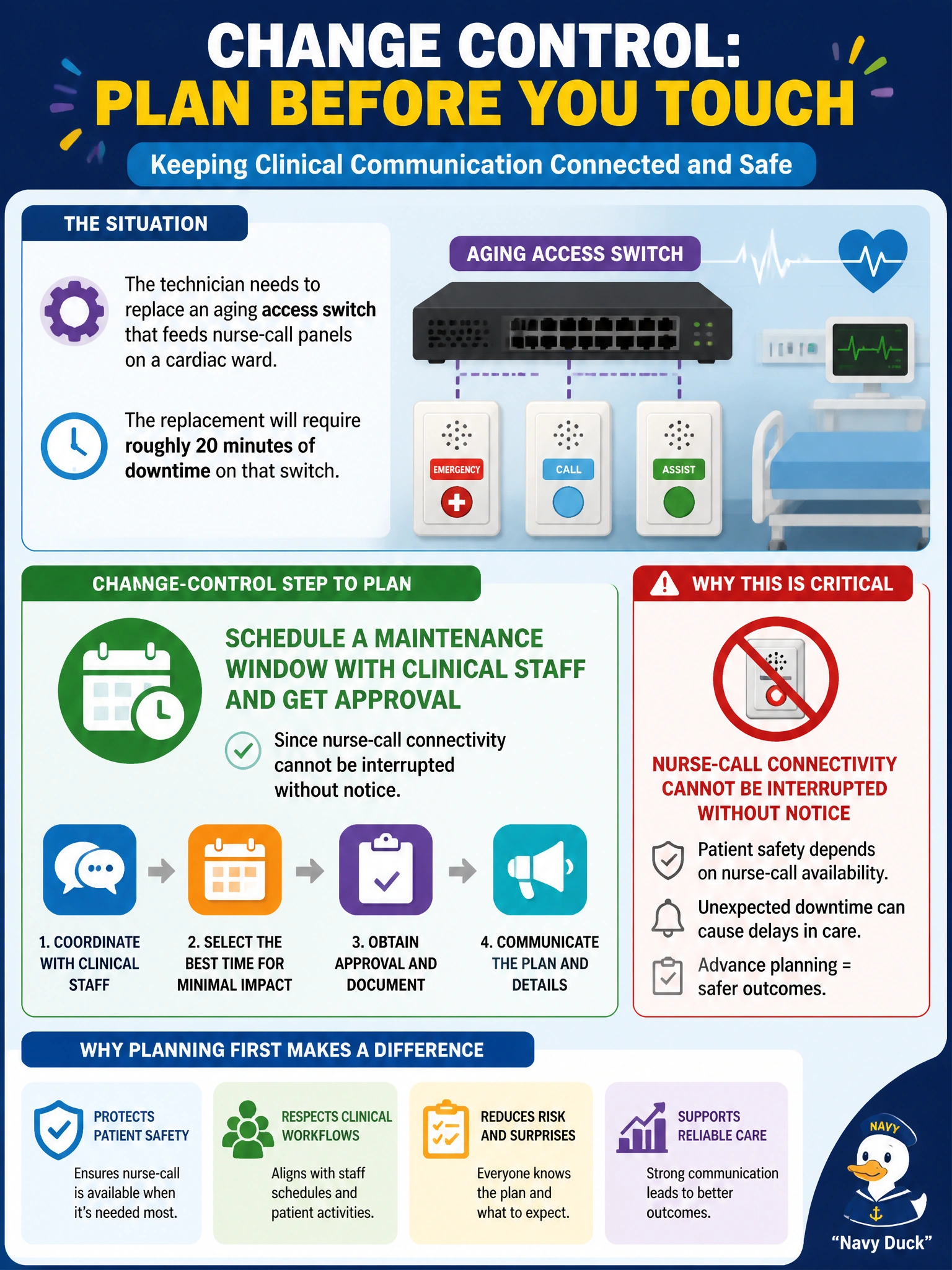
The technician needs to replace an aging access switch that feeds nurse-call panels on a cardiac ward, and the replacement will require roughly 20 minutes of downtime on that switch. What is the correct change-control step to plan before doing the work?
Select an answer to reveal the explanation.
Short Explanation
A nurse-call outage isn't just a network blip — it's a patient-safety event. Before you ever unplug that switch, you need a proper change-control process: a scheduled maintenance window, sign-off from clinical staff, and a plan they've agreed to, so nobody's caught off guard.
Full Explanation
Change control exists precisely for situations like this: a planned interruption to a system with patient-safety implications, such as nurse-call connectivity, requires coordination with the stakeholders who depend on it, formal approval, and a scheduled maintenance window during a period of acceptable risk, not simply picking a convenient time from IT's perspective. Clinical staff need advance notice so they can implement manual fallback procedures for the outage window, and documented approval protects both the patient care process and the technician performing the work. Performing the swap during the busiest shift maximizes the chance that an outage causes real patient-safety impact and directly contradicts good change-management practice, which favors lower-risk windows. Skipping formal approval because a device is old ignores that age has nothing to do with the acceptability of an unannounced interruption to a life-safety-adjacent system. Notifying only IT and excluding clinical staff removes the very people who need to plan around the outage and who must sign off given the system's criticality. The concrete step is documenting a change request with a defined window, impact statement, and rollback plan, then getting clinical leadership's approval before work begins.