
As part of planning a firmware upgrade on the access switches serving the imaging suites, the technician is asked to include a rollback plan in the change request. What should that rollback plan specifically describe?
Select an answer to reveal the explanation.
Short Explanation
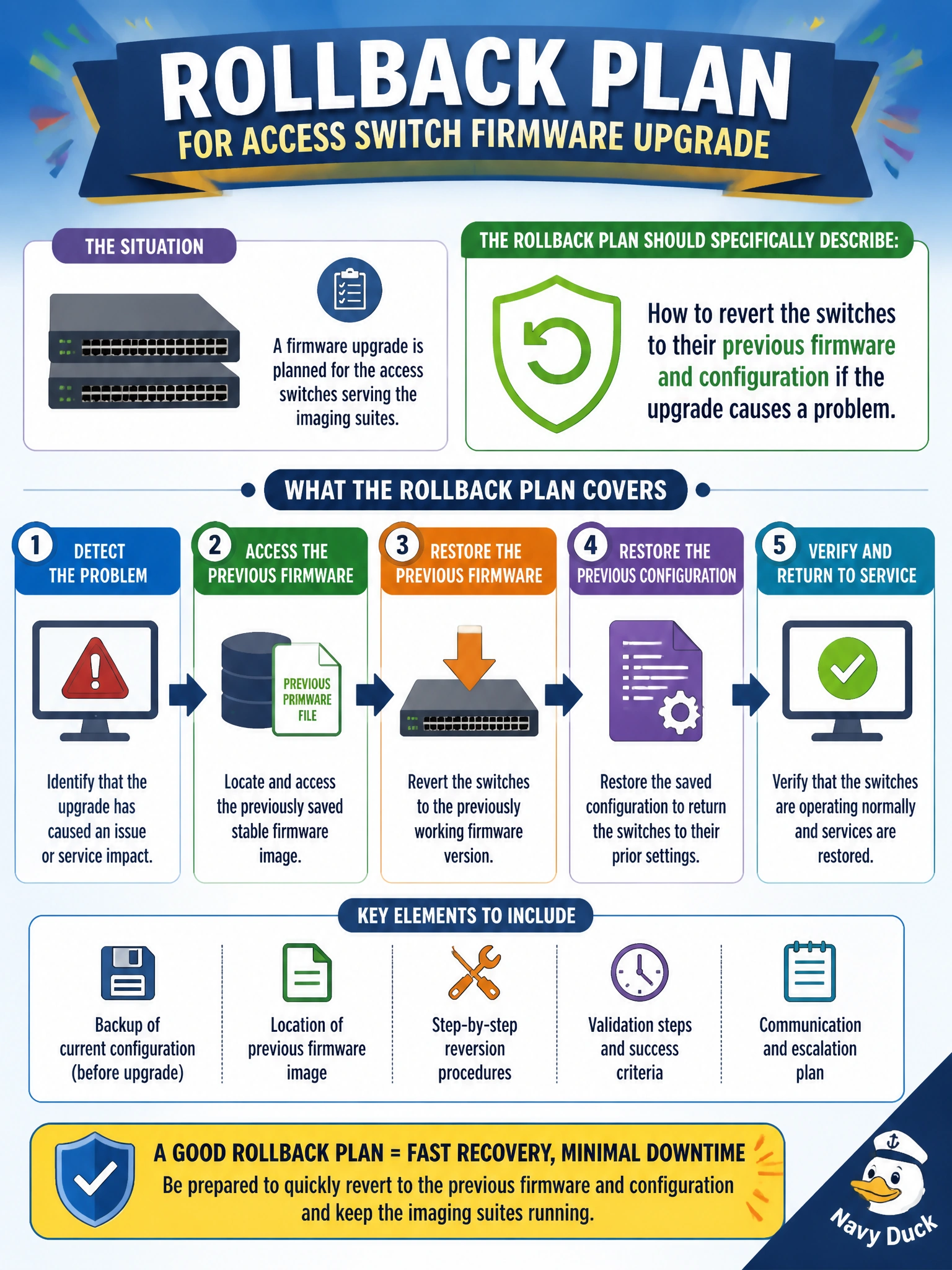
A rollback plan answers one question: if this goes wrong, how do we get back to where we started, fast? For a firmware change, that means having the prior firmware image and configuration ready to reapply — a clear revert path, not a features list.
Full Explanation
A rollback plan's entire purpose is to define a concrete, tested path back to the last known-good state if a change introduces a problem, so for a firmware upgrade that means specifying which prior firmware version and saved configuration will be reapplied, how quickly that can be done, and what confirms the revert succeeded. In a change request touching imaging-suite switches, this is what limits the blast radius if the new firmware causes instability, since the team can restore service quickly rather than troubleshooting live during an outage. Vendor contact information might be useful during an extended escalation but is not itself a rollback procedure and does not tell anyone how to restore service. A port-to-device connectivity list is useful documentation for the environment generally, but it describes what is connected, not how to undo a failed change. A summary of new features describes the benefit of moving forward with the change, which is the opposite purpose of a rollback plan that describes moving backward from it. The concrete artifact a reviewer should expect to see is the specific firmware version and configuration backup being reverted to, plus the steps and expected verification for that revert.