
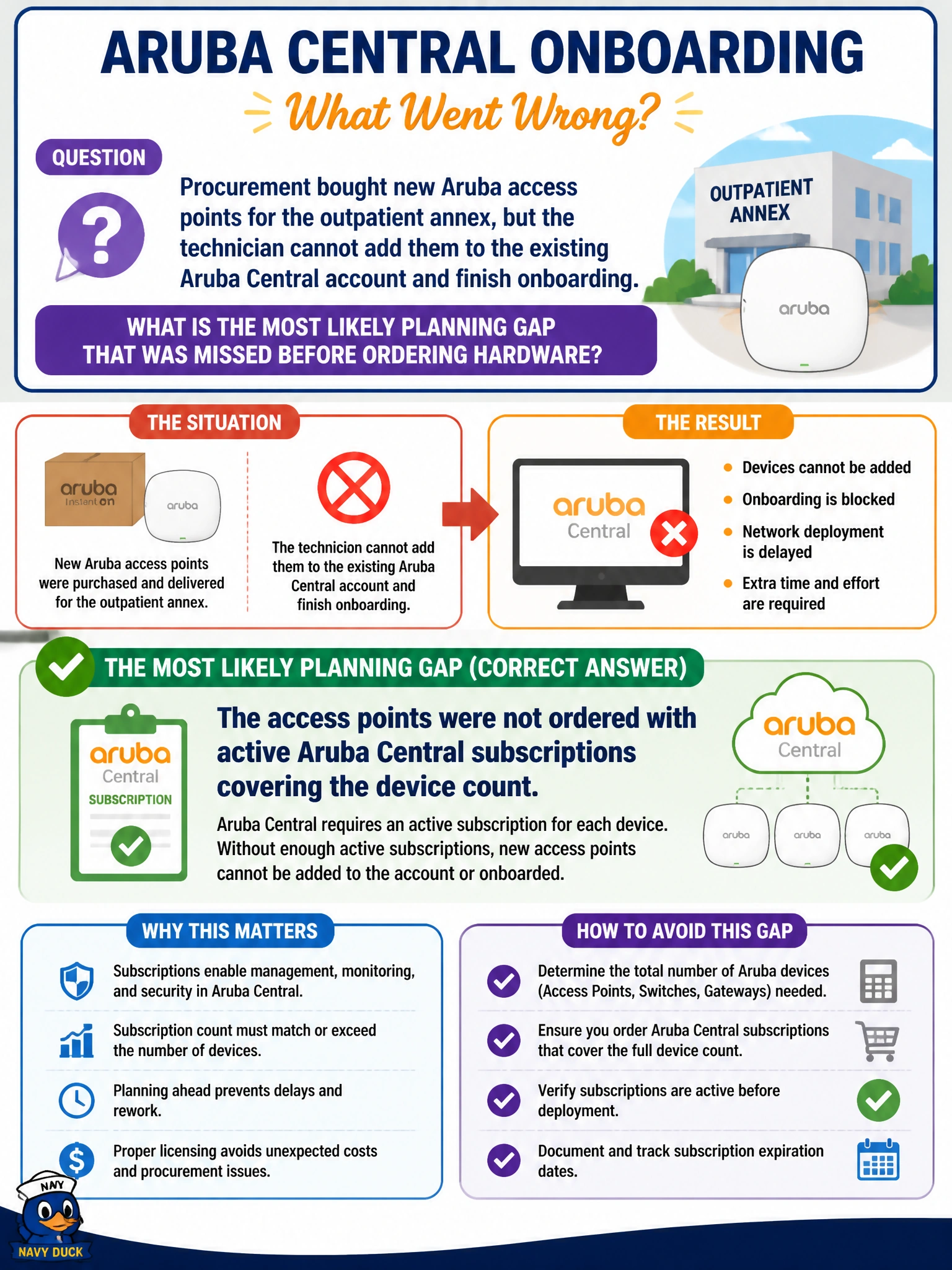
Procurement bought new Aruba access points for the outpatient annex, but the technician cannot add them to the existing Aruba Central account and finish onboarding. What is the most likely planning gap that was missed before ordering hardware?
Select an answer to reveal the explanation.
Short Explanation
Central isn't just software you point devices at — every device it manages needs an active subscription tied to it. If procurement bought hardware without matching licenses, Central will politely refuse to fully onboard them, no matter how correctly they're cabled.
Full Explanation
Aruba Central requires an active subscription for each managed device, so a planning step that gets skipped surprisingly often is confirming that hardware purchase orders include the matching subscription licenses for the number and type of devices being deployed. Without a valid subscription tied to a device's serial number, Central will not complete full onboarding or unlock management functionality for it, even though the device may power on and appear to reach the cloud. This is a licensing-and-subscription concern that belongs in the pre-implementation planning phase, well before hardware ships to a site, not something to discover after install day. Packaging size has no bearing on software licensing or onboarding and is a shipping-logistics non-issue. Radio band support is a hardware capability question settled at the product-selection stage, and Aruba access points intended for enterprise or healthcare deployments support 5 GHz as standard, so it is not the likely cause here. Manufacture date relative to a fiscal year is irrelevant to whether a device can be licensed and onboarded. The concrete check is verifying, before ordering, that quoted subscription tiers and quantities match the device count and expected term.