
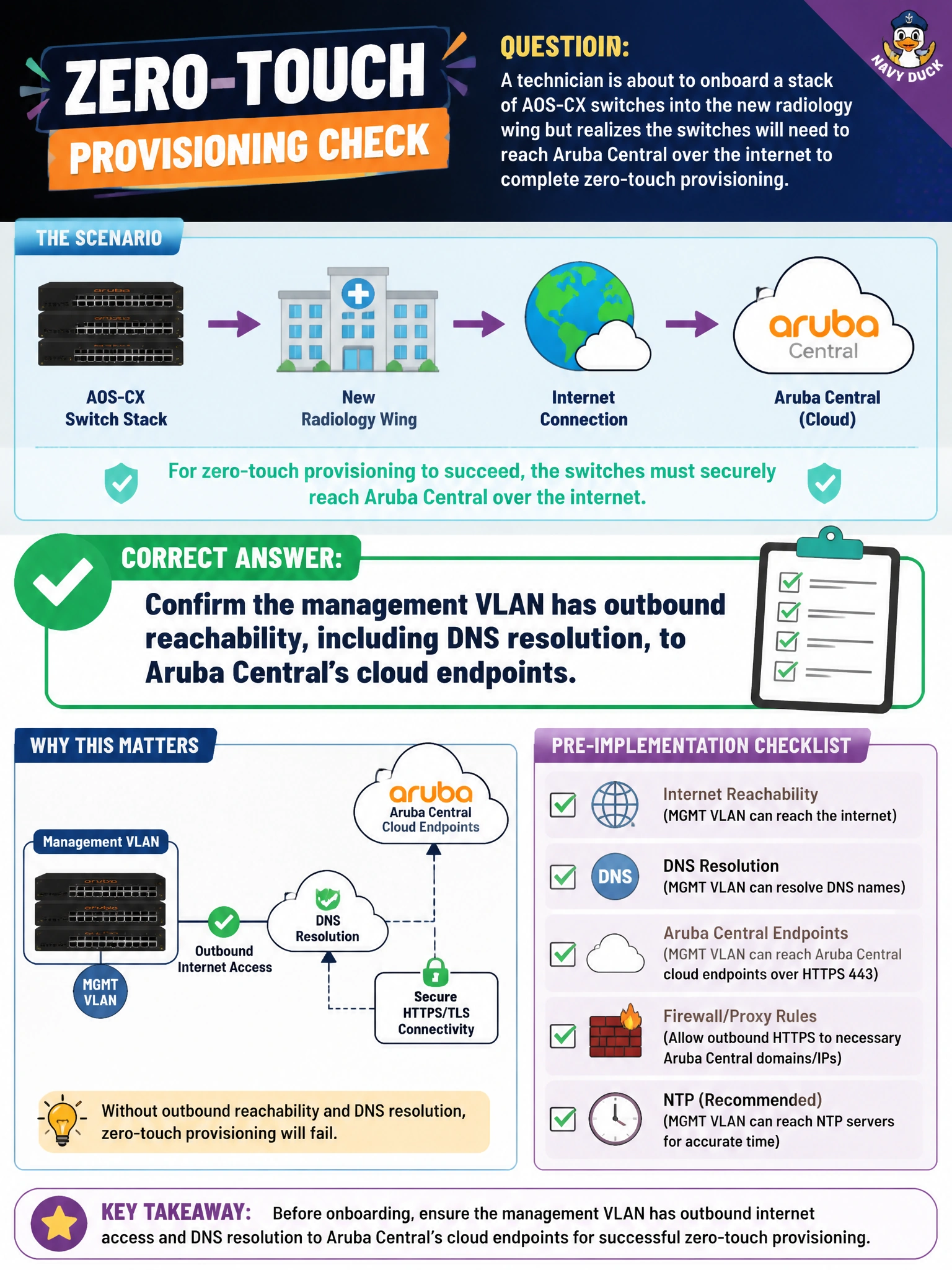
A technician is about to onboard a stack of AOS-CX switches into the new radiology wing but realizes the switches will need to reach Aruba Central over the internet to complete zero-touch provisioning. Which of the following is the correct pre-implementation check to make?
Select an answer to reveal the explanation.
Short Explanation
Zero-touch provisioning is really just the switch calling home. If the management network can't resolve a hostname and get out to the internet, that call never connects — no matter how perfectly everything else is racked. Check DNS and outbound reachability on the management VLAN before you ever expect Central to see the device.
Full Explanation
Zero-touch provisioning depends entirely on the device being able to reach Aruba Central's cloud endpoints over the internet, and that path typically starts with DNS resolution before any HTTPS session can be established, so the pre-implementation check must confirm the management VLAN has both working DNS and outbound connectivity to those endpoints, not just a local address. A switch that gets a DHCP lease but sits behind a firewall blocking outbound HTTPS, or that cannot resolve Central's hostname, will never appear as onboarded no matter how correctly it is racked and cabled. Confirming imaging devices are already registered in Central conflates unrelated device inventories and has nothing to do with switch reachability. Deliberately starting switches on the oldest firmware is backwards; devices should ship with a reasonably current, supported release, and Central-driven upgrades are a convenience, not a prerequisite to plan around. Putting a guest SSID on the same VLAN as switch management is a serious security misstep that mixes untrusted client traffic with infrastructure management, the opposite of good practice. The concrete check is a simple outbound test — DNS lookup and reachability to the required Central URLs — from that management VLAN before shipping switches to radiology.