
The outpatient annex across the road is connected back to the main hospital campus by a fiber uplink that the low-level design assumes is already terminated and tested. Before the technician schedules the switch install in the annex, what should be confirmed about that uplink?
Select an answer to reveal the explanation.
Short Explanation
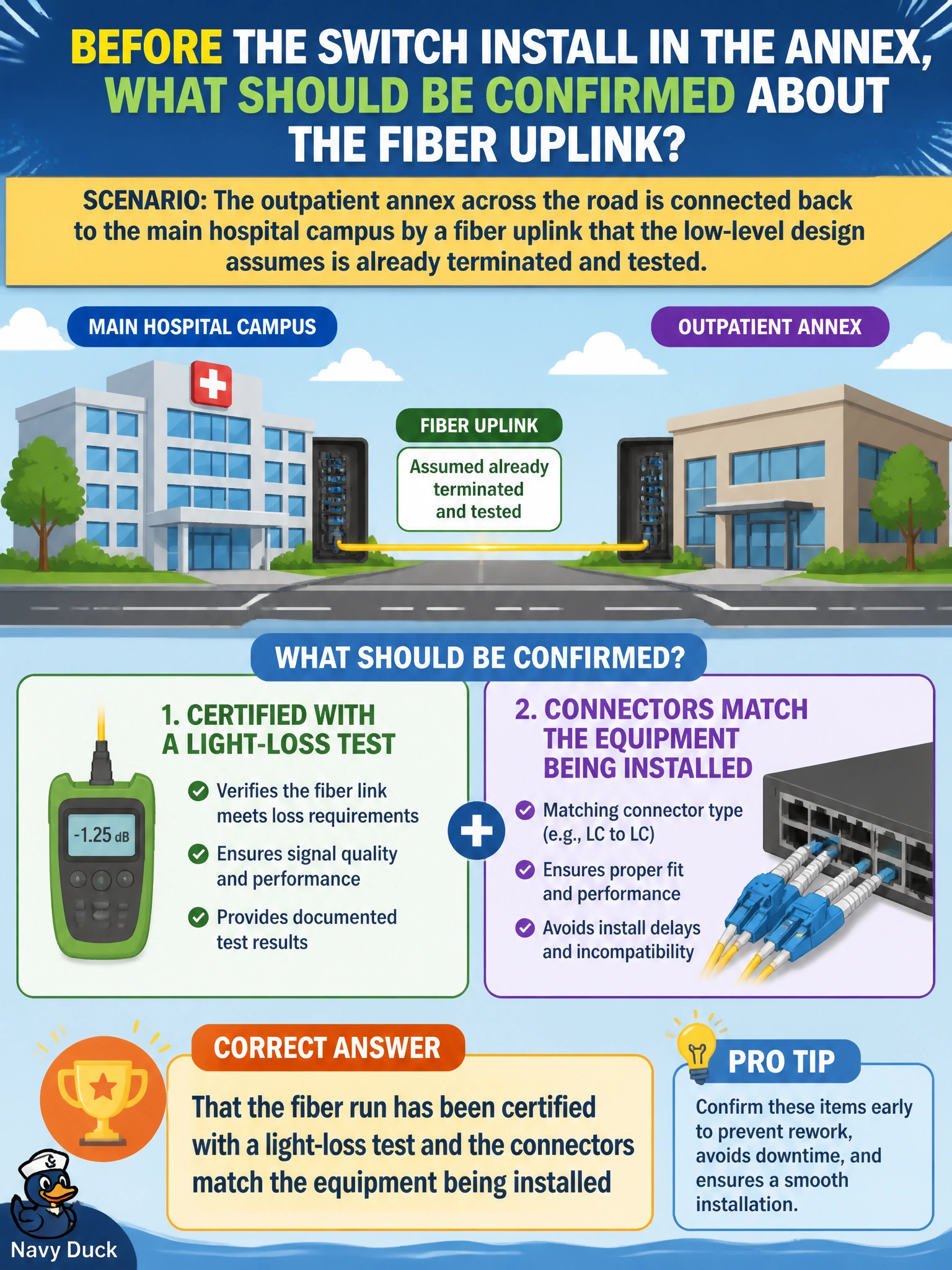
A design document that says the fiber is "already run" is a plan, not a fact on the ground. Before you show up with switches, get that link certified — a light-loss test and a check that the connector types actually match your gear — so install day isn't when you discover the fiber was never finished.
Full Explanation
A design assumption is not the same as a verified physical-layer fact, so before scheduling install day the technician needs independent confirmation that the fiber uplink to the annex has actually been terminated correctly and certified, typically with a light-loss (OTDR or power-meter) test, and that the connector type and fiber mode match what the new equipment expects. Skipping this step risks discovering on install day that the run is incomplete, damaged, or terminated with the wrong connector, which stalls the entire rollout. Matching hostnames between the annex switch and the core switch is a naming-convention choice with no bearing on whether the physical link works, and duplicate hostnames can actually cause management confusion rather than solve anything. Setting every port to the default VLAN ignores the design entirely and would misconfigure the annex rather than validate connectivity to it. Configuring a redundant, unused DHCP server addresses IP addressing resilience, not the physical readiness of a fiber uplink, and is out of scope for this specific pre-implementation check. The concrete check here is running or requesting a certified fiber test report before the truck rolls.