
A finance team at a 40-person SaaS company runs a budget-forecast agent in production that summarizes spending from GitHub issues and spreadsheets. Prompts and tool schemas change monthly, auditors need change history, and the team needs safe rollback after a faulty October update skewed reports. Which versioning practice best controls this production forecasting workflow?
Select an answer to reveal the explanation.
Short Explanation
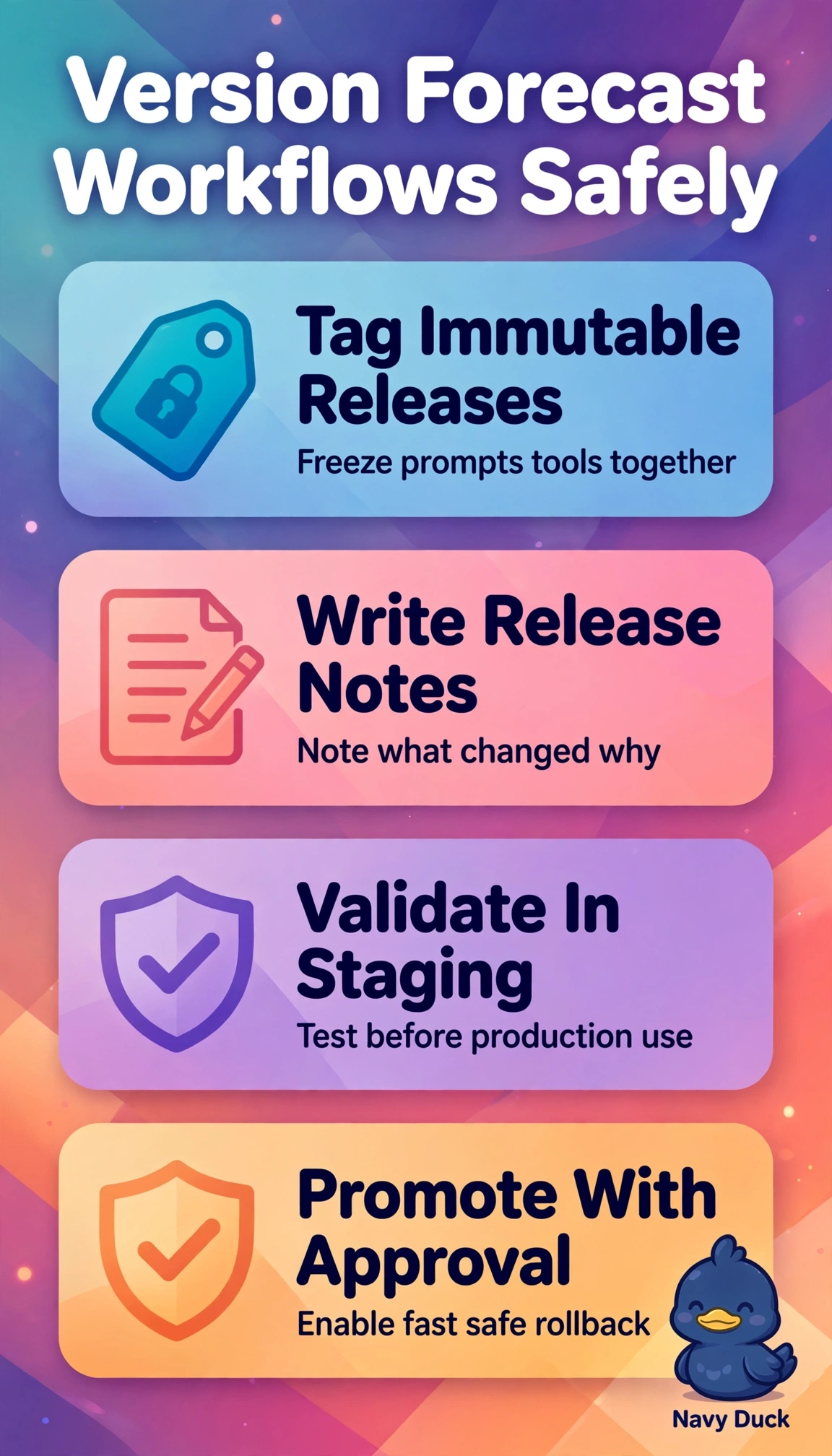
You need a reliable way to restore the forecasting workflow when reports go sideways. Immutable releases let you roll back prompts, tools, and workflows together after validation.
Full Explanation
Tagging immutable releases of prompts, tool schemas, and workflow definitions creates a consistent restore point for the monthly-changing forecasting system. Detailed changelogs give auditors the required history of what changed and why, while promotion from staging after validation reduces production risk; together, these practices enable a rapid rollback to the pre-October release when reports skew. Versioning prompts in Git while leaving tool schemas unversioned fails because changes to the spreadsheet and GitHub issue tools can make behavior irreproducible: a rollback would restore wording but not the full workflow. Deploying monthly updates directly to production after peer review fails because it skips isolated staging validation, so finance users may discover forecast errors before tests do. Tagging and staging releases without written changelogs fails the governance need for evidence that traces faulty logic to a specific October change. On exams, distinguish peer review or automatic history from explicit staging gates and intentional changelog records: references to auditors and faulty updates signal traceability and safe promotion. As a practical check, confirm that you can identify the September production tag, review its changelog entry, redeploy it to staging for validation, and then promote that exact immutable release to production.