
You are a product manager triaging 40 customer requests in a SaaS repository. Duplicate onboarding bugs must roll up to one epic, each request needs a clear owner, and leadership wants filtering by priority and product area. Which issue-management combination best organizes assignment, linking, and tagging for this triage?
Select an answer to reveal the explanation.
Short Explanation
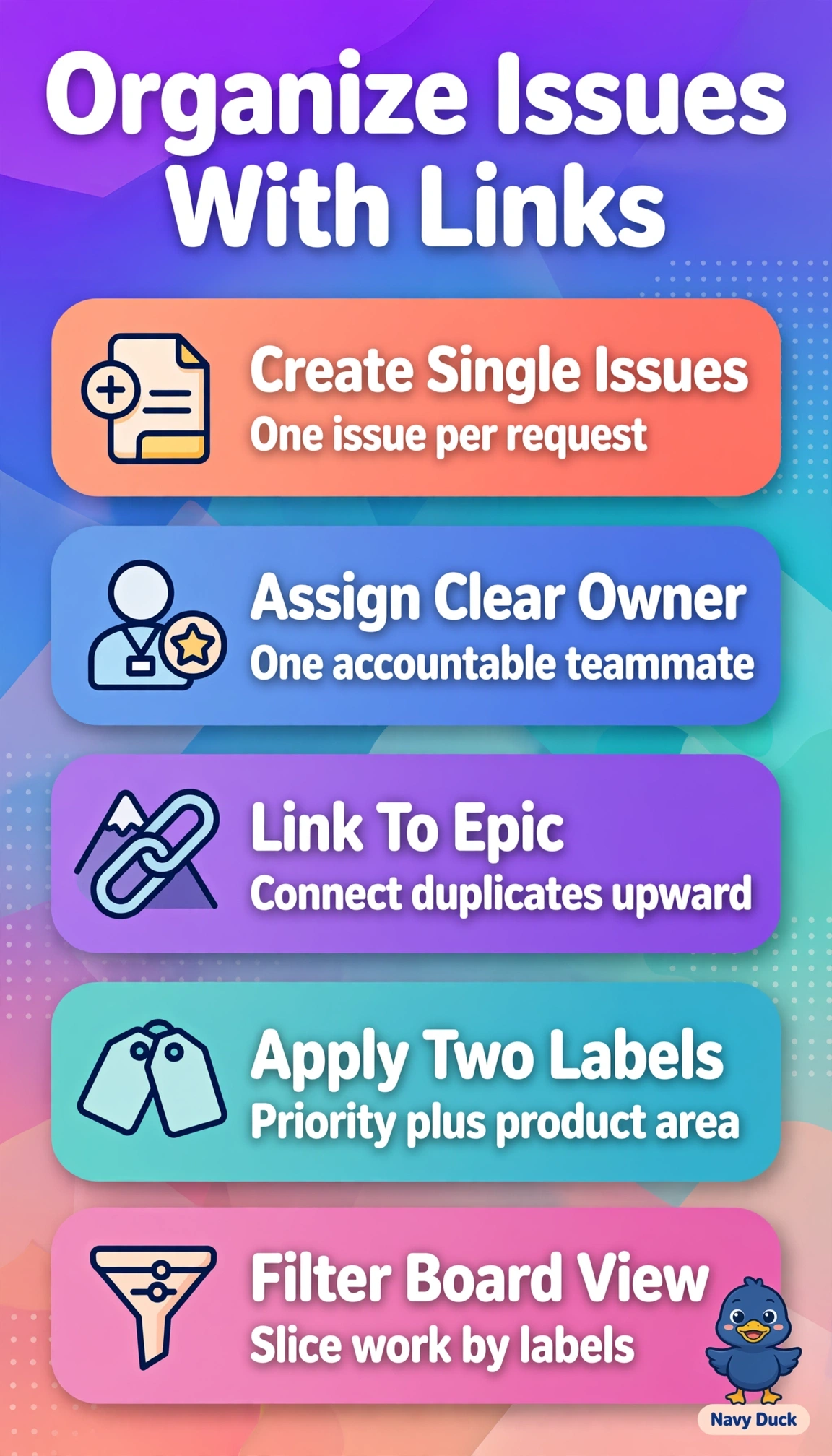
You’ve got the busy triage desk covered: each request has an owner, and duplicates connect to one epic. Traceability comes from combining those links with priority and area labels, so you can track the work and filter it for leadership.
Full Explanation
The combination with an issue per request, a clear owner, links from duplicate onboarding bugs to the epic, and priority and area labels meets each triage need. Separate issues keep all 40 requests individually trackable; assignment establishes accountability; links roll related duplicates into the epic without duplicating content; and labels provide filterable metadata for leadership views. Creating issues with owners and labels while tracking duplicates separately preserves granularity and filtering, but does not link the duplicates to the epic, leaving its scope and progress incomplete. Linking issues to the epic and applying labels under shared team ownership supports collaboration, but fails the clear-owner requirement and can diffuse responsibility for next steps. Assigning owners and linking duplicates to the epic while grouping work by release milestone supports scheduling, but does not provide the requested priority and product-area filters: milestones describe when work ships, not its attributes. Exam caveat: distinguish time-based containers from descriptive attributes; a milestone signals timing, while labels can identify area and priority. Practical check: confirm every request shows an owner, duplicate issues link to the epic, and the issue list can be filtered by both priority and product area.