
A program manager documents a Copilot rollout for support staff. The team confuses reusable task procedures, one-time user requests, and persistent behavior rules. Which distinction should the manager teach first to clarify characteristics of skills, prompts, and instructions?
Select an answer to reveal the explanation.
Short Explanation
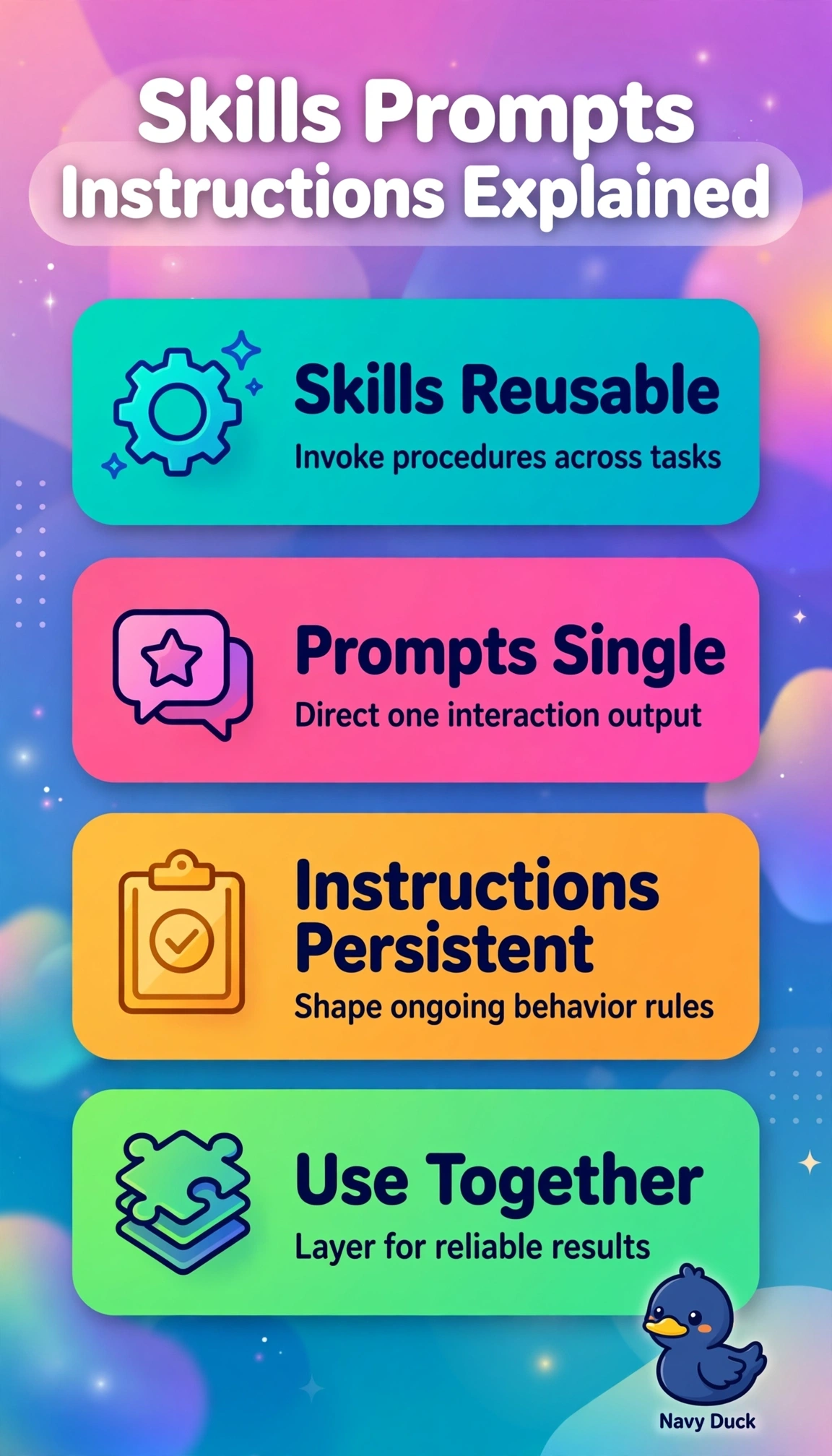
You've got three different tools in your kit, and mixing them up slows everyone down. Skills are your playbooks you reuse, prompts are one-time asks, and instructions set lasting ground rules.
Full Explanation
Skills encapsulate reusable capabilities and procedures that an agent can invoke across tasks, prompts are the specific user inputs that direct output for a single interaction, and instructions are persistent system or repository guidance that shapes tone, constraints, and behavior over time. Framing skills as single requests misattributes prompts to skills and loses reusability, while framing skills as persistent rules confuses them with instructions and obscures their callable nature. Framing skills as persistent rules with prompts as procedures similarly inverts the durability and scope, and describing the trio as model choices or audit logs shifts to model selection and governance rather than input layering. For the exam, remember durability and scope separate the three: single turn versus repeatable capability versus always-on rule. In practice, label examples in your playbook so staff can see one prompt, one skill, and one instruction side by side.