
A product manager asks Copilot to analyze 200 app store reviews to guide roadmap bets. She needs clear direction on tone, structure, and originality so results are consistent across sprints. Which prompt specification best defines the information to include in a response for this analysis?
Select an answer to reveal the explanation.
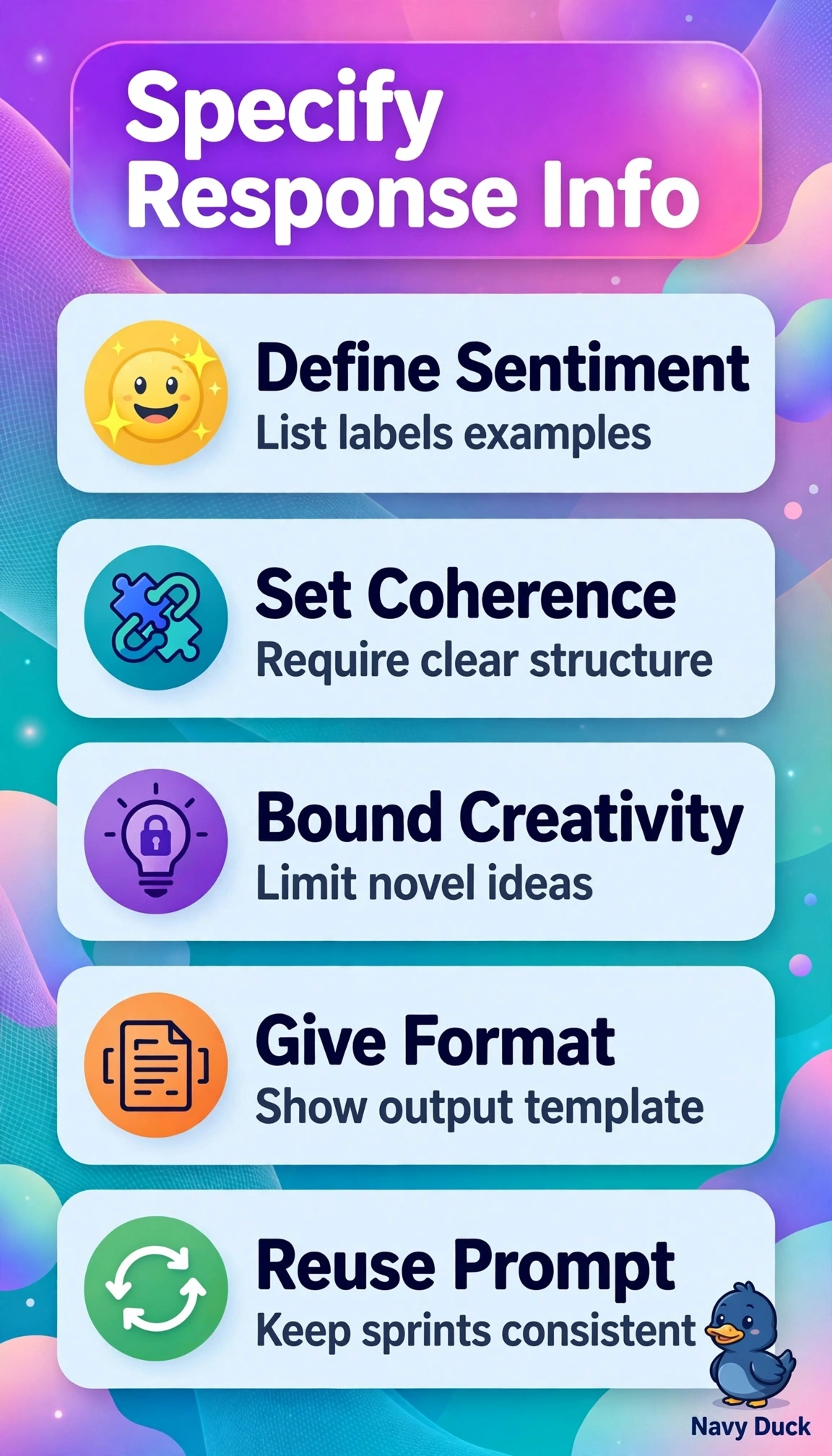
Short Explanation
Vague asks get wandering answers across sprints. Your response spec hands Copilot a clear scorecard for tone structure and originality.
Full Explanation
The correct specification succeeds because analyzing 200 reviews for roadmap bets requires explicit control over tone through sentiment labels, over structure through coherence rules for summaries, and over originality through creativity limits, all anchored by examples and format to keep outputs consistent across sprints. The tone-plus-template distractor defining tone categories, length rules, and templates standardizes appearance but omits creativity boundaries, so the model may invent features or exaggerate praise and the team cannot trust originality. The citation-grounded distractor with tone scales, creativity limits, and review citations improves evidence grounding but omits coherence rules and shared format, so each sprint produces differently organized summaries that cannot be compared for roadmap decisions. The coherence-plus-themes distractor with coherence rules, creativity limits, and key themes supports planning relevance but omits sentiment direction, so it cannot distinguish praise from complaint and fails the core need to guide bets by tone. An exam caveat is that length, sources, or citations alone do not satisfy a prompt asking for tone, structure, and originality together, so look for the choice covering all three plus consistency mechanics. A practical check is to test the prompt across two sprints with different reviewers and confirm sentiment coding matches, summary structure aligns, and no new features appear without review evidence.