
A business operations team runs an agent that can read tickets, query order databases, issue refunds, and post public status updates. Leadership wants automation for routine reads but strict human control when financial or external communication tools are used. Which escalation path should the analyst design based on tool usage?
Select an answer to reveal the explanation.
Short Explanation
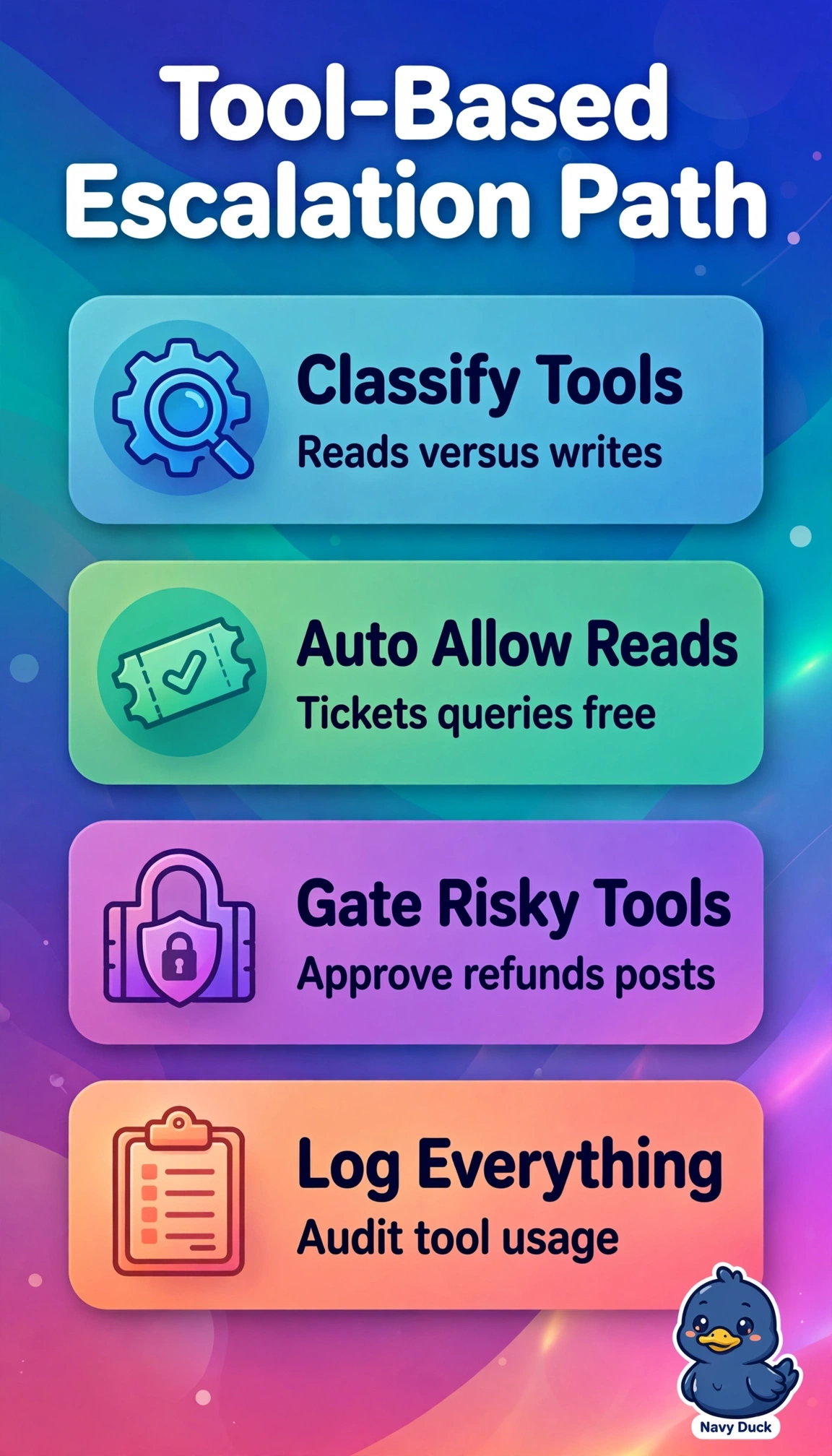
You keep routine ticket reads and order queries autonomous while requiring approval before refunds and public status posts. That risk-based boundary protects money and external communication without slowing routine work. You’re matching oversight to each tool’s impact.
Full Explanation
The correct design lets ticket reads and order-database queries run autonomously, but requires human approval before issuing refunds or posting public status updates. Reads and queries are routine, while refunds have financial consequences and public messages carry external reputational risk. Allowing autonomous public posts while escalating only refunds fails because public communication also belongs in the strict-control tier. Allowing autonomous refunds with detailed audit logging fails because logs provide accountability after a transaction, not preventive approval before money moves. Permitting refunds and public posts with next-day log review also fails: retrospective review cannot prevent harm before a person can intervene. Exam caveat: distinguish a preventive approval gate from detective oversight; logging or review does not meet an explicit human-approval requirement unless approval occurs before the action. Practical check: map each tool to reversibility, financial impact, and external visibility, then verify that refund and posting calls are blocked until approval is recorded and that the approval record is retained.