
A technical project manager oversees three Copilot coding agents refactoring payment services overnight with required checks, strict file boundaries, and a morning deadline. She must catch stalls, policy violations, and failed tests early. Which supervision approach best monitors agentic workflow runs during execution?
Select an answer to reveal the explanation.
Short Explanation
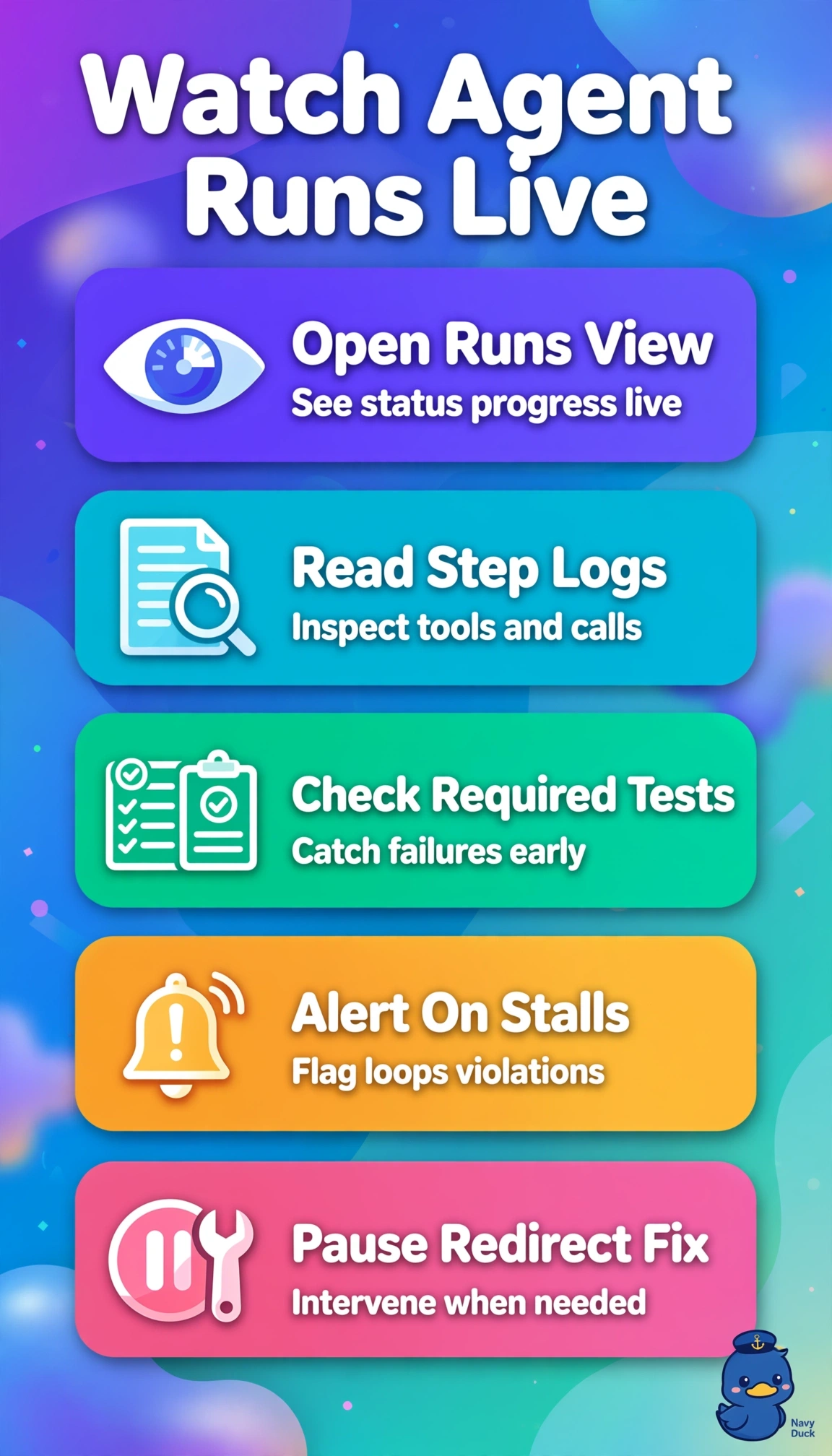
With three agents working overnight, you need a night watch that can catch problems while they’re still fixable. Live status, logs, and checks give you the telemetry to spot stalls, violations, and failed tests early.
Full Explanation
The best supervision approach gives you continuous visibility into the overnight agents’ execution, rather than only their finished work. Tracking Actions run status, agent session logs, and required checks lets you detect stalls, file-boundary or policy violations, and failed tests early enough to intervene and protect the morning deadline. Reviewing completed pull requests and CI summaries in the morning is useful merge hygiene, but it is retrospective: it cannot catch a stall or violation during execution, when delay may jeopardize the deadline. Monitoring logs and file diffs overnight while deferring required checks can help you assess boundary compliance, but it postpones the authoritative signals for failed tests and policy enforcement that you need to catch problems early. Tracking Actions status and restarting stalls while trusting agents to enforce their own file boundaries addresses availability, but not containment: strict boundaries for payment services need independent verification. Exam caveat: distinguish after-the-fact pull request review from in-flight supervision; wording such as “during execution” and “early” points to live monitoring. Practical check: open the Actions run, agent session transcript, and checks together, and verify that a stall, violation, or test failure will page you or block progress before morning.