
A market analyst maintains a custom support agent that answers product questions, but responses miss recent pricing changes and outage notices published on the company status site. The agent must keep its curated tone and only browse approved domains when fresh facts are needed. Which custom agent configuration should the analyst apply to add reliable web search to instructions?
Select an answer to reveal the explanation.
Short Explanation
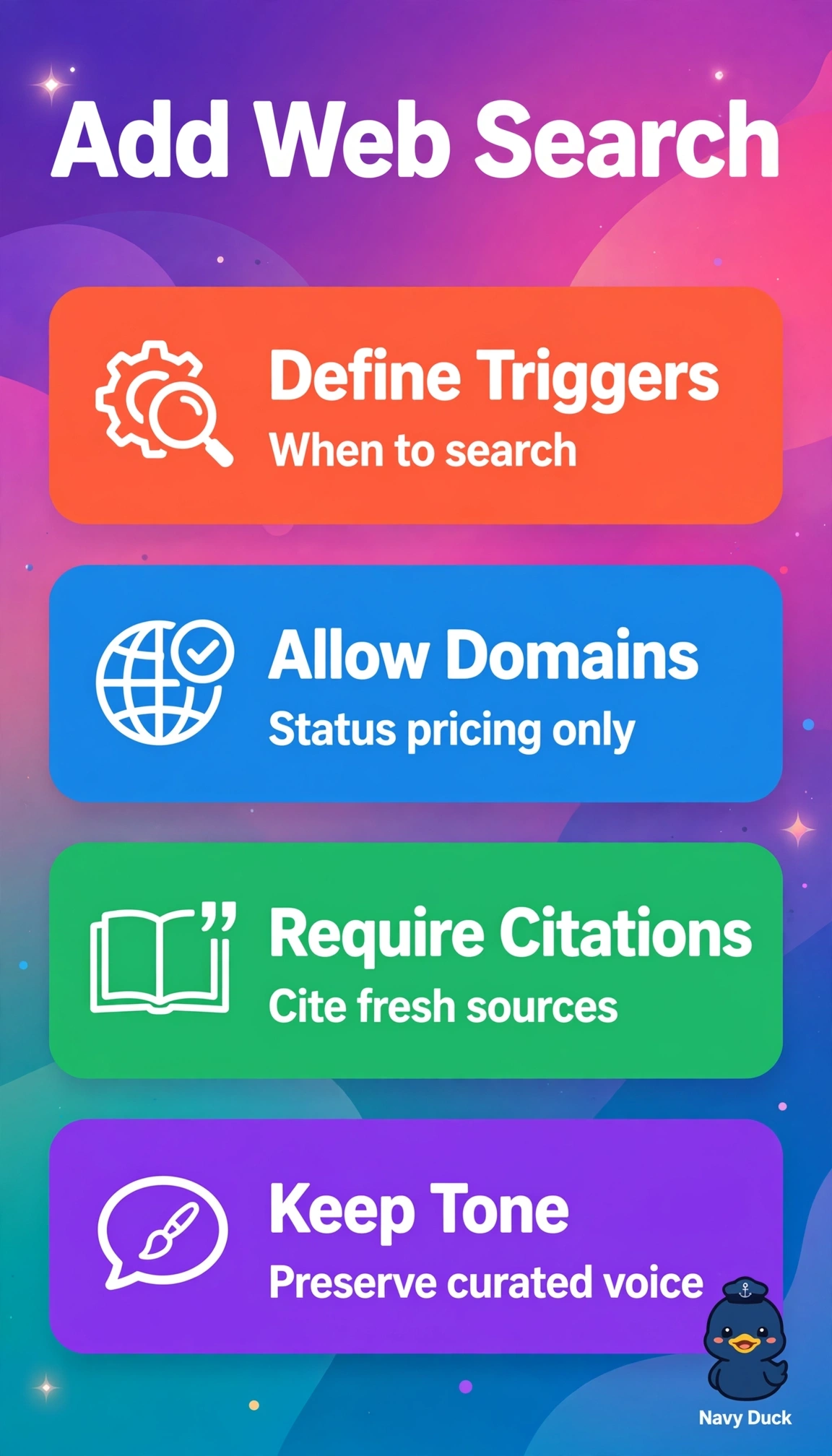
You can keep answers current without losing control of your agent’s tone. Explicit rules for when to search, which domains are approved, and how to cite fresh sources give you reliable updates with guardrails.
Full Explanation
The configuration with explicit rules for when to search, approved domains, and citations for fresh sources is right because it makes browsing conditional on needing current facts, restricts results to trusted sites such as the company status site, and lets readers verify pricing and outage claims. Added to the agent’s instructions, these rules support freshness while preserving its curated tone. Searching with broad web relevance ranking can find useful material, but without approved-domain limits it may rely on unvetted prices or outage reports. Searching approved domains and citing sources in the default helpful voice handles scope and verification, but the default voice can replace the agent’s curated tone. Searching approved domains and citing the stable product manual provides controlled, verifiable information, but the manual may not reflect recent pricing changes or outage notices. The exam caveat is that a tempting configuration may meet several requirements but miss one; check the search trigger, domain limits, tone, and freshness together. As a practical check, test a changed price and a current incident: confirm the agent searches the approved status domain, cites current information, and retains its curated tone.