
A marketing ops team built a brand-voice skill that formats release notes with approved tone and disclaimers. They want Copilot agents and an Actions workflow to apply it consistently on every release. How should they call skills from agents and workflows for reliable reuse?
Select an answer to reveal the explanation.
Short Explanation
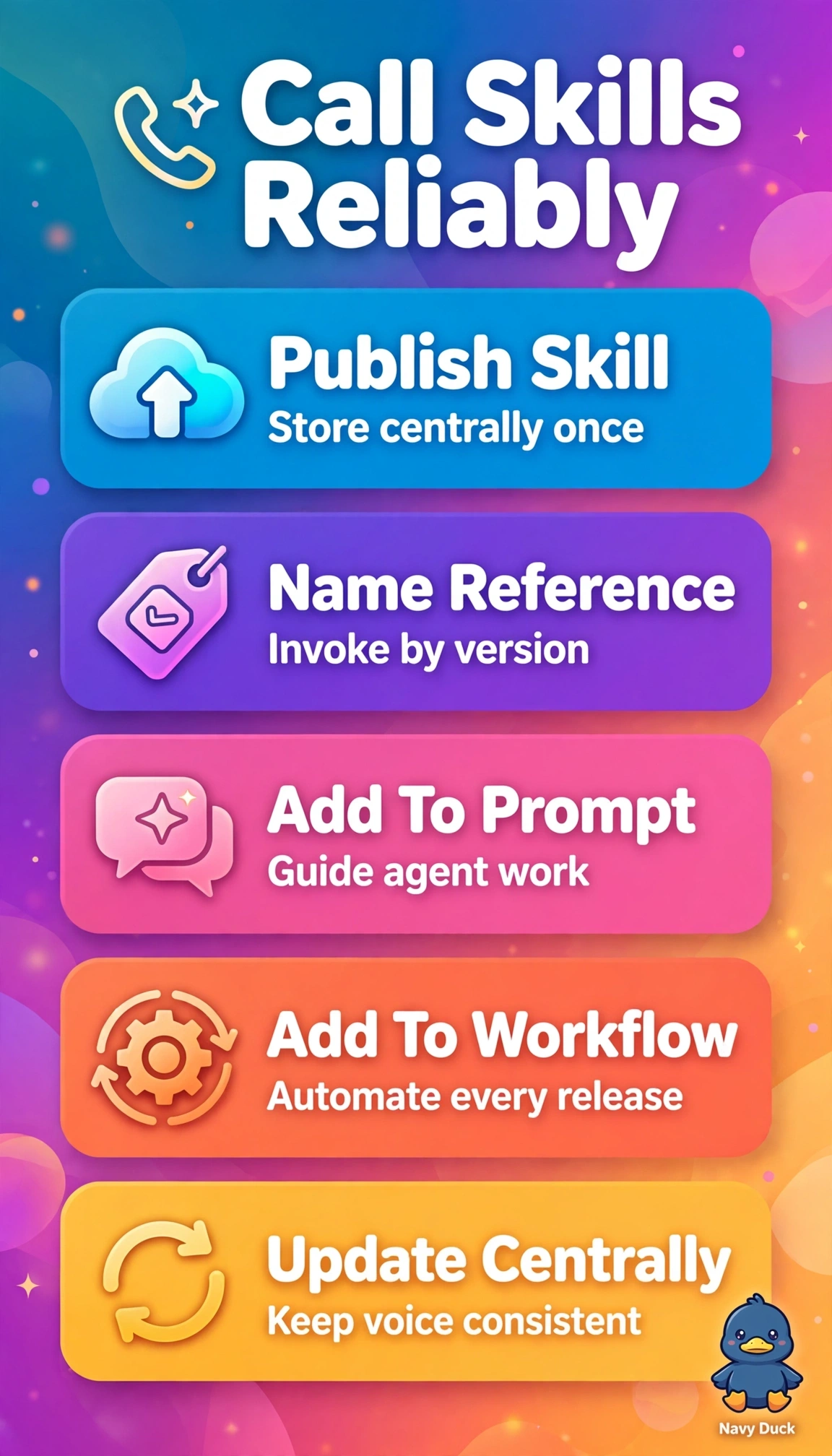
Calling your play by name keeps everyone in sync, and named reference does that. Versioned invocation guarantees the same voice every release.
Full Explanation
Referencing the versioned skill by name in both agent prompts and workflow steps creates a single reusable source of truth, so Copilot agents and Actions automatically apply identical approved tone and disclaimers on every release while preserving auditability and controlled updates through versioning. Embedding a static copy of the approved wording in each agent and workflow configuration initially works but breaks reliable reuse by duplication, since future tone or disclaimer changes require error-prone edits everywhere and risk drift between releases. Pointing agents and workflows to the unpinned latest skill so edits apply immediately preserves reuse but sacrifices reliability, because unversioned invocation can introduce untested changes into production releases without approval or rollback. Activating the skill for agent chats and formatting workflow release notes separately covers interactive quality but violates the consistency requirement, leaving the automated workflow path without enforced brand voice and disclaimers. For exams, distinguish managed reuse by named reference from convenient reuse by copy or floating reference, as the question emphasizes versioned consistency across two invocation surfaces. As a practical check, inspect the agent prompt file and workflow YAML for the same skill name plus explicit version identifier and confirm a version bump propagates without editing surrounding logic.