
A 400-person SaaS company sees Copilot seat growth, premium model usage, and repo automation driving unexpected charges. Finance wants predictable spend without blocking delivery teams. Which budget guardrail approach best controls GitHub and Copilot usage costs?
Select an answer to reveal the explanation.
Short Explanation
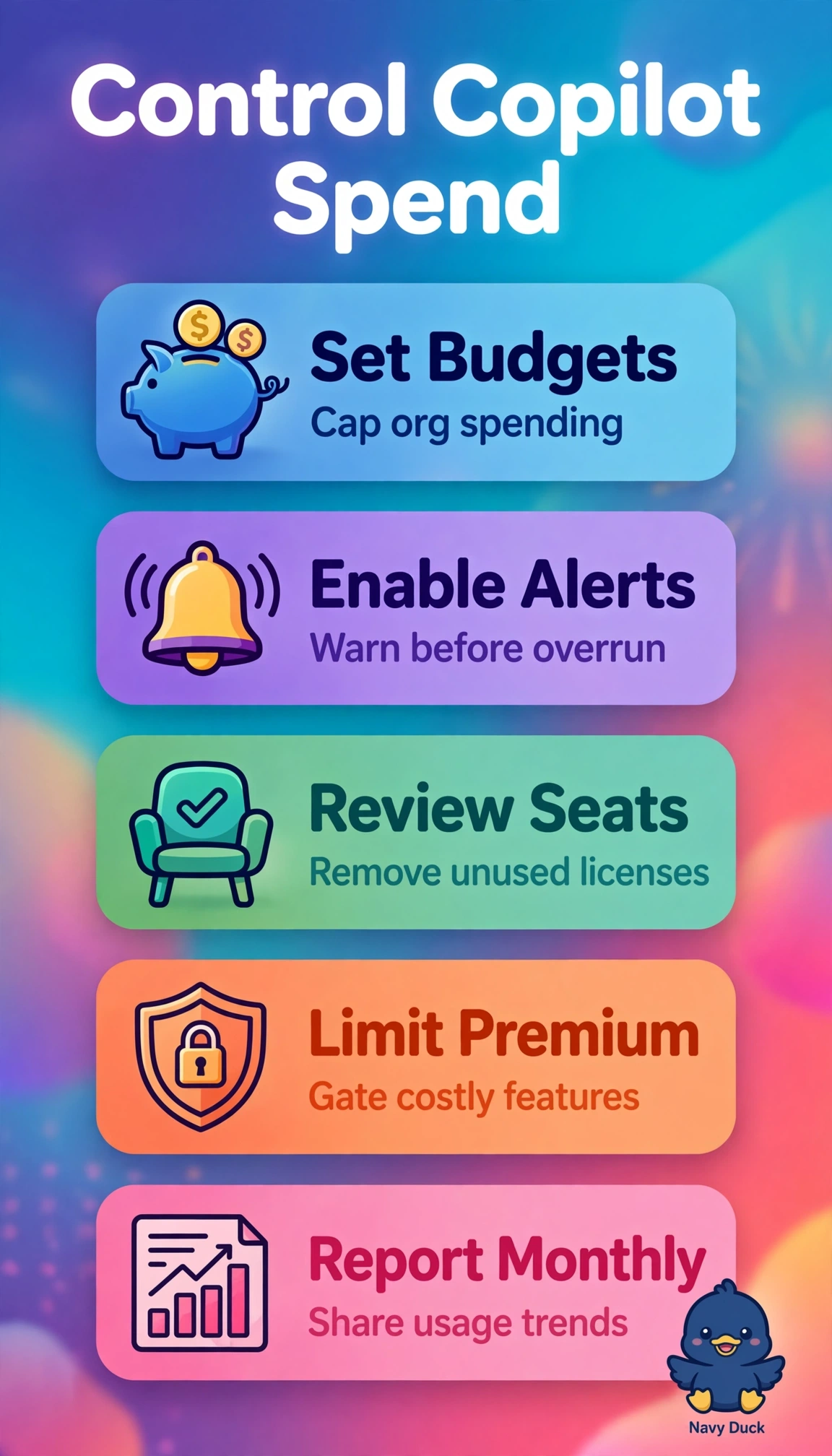
Finance wants guardrails, not roadblocks for builders. Your budgets plus alerts keep spending visible early so teams adjust before overruns hit.
Full Explanation
Correct answer works because it applies proactive, non-blocking governance to every driver - organization budgets establish predictable spend targets, usage alerts trigger intervention before overruns, seat reviews reclaim inactive Copilot licenses from growth, and policy limits keep premium model use intentional without stopping delivery. Showback dashboards allocating Copilot and Actions costs to teams fail on control because transparency alone does not prevent variance without budgets, thresholds, and enforcement. Optimizing Actions with larger self-hosted runners and off-peak scheduling fails on scope because it reduces Actions unit cost while leaving seat growth and premium model consumption unmanaged and unpredictable. Strict Copilot seat approvals with quarterly recertification and premium entitlements fail on completeness because strong identity hygiene does not constrain automation volatility from Actions minutes, runners, and storage. For exams, favor comprehensive prevention with alerts and policies over partial optimization, visibility-only, or reactive reconciliation when the stem demands predictability without blocking teams. Practically, confirm budgets and alerts cover both Copilot and Actions meters, check premium policies and seat activity reports, and trace top-cost repositories to validate limits before month-end.