
A business analyst uses Copilot to summarize weekly incidents from a repository where file names change often. Results vary because Copilot guesses which file to use. Which prompting practice best defines the data to be acted on and input variables for reliable outputs?
Select an answer to reveal the explanation.
Short Explanation
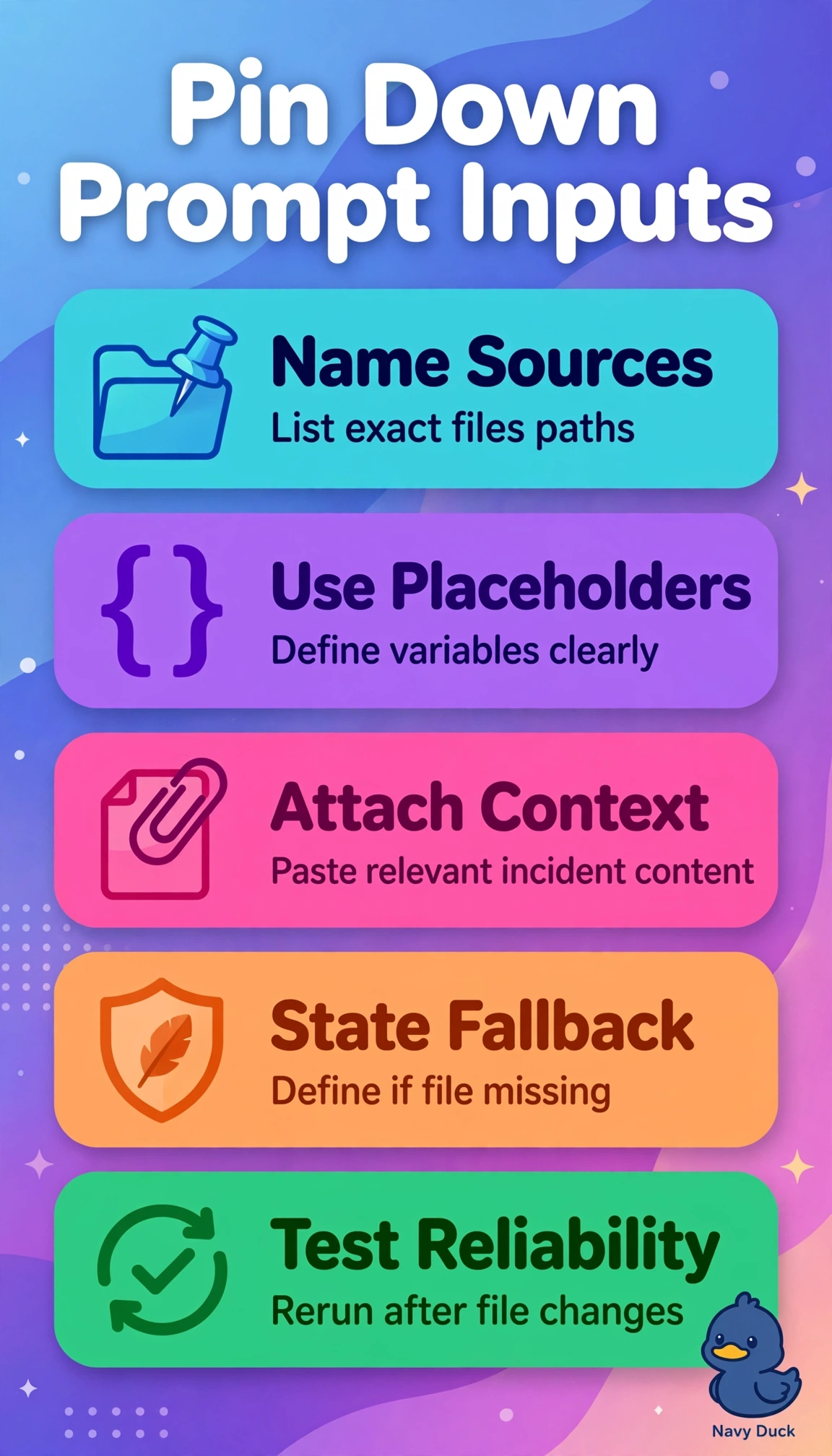
When filenames keep changing, you need a prompt that leaves less room for guessing. Naming the sources, using placeholders for variables, and stating a fallback gives you grounding for more reliable summaries.
Full Explanation
Naming the exact source files, using placeholders for variables such as the week or date, and stating what to do if a file is missing directly addresses Copilot’s uncertainty about which data to use. These instructions make the intended inputs explicit and provide a fallback rather than leaving Copilot to guess. Specifying headings and a sample layout can make weekly summaries look consistent, but it controls formatting, not source selection. Defining incident categories and severity levels adds business context for interpreting the data, but does not identify the files or variables Copilot should use. Adding two prior weekly summaries can demonstrate the desired level of detail and style, but examples do not specify the current source data and could encourage imitation of outdated summaries. For the exam, distinguish guidance about how an answer should look or be interpreted from instructions that define the data and inputs to act on. As a practical check, rename a source file and rerun the prompt to confirm that Copilot follows the stated fallback instead of silently summarizing the wrong document.