
A fintech product manager is designing an agentic workflow that reads customer complaints, issues refunds under $50, updates billing records, and notifies regulators when fraud is suspected. Compliance requires auditability and no autonomous legal or financial commitments. Which decision point should the manager designate as requiring mandatory human judgment and approval?
Select an answer to reveal the explanation.
Short Explanation
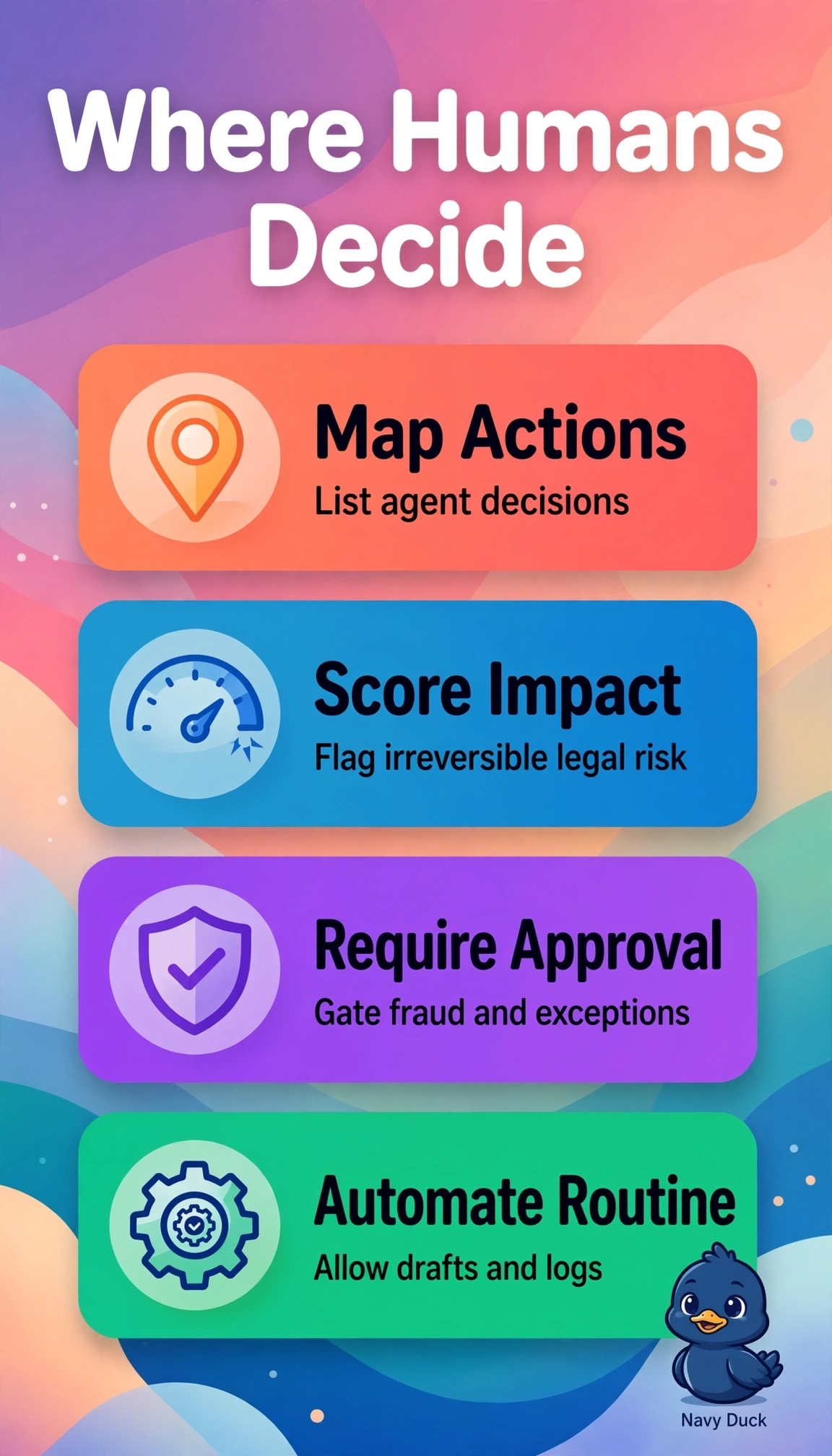
You’ve got low-risk chores and high-stakes calls mixed together. Keeping escalation on fraud notices and out-of-policy refunds protects you. That’s where human judgment earns its keep.
Full Explanation
The correct response isolates irreversible external commitments from reversible routine execution, which is exactly what the compliance rule demands. Regulator notifications for suspected fraud create legal exposure to an outside authority with investigative and reputational consequences that an audit log cannot undo, so they require human judgment and approval rather than automated filing. Refunds that exceed the under-$50 policy or suggest legal risk, such as implied fault or litigation-prone facts, create non-routine financial and legal commitments that need contextual review of policy, precedent, and history, while routine under-$50 refunds, billing updates, and complaint sorting can stay automated if fully logged. Requiring human review for all billing corrections and routine under-$50 refunds fails by overcontrolling low-risk reversible work while leaving regulator filings without approval. Approving only over-policy refunds with logs fails by controlling financial exceptions but leaving legal commitments ungoverned despite the ban on filings. Requiring approval only for regulator notifications fails by controlling legal exposure but leaving over-policy or legally sensitive refunds to automation. As an exam caveat, auditability never equals approval, logs explain what happened but do not authorize legal or financial acts. As a practical check, capture a named approver, timestamp, and rationale before any external notice or exception refund executes.