
A product manager uses Copilot in GitHub to summarize 200 open feedback issues for executives. She needs consistent tone analysis, a readability judgment, and one fresh idea per theme, and complains past summaries vary wildly. Which prompt instruction best defines the information to include for reliable sentiment, coherence, and creativity outputs?
Select an answer to reveal the explanation.
Short Explanation
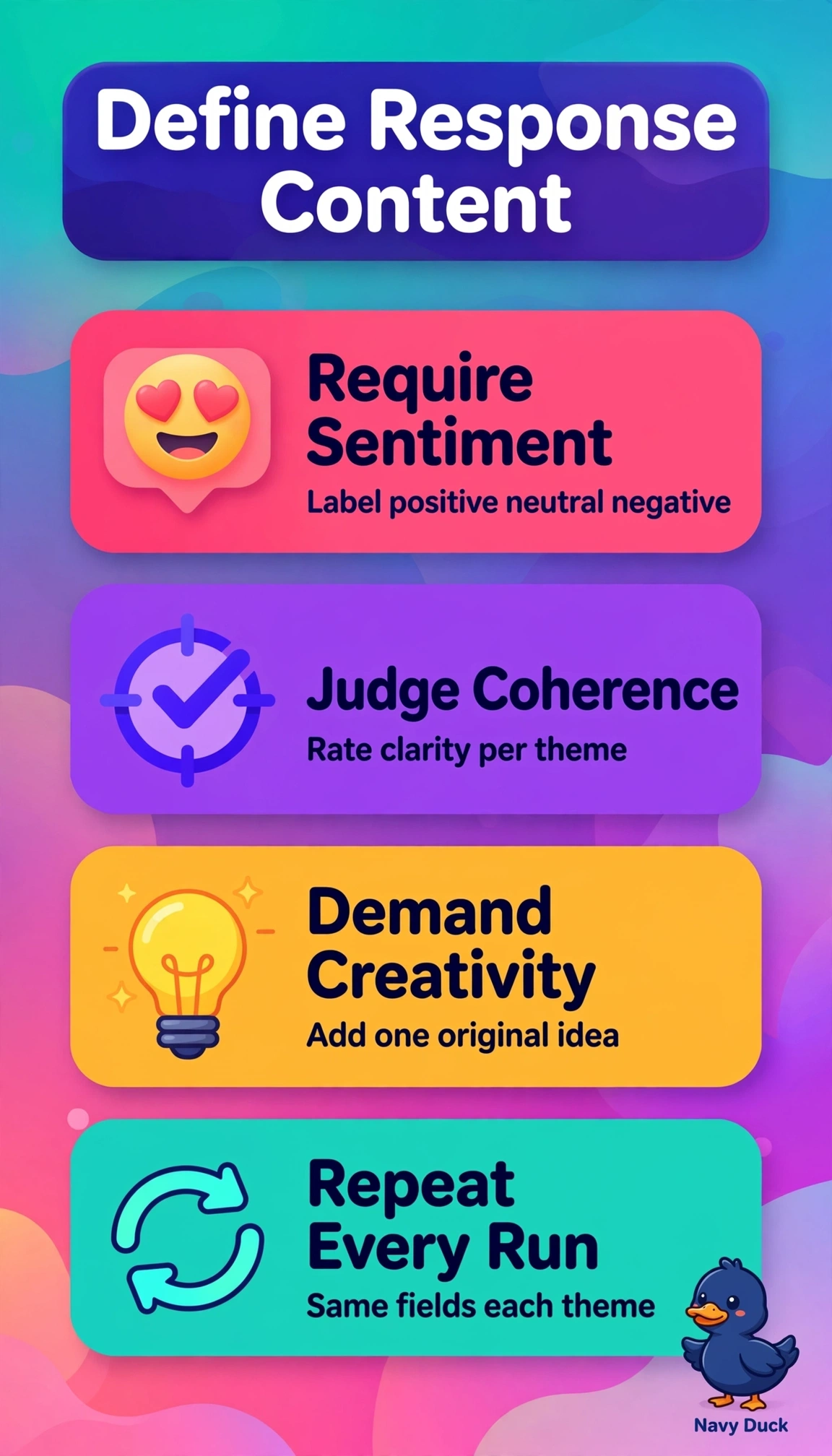
You get steadier results when you name the ingredients upfront. Asking for sentiment labels, clarity ratings, and one fresh idea sets consistent criteria for tone, readability, and creativity, so Copilot has less room to guess. You can think of it as giving a judge a scorecard instead of saying “do your best.”
Full Explanation
The instruction to label each theme positive, neutral, or negative, rate its clarity, and add one original improvement idea defines all three dimensions needed for reliable generation. Standardized sentiment labels make tone analysis consistent, a clarity rating provides the requested readability judgment, and an original idea per theme adds creativity while reducing variability through fixed criteria. Grouping feedback into themes, rating clarity, and proposing an idea may suit executive reporting, but omitting sentiment labels leaves tone impressionistic and difficult to compare across 200 issues. Labeling sentiment, summarizing evidence, and adding an idea supports analysis, but evidence summaries do not assess readability, so executives miss the requested clarity signal. Labeling sentiment, rating clarity, and listing complaints verbatim preserves customer wording, but copying complaints replaces the requested creative synthesis and supplies no fresh idea. Exam caveat: match every requested construct—sentiment, coherence through a clarity judgment, and creativity—rather than choosing an instruction that covers only some of them. Practical check: test the prompt on a sample and confirm that every theme returns all three fields consistently, with none missing.