
You are a program manager overseeing a nightly agentic workflow that triages support issues, labels them, and drafts replies across 200 tickets. Leadership requires proof the run completed, how long steps took, and where failures occurred. Which monitoring approach should you use to supervise agentic workflow runs effectively?
Select an answer to reveal the explanation.
Short Explanation
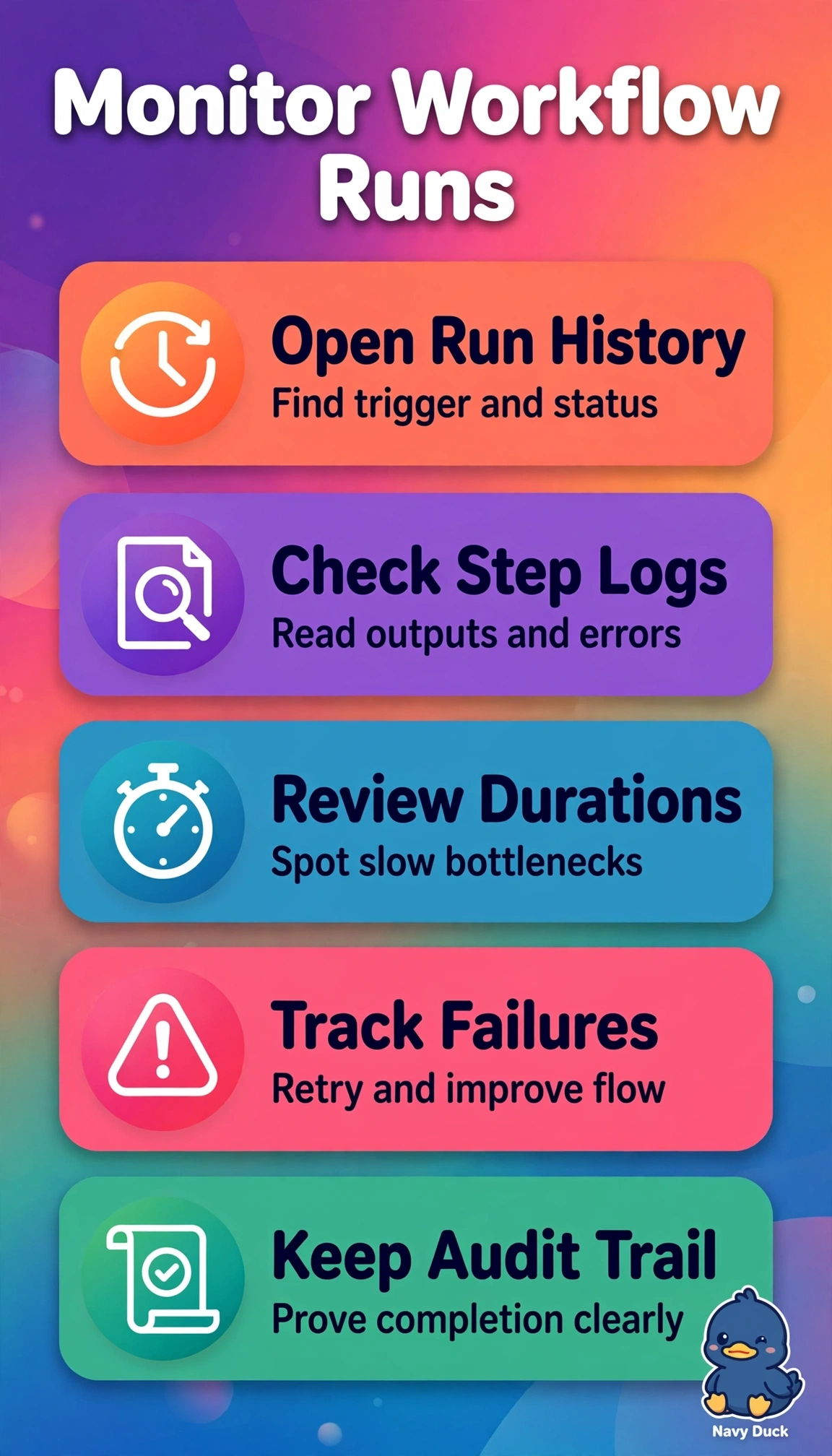
You're the flight controller here, and you've got radar in run history. Checking step logs, timings, and failures lets you spot trouble fast without hovering over every ticket.
Full Explanation
The correct approach works because run history in Actions provides proof the nightly batch completed across 200 tickets together with per-step logs, per-step durations, and failure context, satisfying all three leadership requirements in one system of record for triage, labeling, and drafting. Inspecting per-ticket agent traces with step timings and error causes in observability tooling is a sound debugging practice, but it is ticket-centric and lacks run-level completion assurance, so partial or stalled nightly execution could go unnoticed. Reviewing run summaries with completion status and failed ticket identifiers supports reporting and covers completion and failure location, yet summarization removes step-level timing, making it impossible to diagnose how long labeling or drafting took or where slowdowns emerged. Auditing full run logs with timestamps and total runtime to verify completion is widely used for compliance and confirms start-to-finish success and overall latency, but without failure details it cannot show which step failed or why remediation is needed. On the exam, beware stems that require three distinct evidence types, since a polished but partial monitoring answer is still wrong if one requirement is absent. As a practical check, open the latest run, confirm terminal completion, expand one successful and one failed ticket, and verify step names, durations, and error details are all visible.