
A fintech product manager must document a lending decision for auditors with clear reasoning steps, plus draft quick internal release notes. The team can switch models in GitHub Copilot. Which model selection principle best addresses explainability for these two different needs?
Select an answer to reveal the explanation.
Short Explanation
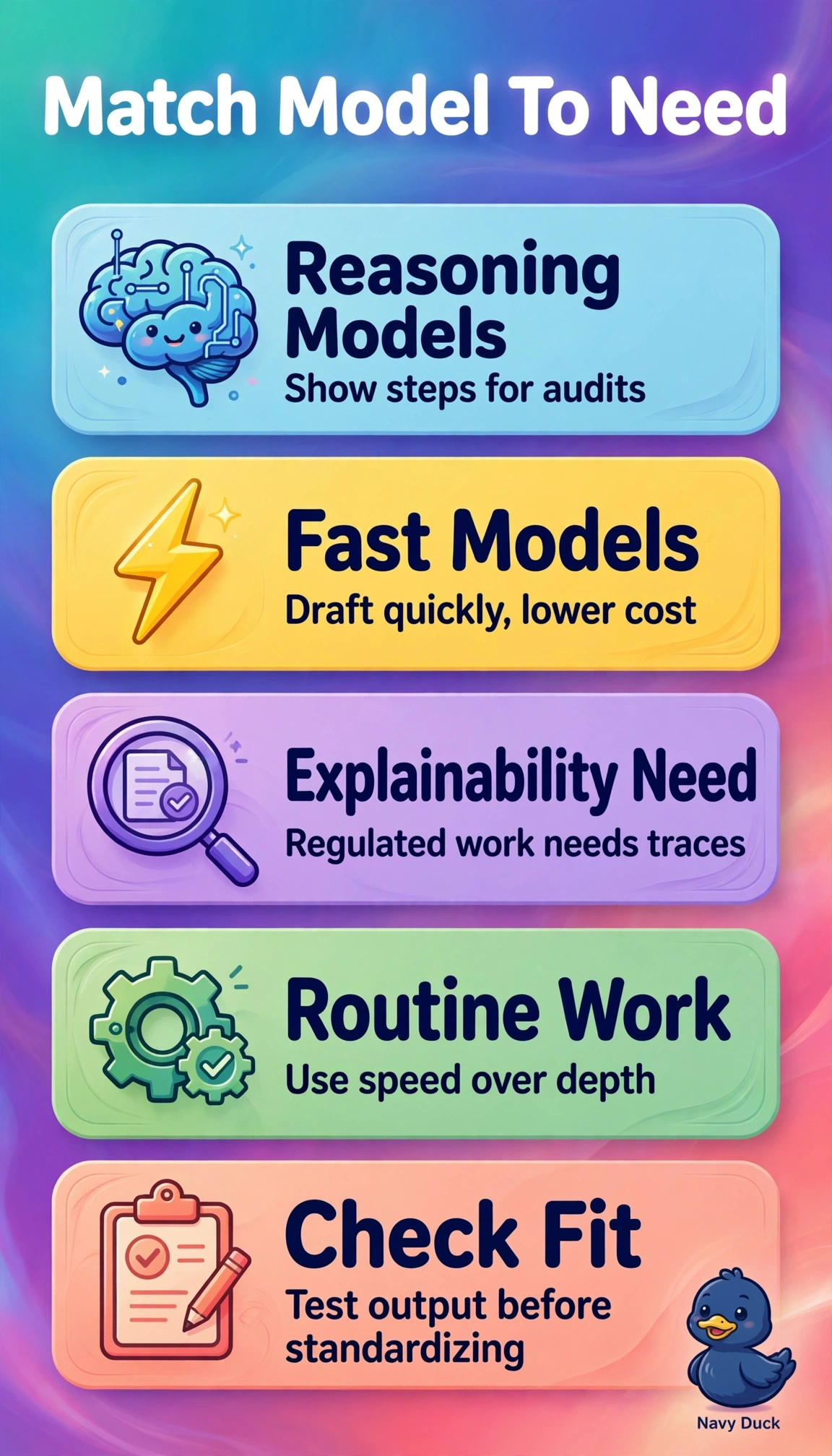
You've got two different jobs, so you need two different tools for the work. A thorough explainer shines for audits while speed wins for drafts, and trade-offs decide the pick.
Full Explanation
The correct principle matches model capability to task risk and explainability demand, assigning a reasoning-optimized model to the lending decision where auditors require explicit step-by-step justification that can be logged and reviewed, while assigning a fast efficient model to low-risk routine release notes where speed and conciseness matter more than deep traceability, which reflects standard GitHub Copilot model-switching guidance. The thorough-documentation approach that applies a reasoning-optimized model to both tasks fails by efficiency because it imposes unnecessary latency and cost on quick internal drafts that do not need deep reasoning. The responsive-prompting approach that applies a fast efficient model with step-by-step prompting to both tasks fails by explainability because prompted bullet points mimic reasoning but do not provide the native chain-of-thought traceability auditors expect for a regulated lending decision. The brevity-focused split that correctly separates models but omits intermediate steps from the audit log fails by auditability because removing the very reasoning evidence defeats the purpose of choosing a reasoning model for compliance. For exams, do not equate any structured prompt with true reasoning capability when the stem explicitly demands auditable reasoning steps. As a practical check, verify that the audit artifact preserves inputs, model version, and explicit reasoning steps separately from concise internal notes.