
A product manager deploys a customer-facing support agent that can draft refunds and update billing records for a SaaS product. Finance requires approval for refunds over $50 and a block on direct production writes. Which control should the manager configure to implement agent guardrails?
Select an answer to reveal the explanation.
Short Explanation
You can keep refunds helpful without letting risky changes slip through. Human approval and write limits help you act quickly while keeping billing safe.
Full Explanation
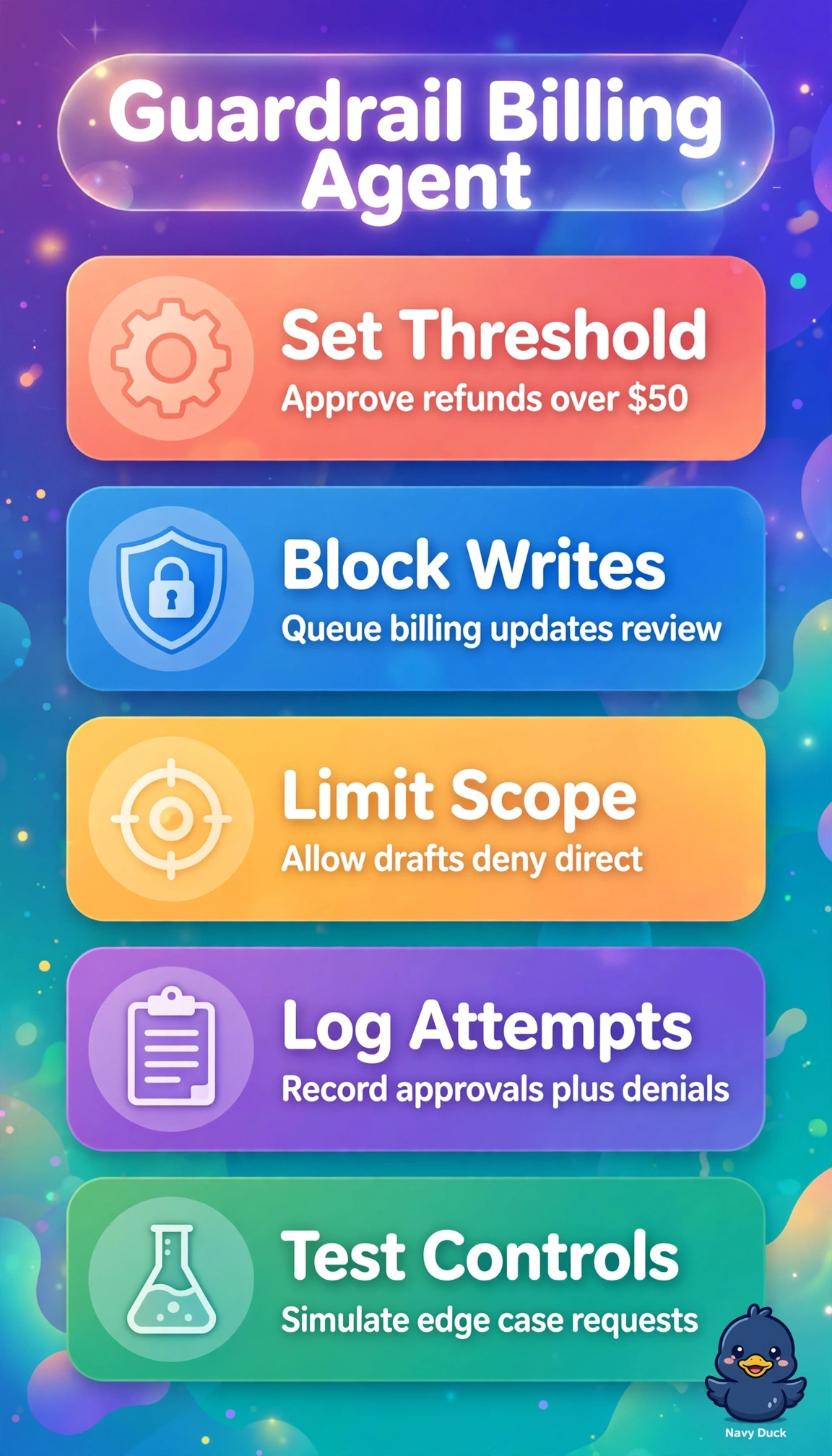
The correct control requires human approval for large refunds—configured as refunds over $50 to match finance’s threshold—and routes billing writes through a review queue. Together, these controls prevent unapproved refunds and block the agent from writing directly to production, supporting segregation, reversibility, and least privilege. Requiring approval over $50 while logging direct billing writes gets the refund threshold right, but audit logs are detective, not preventive: direct writes can take effect before anyone reviews them, so the production-write block is missing. Requiring approval over $200 and queuing billing writes preserves the write restriction, but the higher threshold lets refunds between $50 and $200 proceed without the approval finance requires. Allowing refunds over $50 with post-action manager sign-off also queues billing writes, but retroactive sign-off cannot prevent a refund from being issued before approval. An exam caveat is to distinguish preventive controls from detective controls, and pre-execution approval from post-action review; logging or later review does not meet an explicit block or approval gate. As a practical check, test a $51 refund in staging and confirm it pauses for approval, then verify an agent billing-write request creates a queued proposal rather than changing production, including when approval is denied or expires.