
A 40-person nonprofit launching a donor platform needs a shared GitHub Project to track epics, dependencies, and milestone dates across fundraising, engineering, and design, with timeline views for the board. The coordinator has only issues and no project yet. Which action should the coordinator take to create projects, including selecting an appropriate template?
Select an answer to reveal the explanation.
Short Explanation
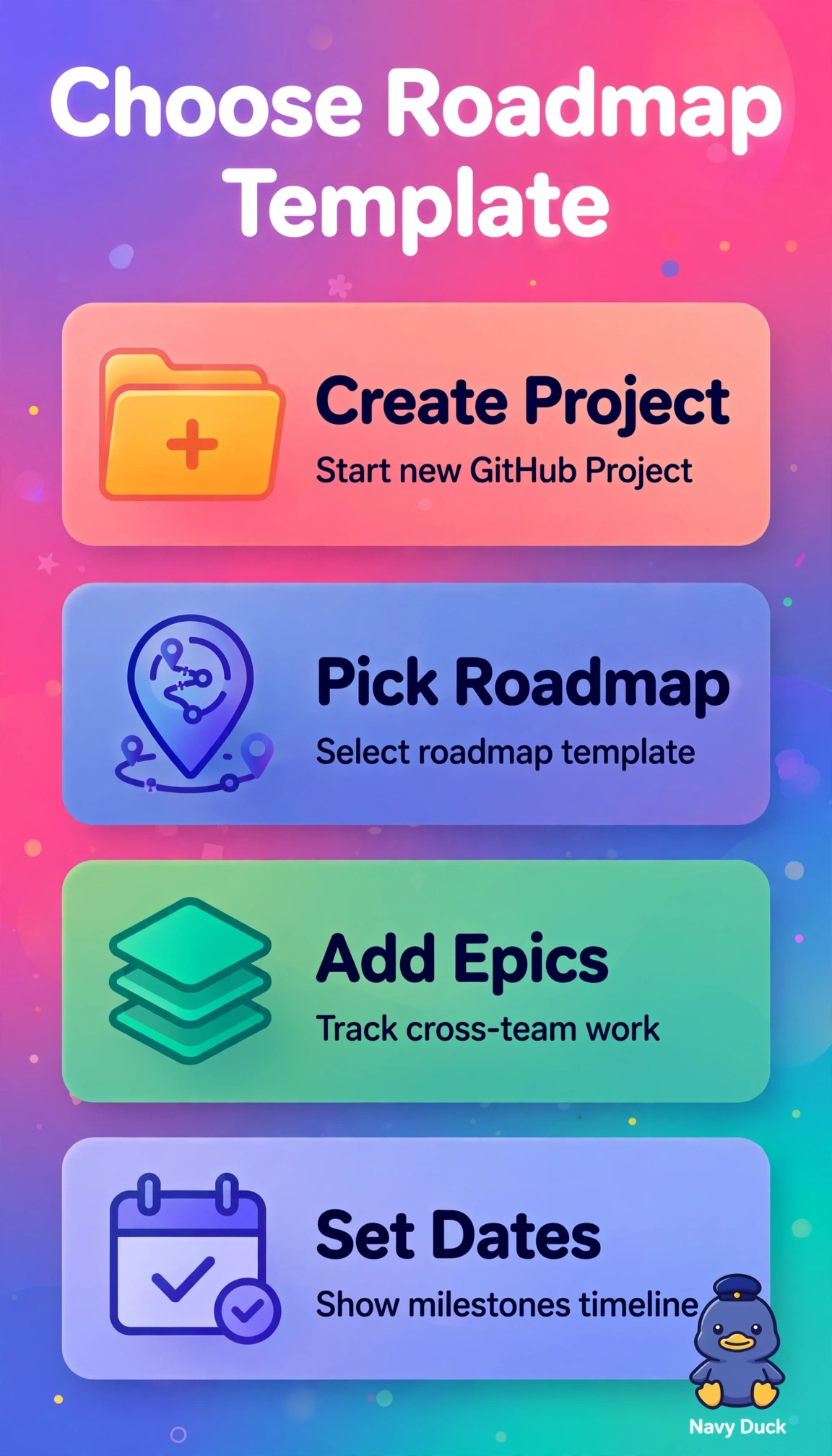
You need a boardroom timeline, not a bug queue. Roadmap templates spotlight dates and dependencies across teams. Your epics will finally read like a story leadership gets.
Full Explanation
The coordinator needs a single shared GitHub Project that turns existing issues into structured epics with dependencies and date fields and presents them in timeline layouts for board oversight, which is exactly what starting from the roadmap template provides because it preconfigures timeline view, milestone dates, and grouping suitable for cross-functional planning. The table-based team planning approach is a legitimate way to manage epics, owners, and dependencies with custom fields and filters, but it fails the explicit timeline-view requirement since tables optimize for sorting and list management rather than date-based visualization. The board-based status approach is widely used to visualize flow and dependencies across columns, but it tracks progress by status rather than milestone dates on a timeline, so it cannot give the board the requested chronological view. The proposal to create separate team-specific roadmaps correctly uses timeline visualization yet violates the shared-project requirement, fragmenting fundraising, engineering, and design work and obscuring cross-team dependencies. As an exam caveat, do not select a plausible project type or template on task-management merits alone; match every noun in the stem — shared, dependencies, milestone dates, and timeline — before committing. As a practical check, after creation verify existing issues are added as items, date fields are populated, dependencies are linked, and the timeline view renders correctly for stakeholders.