
A finance manager oversees an agentic workflow that extracts data from 500 vendor invoices nightly. Leadership needs proof of reliability, early warning of failures, and audit trails. Console output looks fine but errors hide until month-end. Which approach best monitors agentic workflow runs over time?
Select an answer to reveal the explanation.
Short Explanation
Month-end surprises mean you watched results, not runs. You're installing a dashboard for run telemetry on health and errors, like a fitness tracker for nightly jobs.
Full Explanation
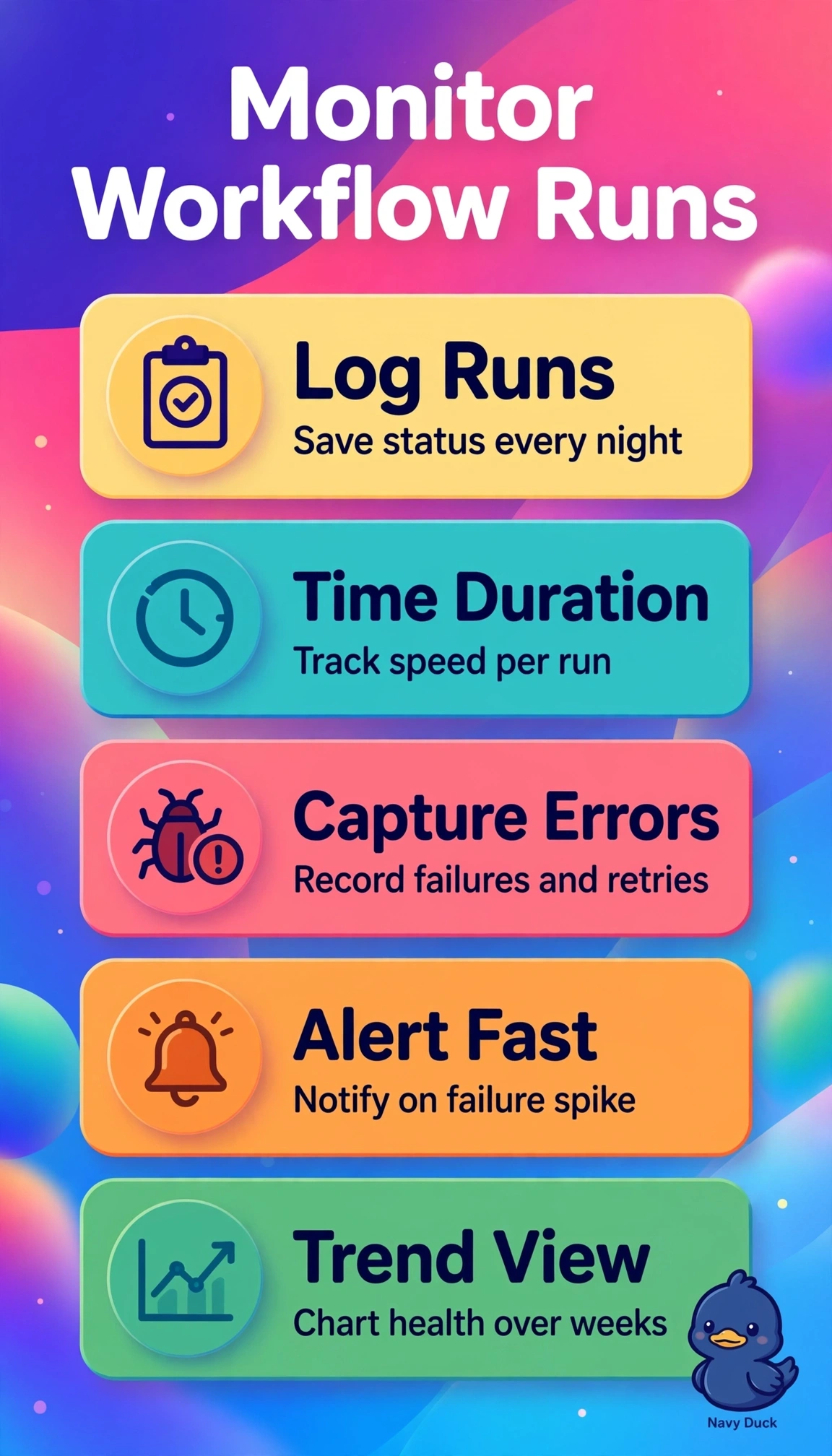
Monitoring runs requires operational telemetry across executions, so collecting status, duration, error types, retry counts, and alerts in persistent logs with a trend dashboard reveals failure spikes, drift, and audit evidence that single-run console views miss. Reviewing final totals checks output correctness but detects problems late and lacks per-run diagnostics for early warning. Reviewing prompt versions and commits tracks changes that might affect health but does not observe actual nightly execution behavior. Surveying satisfaction captures perceived quality monthly without timely failure signals or auditable trails. For the exam, remember monitoring equals run-level metrics plus logs plus trends and alerts, not just outputs or code, and a practical check is to confirm a failed test run triggers an alert and appears in the dashboard.