
A program manager pilots an agent that triages 200 support issues weekly, must apply only approved labels, link a related incident, and post a confidence score for human review. Early runs skip links and use free-form labels. Which supervision practice should the manager implement to ensure that agentic workflows meet requirements?
Select an answer to reveal the explanation.
Short Explanation
Hope isn’t a quality plan when labels go sideways. Acceptance checks turn vague expectations into testable proof. You’ll catch drift early by sampling against clear bars.
Full Explanation
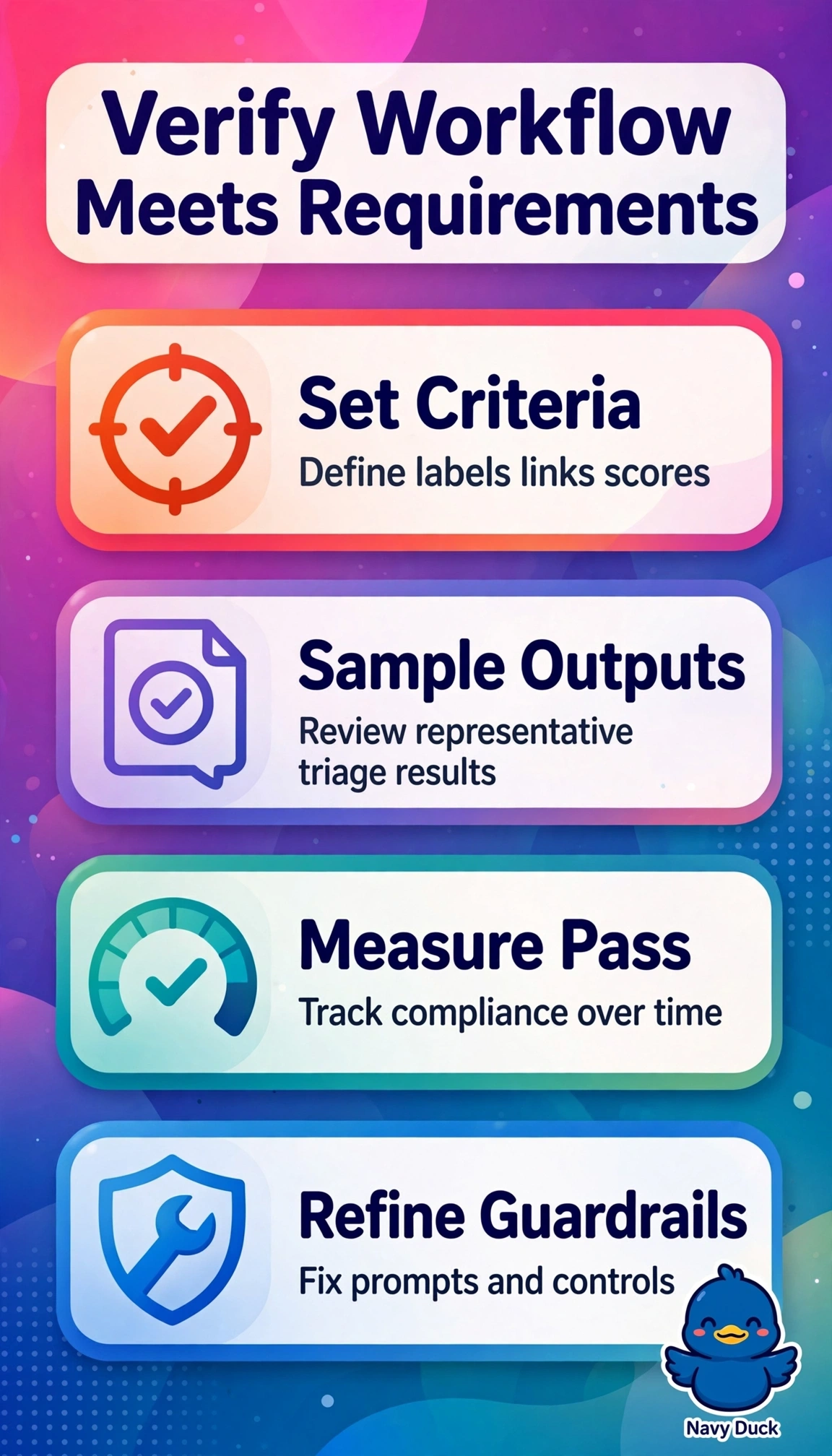
The correct practice works because it translates the three non-negotiable outputs into measurable acceptance checks and then verifies them on samples, which directly addresses the observed failures of missing links and free-form labels while preserving the human-review loop scaled for 200 items weekly without requiring census review. One distractor that enforces approved labels and confidence scores but makes incident links optional applies a reasonable throughput trade-off yet fails this scenario by violating an explicit must-link requirement and normalizing the exact skipping behavior the pilot must eliminate. Another distractor that audits samples for labels and links while deferring score validation demonstrates solid sampling discipline yet fails by removing the confidence signal that lets reviewers calibrate trust and prioritize attention, breaking the required score-for-review control. The remaining distractor that validates all three outputs only in pre-launch testing reflects sound shift-left practice yet fails as supervision because models and data drift in production and without ongoing sampled reviews there is no detection of regression to free-form labels or dropped links. As an exam caveat, distinguish one-time qualification from sustained oversight and reject any answer that satisfies only two of three must requirements even when it improves speed or coverage. As a practical check, publish pass thresholds for label allowlist match, link presence and resolvability, and score completeness, then log results on a weekly sample and trend failures to drive prompt, retrieval, or UX fixes.