
A technical program manager must turn a weekly vendor-risk review from a chat experiment into a repeatable agentic workflow. The team needs a reviewable definition with goal, trigger, instructions, and tools that runs consistently. Which approach should the manager use to create agentic workflow files?
Select an answer to reveal the explanation.
Short Explanation
Great experiments deserve a durable home. A declarative definition file turns chat magic into a repeatable, reviewable workflow your whole team can trust.
Full Explanation
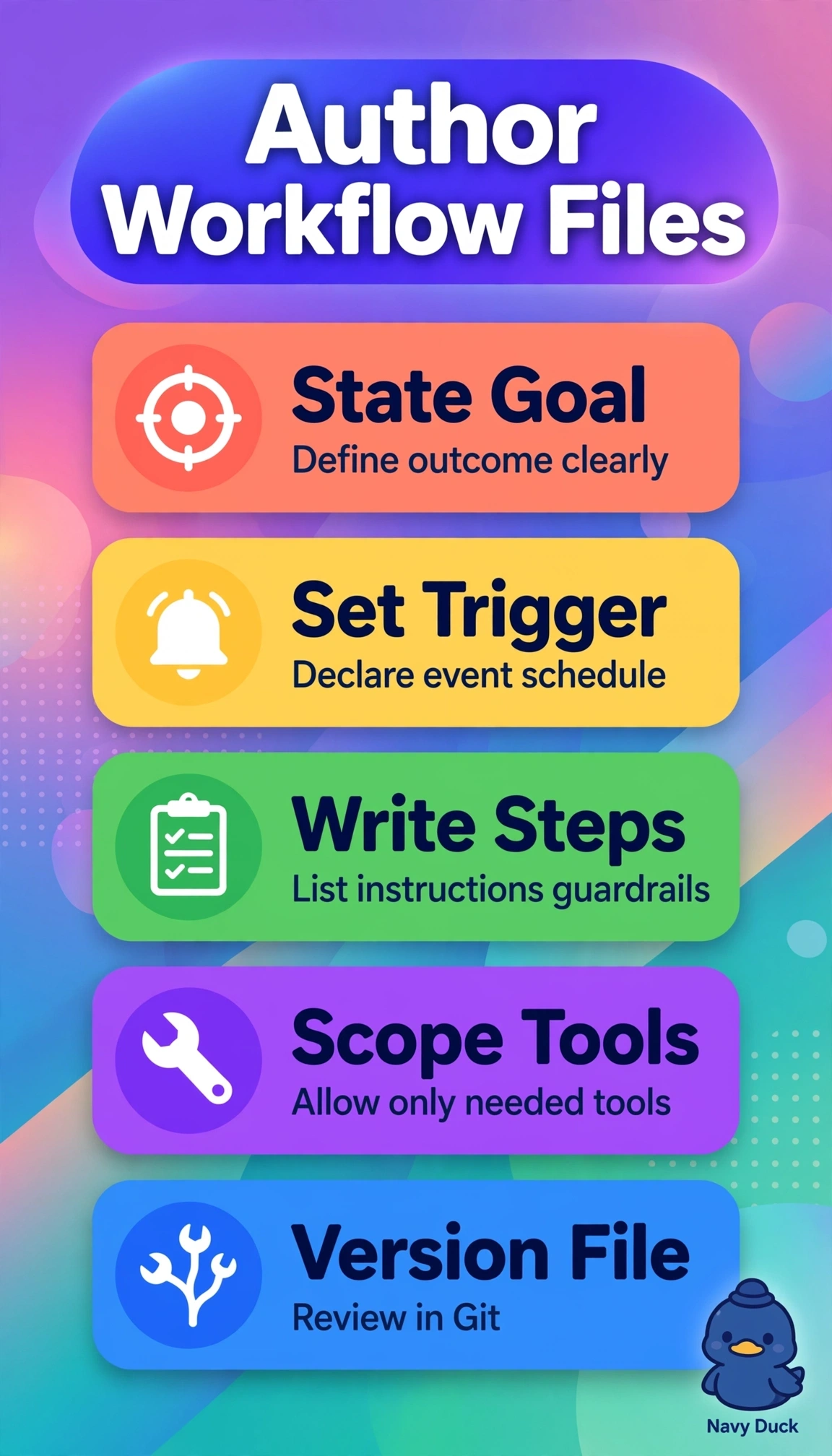
The correct approach is right because an agentic workflow requires a versioned, reviewable artifact that explicitly declares the goal, the trigger condition, the step-by-step instructions, and the allowed tools, which moves the process from an ad hoc chat experiment to a consistent, auditable, and reusable automation that peers can review in source control. A reusable team prompt template with goal and instructions fails by trigger concept because analysts launching it manually each week preserves helpful standardization but provides no declared trigger or guaranteed consistent execution. An automated weekly scheduler job running approved scripts fails by definition concept because while it achieves consistency and tool control, it embeds logic in jobs and scripts rather than providing a single reviewable definition containing goal, trigger, instructions, and tools. A versioned wiki page with goal, trigger, instructions, and tool links fails by executability concept because documentation supports transparency and peer review but cannot be executed by the agent with enforced tool permissions and deterministic steps. For the exam, do not confuse general automation or documentation maturity with agentic workflow files; the question specifically tests declarative, reviewable, runnable definitions. As a practical check, verify the file is versioned, renders goal, trigger, instructions, and allowed tools in review, and produces the same scoped run when triggered.