
A technical project manager inherited confusing billing logic with no docs, a suspected bug, and zero tests before a launch review. The manager uses Copilot Chat in the IDE and needs understanding, a targeted repair, and coverage quickly. Which slash command sequence should the manager use to apply /explain, /fix, /tests, /doc, /clear, and /chronicle effectively?
Select an answer to reveal the explanation.
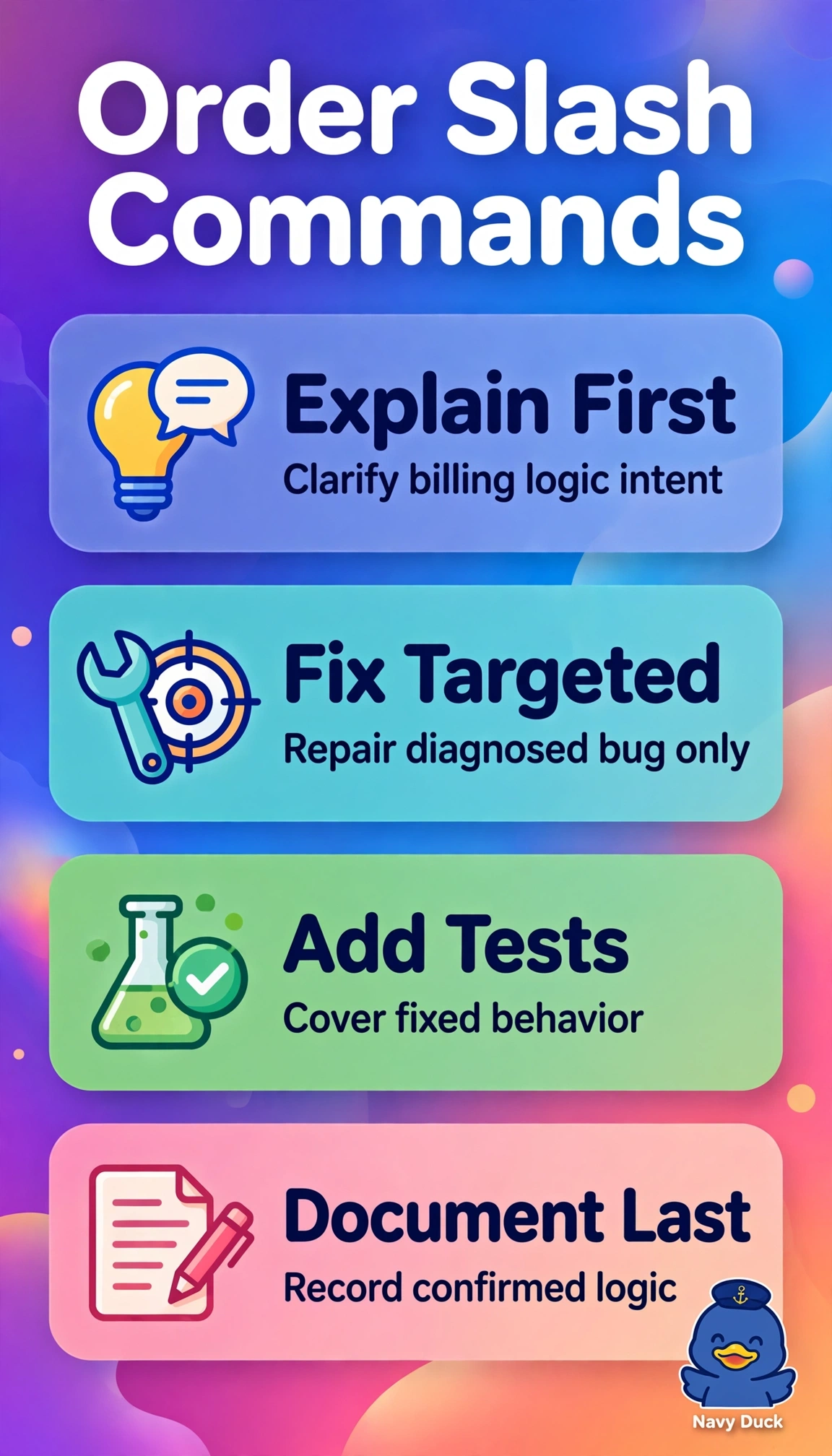
Short Explanation
You're working in order, not scrambling the steps. Chaining task-specific commands moves you from clarity to fix to proof. It's like diagnose, treat, then write the care notes.
Full Explanation
The correct sequence mirrors the disciplined triage workflow required when inheriting undocumented, buggy, untested billing logic before a launch review, starting with /explain to build an accurate mental model of control flow and edge cases, then applying /fix narrowly to the suspected defect with that context, then generating /tests to lock in correct behavior and prevent regression, and finally using /doc to capture verified behavior for maintainers. One incorrect sequence fixes before explaining, which violates root-cause discipline because proposing a patch without comprehension risks masking symptoms and introducing regressions in financial calculations. Another incorrect sequence documents and tests before fixing, which fails sequencing logic because documentation would then describe buggy behavior and tests would enshrine the defect as expected, requiring costly rework. A third incorrect sequence substitutes /clear for /tests, which confuses session hygiene with quality assurance because clearing chat context improves focus but provides zero regression coverage demanded for launch readiness. For exam purposes, remember that Copilot Chat slash commands are order-dependent and /chronicle is for capturing session history rather than repairing or deploying code, so sequences that place the repair last or omit coverage entirely are classic traps. As a practical check, always verify /explain output against actual transaction examples, apply the minimal /fix diff, run the newly generated tests, and only then finalize /doc so documentation reflects proven behavior.