
A startup operations manager supports a 12-person product team on Copilot Business with a tight monthly budget and frequent agent edits in VS Code. Leadership wants to know whether overages come from chat exploration or agent actions. Which review practice best evaluates token usage and premium request consumption?
Select an answer to reveal the explanation.
Short Explanation
You can trace the overage to its source instead of guessing from the total. Usage dashboards show chat and agent premium requests by user and action.
Full Explanation
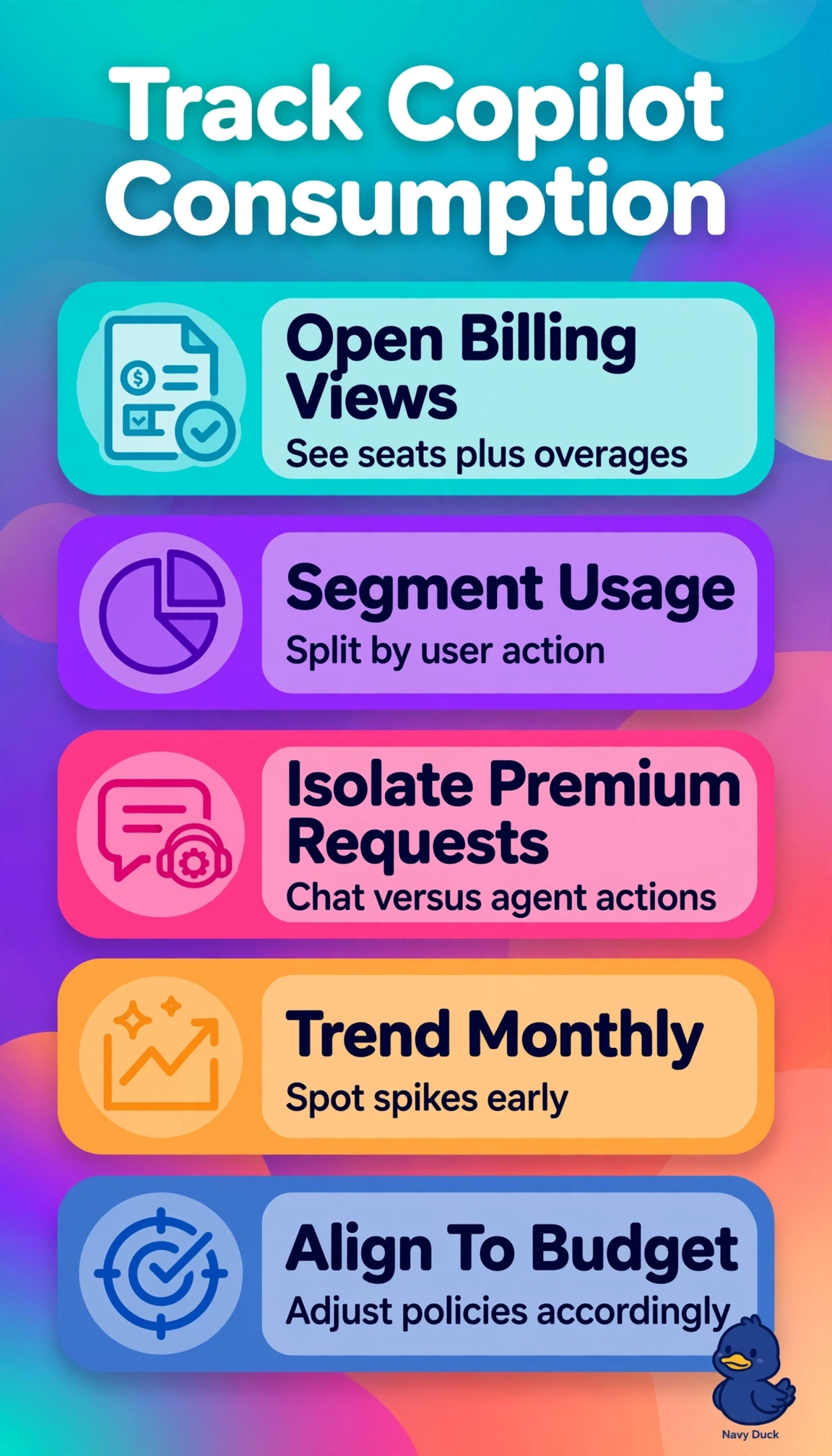
Reviewing Copilot usage reports and premium request logs in billing and usage dashboards, segmented by user and action, directly answers whether overages come from chat exploration or agent actions in VS Code. This level of detail lets the manager attribute token usage and premium request consumption to the relevant activity while monitoring a tight budget. Exporting monthly organization invoice totals is useful for tracking overall spend against the budget, but an aggregate total does not distinguish chat from agent activity or show which users drive consumption. Analyzing agent edit acceptance rates and code review outcomes can help evaluate productivity from frequent edits, but those measures do not quantify token usage or premium request consumption. Auditing seat assignments and repository access supports license allocation and onboarding for the twelve members, but it shows who has access, not how chat and agent actions use resources. As an exam caveat, distinguish a question about consumption by action type from one about overall budget tracking or license allocation: invoice totals and seat audits cannot provide the requested usage breakdown. As a practical check, schedule a monthly dashboard review, filter by date, user, and action, then reconcile premium request usage with invoice details before discussing budget tradeoffs with leadership.