
A release manager's documentation agent failed overnight: it stopped after a renamed API spec file, blocking release notes for a 12-team launch with a morning deadline. Logs show file-not-found errors. Which interaction best resolves the failure in the agentic workflow?
Select an answer to reveal the explanation.
Short Explanation
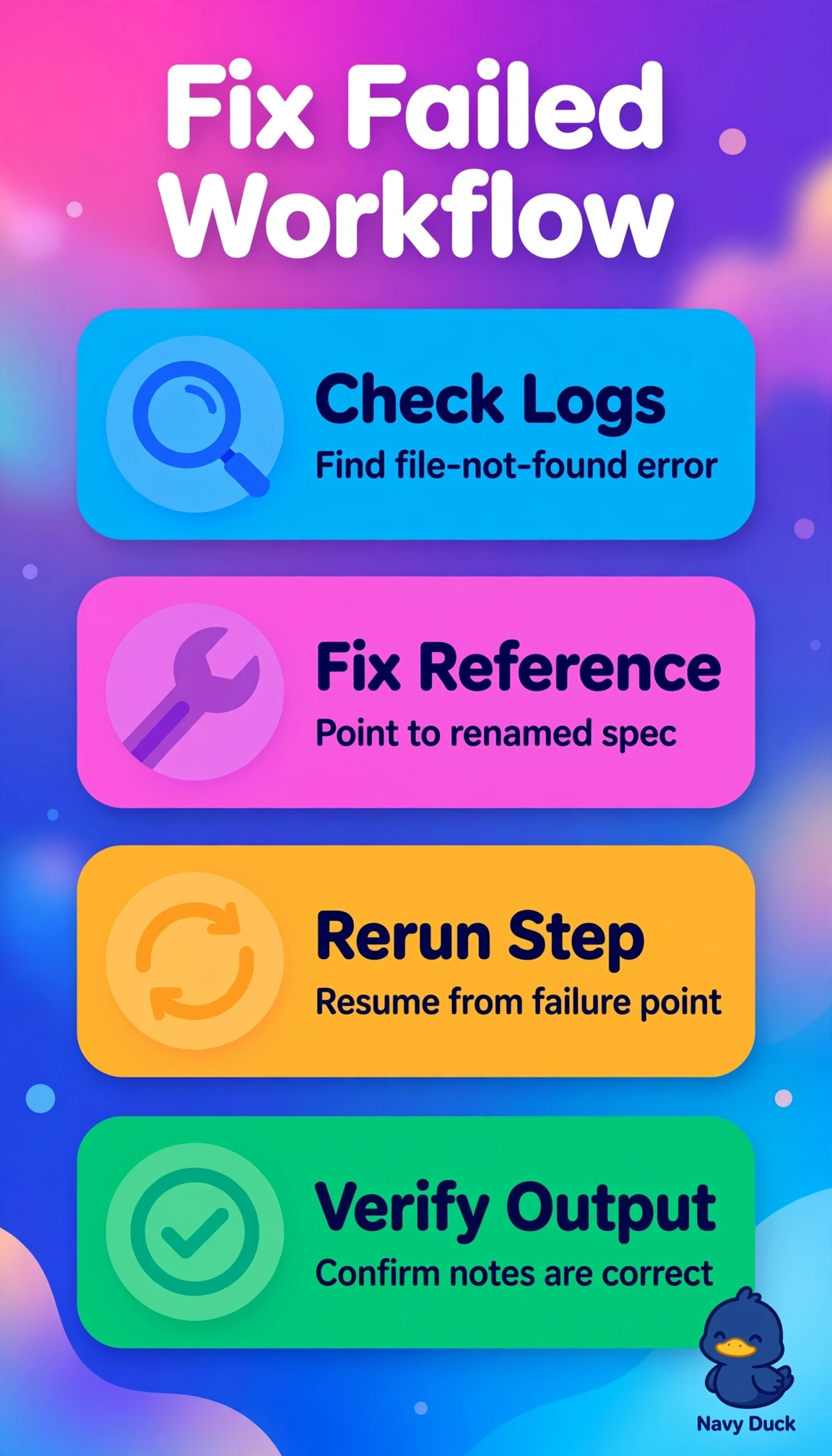
Failures are clues, not dead ends for you. Fixing the failed step at its broken file reference gets your launch back on track fast.
Full Explanation
The correct interaction resolves the diagnosed root cause because logs show file-not-found errors after a rename, so updating the workflow file reference restores the dependency, rerunning only the failed step preserves successful prior work and respects the morning deadline for the 12-team launch, and verifying the generated release notes confirms accuracy before distribution. The approach of skipping the missing file and building from remaining sources reflects graceful degradation for resilience, but it fails by completeness because it would produce release notes missing the renamed API spec and its breaking changes. The approach of updating the reference and rerunning the entire workflow reflects sound idempotent recovery practice, but it fails by targeted efficiency because re-executing all upstream steps wastes the constrained overnight window and introduces unnecessary failure risk when a failed-step resume is available. The approach of fixing the reference, rerunning the failed step, and publishing without verification improves speed, but it fails by quality governance because customer-facing release notes in an agentic workflow require validation for hallucinations and omissions. Exam caveat: prioritize root-cause fix plus minimal resume plus verification over workarounds or full restarts when logs identify a specific artifact and a deadline constrains recovery. Practical check: confirm the new path resolves, inspect the run graph to ensure only the failed node re-executes, diff generated notes against endpoints in the renamed spec, and stabilize the reference with a versioned path or alias to prevent future renames from blocking releases.