
A product operations team wants triage automation that drafts a checklist whenever a bug is labeled critical, posts a nightly summary of open incidents, and allows on-demand reruns for audits without duplicate runs. Which selection and configuration of triggers best implements the automation?
Select an answer to reveal the explanation.
Short Explanation
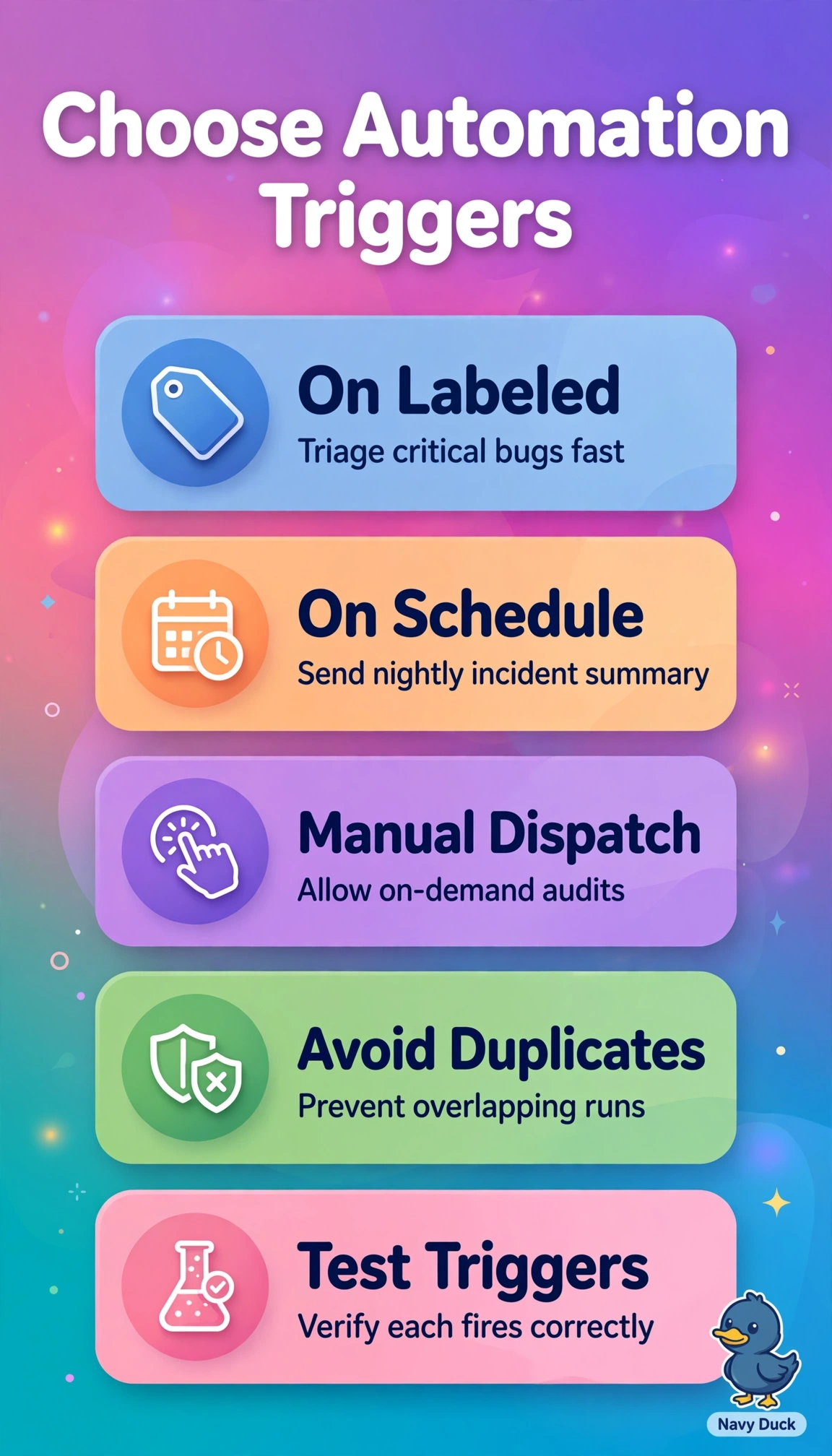
You've got three different jobs, so you'll want three different starting signals. A labeled event acts like your doorbell for critical bugs, a schedule is your alarm clock for the nightly summary, and manual dispatch is the spare key you use for audits.
Full Explanation
The correct design matches each need to its native trigger semantics for responsiveness, reliability, and control. A labeled event fires exactly when the critical label is applied, providing label context to draft the checklist immediately, including bugs labeled after creation. A scheduled cron trigger guarantees the nightly open-incident summary runs unattended regardless of activity, preserving cadence and SLA. Manual dispatch enables parameterized on-demand audit reruns with actor attribution and concurrency controls to suppress duplicates. Replacing audit dispatch with a push trigger fails on control because pushes execute on every commit without operator inputs, creating noisy duplicate runs instead of a single governed rerun. Triggering on opened issues for all new bugs fails on precision because it lacks the critical-label filter, drafting checklists for minor issues while missing existing issues later labeled critical. Handling summaries and audits only by manual dispatch fails on automation because it demands human initiation every night, breaking unattended delivery even though inputs suit audits. As an exam caveat, compare intent and filters rather than general capability, especially labeled versus opened and scheduled versus manual with concurrency. As a practical check, inspect triggers, verify label names and UTC cron, then test labeling and dispatch the same audit twice to verify deduplication.