
A healthcare program team wants Copilot and coding agents to speed up claims reporting, but the organization requires HIPAA-aware handling, approved data zones, and audit trails for automated code changes. Velocity cannot override compliance. Which organizational adherence approach lets the team use Copilot and agents within standards?
Select an answer to reveal the explanation.
Short Explanation
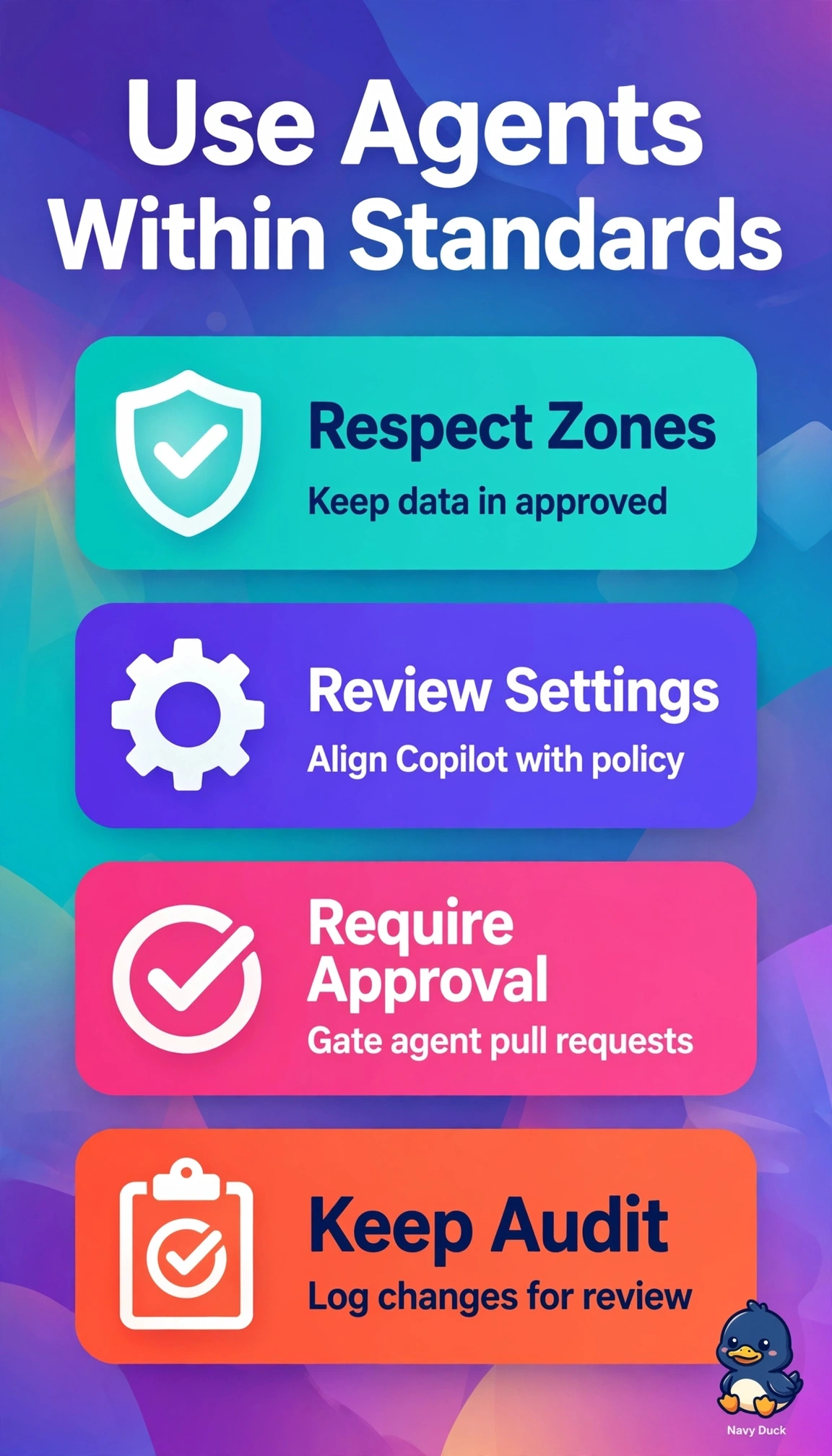
You can keep claims work moving without letting speed outrun trust. Enforcing org policies for approved zones, reviewed HIPAA-aware Copilot settings, and human approval of agent pull requests keeps you within standards.
Full Explanation
The approach that enforces organizational policies works because it addresses all three requirements together: approved data zones confine work to permitted locations, reviewed Copilot settings provide HIPAA-aware handling of prompts and outputs, and human approval of agent pull requests preserves accountability and auditability without letting velocity override compliance. Using approved zones and HIPAA-aware settings but relying on automated tests and auto-merge may speed delivery, yet tests do not replace accountable human review or the audit trail required for automated claims-code changes. Enforcing approved zones and human approval while leaving Copilot settings at their defaults also falls short: defaults do not ensure HIPAA-aware retention, exclusion, and access controls for protected health information. HIPAA-aware settings and human approval cannot compensate for flexible multi-region processing, which violates the approved-zone residency requirement. For the exam, reject partial-compliance shortcuts even when they appear efficient. In practice, verify the three controls together: check Copilot data settings, repository and runner residency, and branch protection requiring human reviewers, with logs for agent pull requests.