
An operations lead runs an agentic workflow that pauses before publishing customer-facing release notes, asking for confirm, edit, or stop due to accuracy and compliance rules. A pending request cites an unapproved feature. Which response to the interaction request for approval, rejection, or revision best meets controls?
Select an answer to reveal the explanation.
Short Explanation
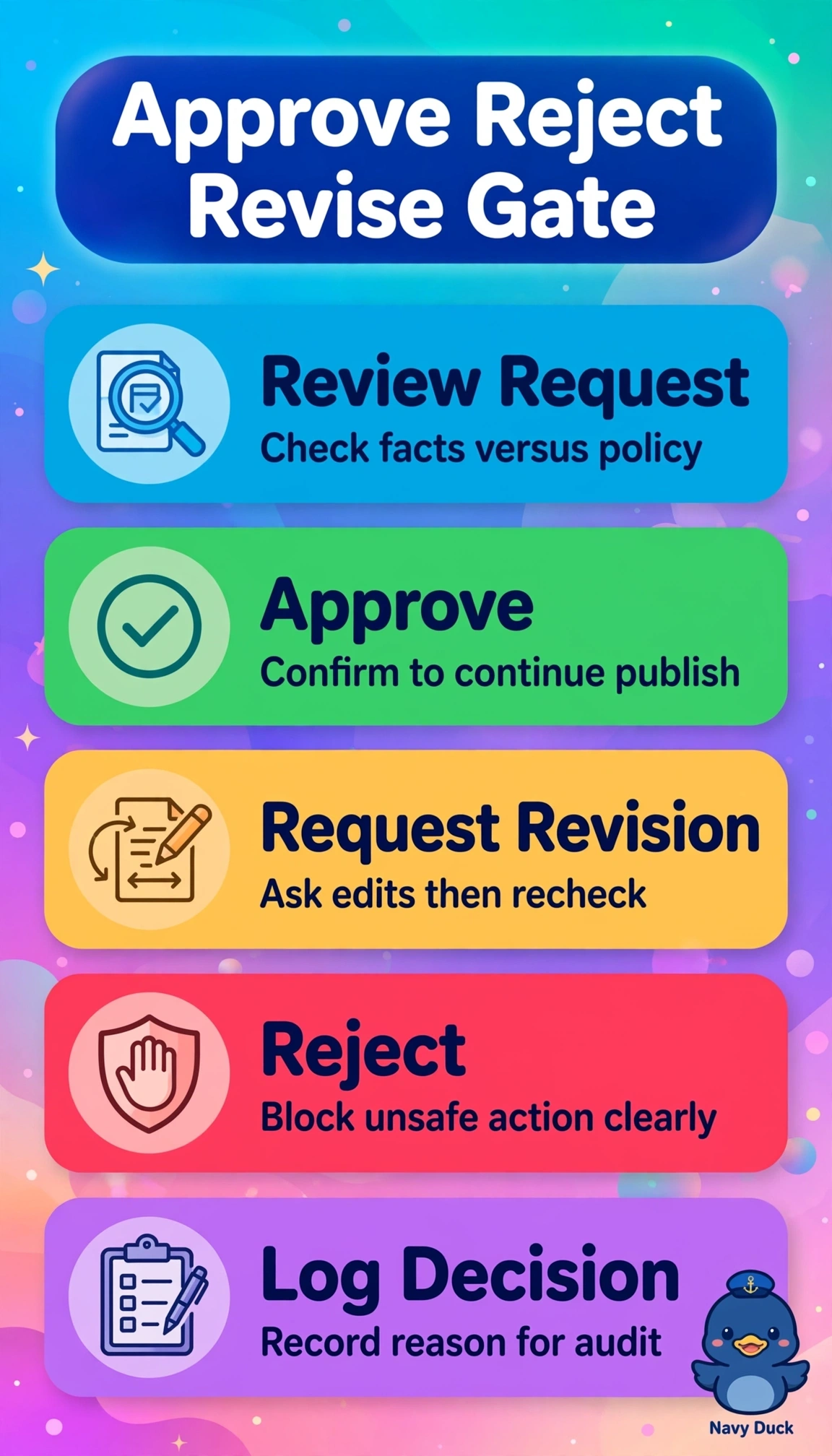
You're the safety brake before customers see anything wrong. Rejection stops the risky publish cleanly and sends the agent back with clear feedback to fix.
Full Explanation
The correct response enforces the human approval gate as a compliance control, not merely an editorial checkpoint, so rejection with mandatory removal and fresh review prevents an unapproved claim from reaching customers while preserving auditability. The accuracy-edit approach fails by concept because it treats authorization as an editing problem, verifying wording while leaving the underlying compliance violation intact, since accurate description does not make an unapproved feature publishable. The remove-and-approve-without-rereview approach fails by concept because it breaks closed-loop verification, assuming the fix is correct without confirming removal, formatting, and residual risk through the required second pass. The pause-for-legal-guidance-without-rejection approach fails by concept because it substitutes indefinite deferral for a disposition decision, keeping a noncompliant draft in the queue where it can be mistakenly resumed or published rather than dispositioned as rejected. Exam caveat: beware attractive choices that add proper compliance language like verification or legal consultation but omit one mandatory element, as exams test whether every conjunctive condition of removal plus rerun plus explicit reject is met. Practical check: before any publish confirmation, cross-check each cited feature against the approval registry and require the workflow log to show rejected revision followed by a new approved review record.