
A logistics firm wants an agent that reviews incoming carrier invoices, flags exceptions for a manager, posts summaries to an issue tracker, and learns approved handling rules over time. Leadership wants a maintainable design that others can reuse. Which design pattern alignment best structures this agentic workflow for reuse?
Select an answer to reveal the explanation.
Short Explanation
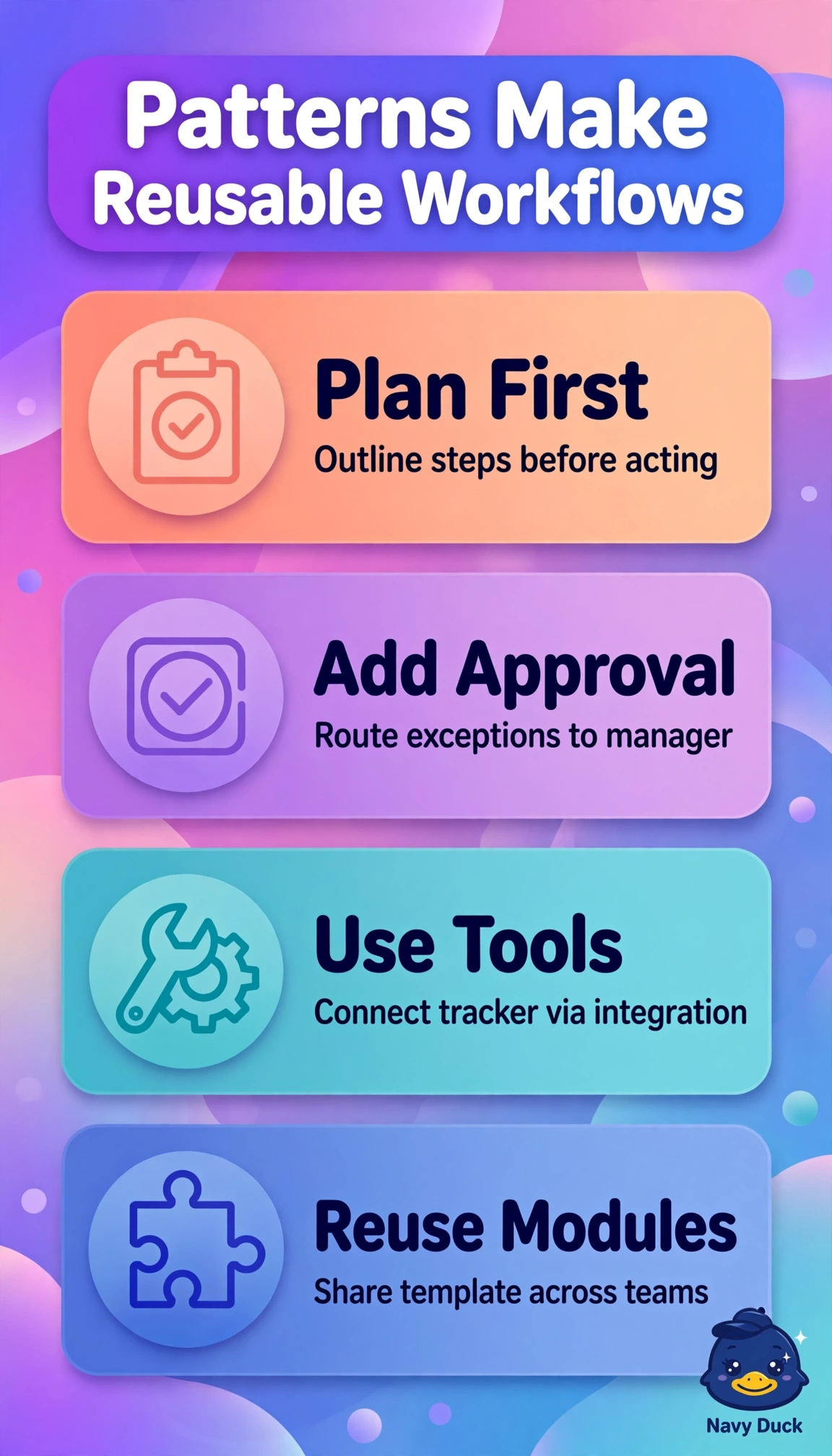
You can make this invoice workflow easier to reuse when its planning, manager approval, and tool integration fit together like Lego bricks. Modular patterns keep those parts distinct and easier to audit, unlike one giant prompt or a design that skips manager approval.
Full Explanation
Composing modular plan-then-execute, human-approval, and tool-integration patterns is right because each need gets a reusable component with a clear interface. Plan-then-execute structures invoice review into extraction and validation steps followed by actions; human approval gives managers a chance to review flagged exceptions before approved handling rules evolve; and tool integration standardizes posting summaries to the tracker. Learning from approvals can update the rule base, while clear interfaces let other teams reuse the same components for different carriers without forking code. Centrally governed handling rules fail by concept because fixed governance does not provide the requested learning from approved handling, even though the design includes manager approval and tracker integration. Autonomous application of learned rules with audit logging fails because retrospective logging does not replace prospective manager control of flagged exceptions, even with workflow reuse and tracker integration. A monolithic invoice agent fails because collapsing planning, approval, and integration into one brittle artifact undermines maintainability and reuse, despite manager approval, tracker posting, and feedback-based rule refinement. Exam caveat: favor pattern composition that preserves the workflow, human-control, tool, and learning requirements over a design that is strong operationally but drops one constraint. Practical check: confirm separate planning, approval callback, tracker connector, and rule-store update contracts, with versioned tests that support reuse.