
A retail operations team gets 3,000 tickets monthly spanning refunds, shipping, and loyalty issues. Ana wants an agentic workflow that first classifies each ticket, then routes it to a specialized refund, shipping, or loyalty sub-agent for resolution. Which common agentic design pattern should Ana align her workflow with to handle this triage need?
Select an answer to reveal the explanation.
Short Explanation
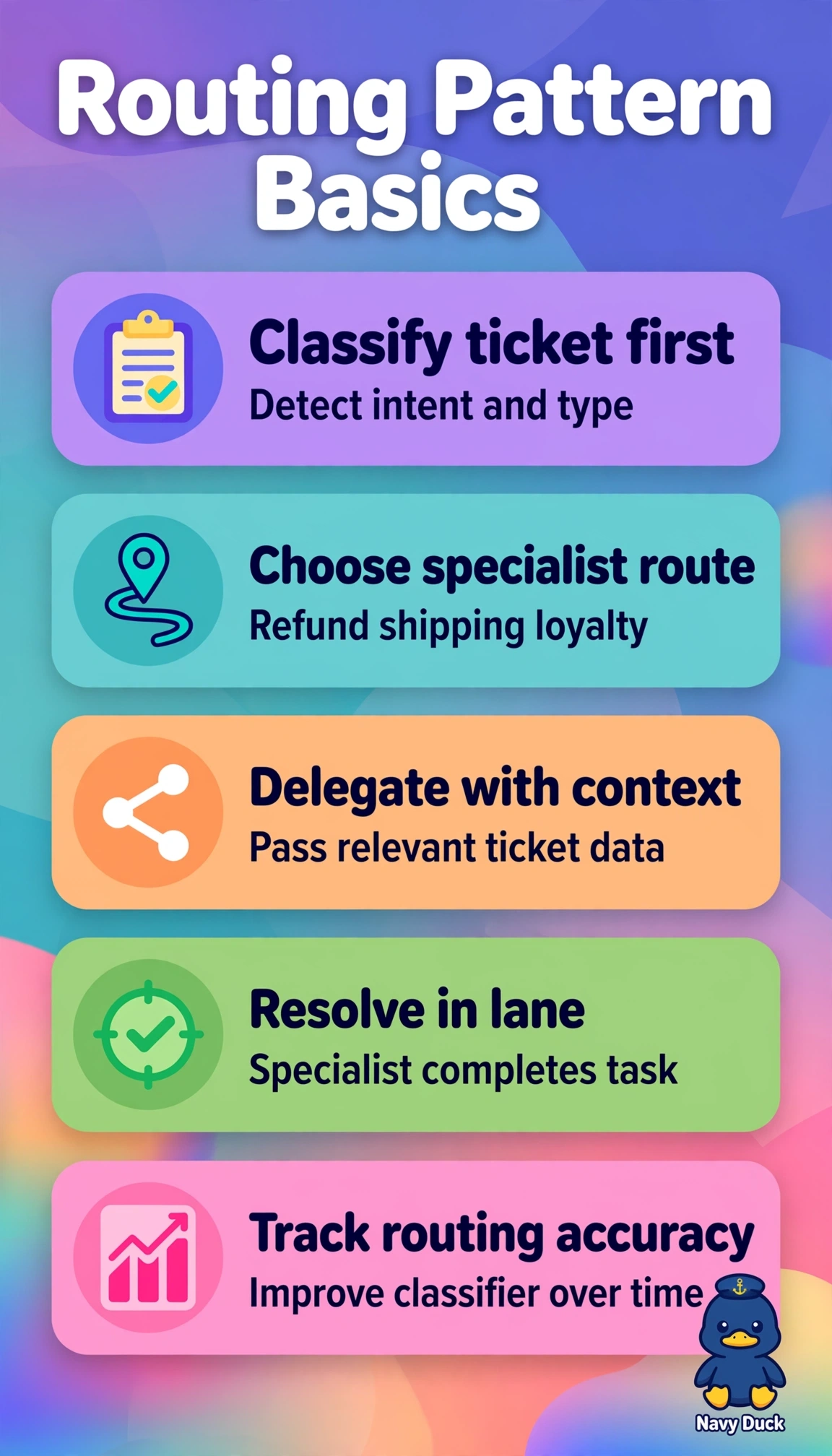
You've got different ticket types needing different experts. The routing pattern lets a classifier direct each case to the right specialist without wasted work.
Full Explanation
The routing pattern uses a front classifier to inspect input and delegate to the most suitable specialist, which fits Ana requirement to separate refunds, shipping, and loyalty work for efficiency and accuracy. Prompt chaining fails by concept because it forces the same fixed sequence for all inputs, so it cannot branch to different specialists based on ticket type. Evaluator-optimizer fails by concept because it improves one output through iterative critique and regeneration, not triage and delegation across distinct task types. Parallelization fails by concept because it runs multiple agents on the same task simultaneously and aggregates results, which would waste effort having every specialist handle every ticket. For the exam, match divergent input types to routing and repeated refinement to evaluator-optimizer, and practically validate the classifier with labeled samples before wiring specialists.