
A product manager supervises an agentic workflow that enriches 500 CRM records overnight, but at 3 a.m. it halts with authentication errors on the CRM step after a token rotation. The remaining steps are queued and sales needs data by 9 a.m. Which human-in-the-loop response best resolves this agentic workflow failure?
Select an answer to reveal the explanation.
Short Explanation
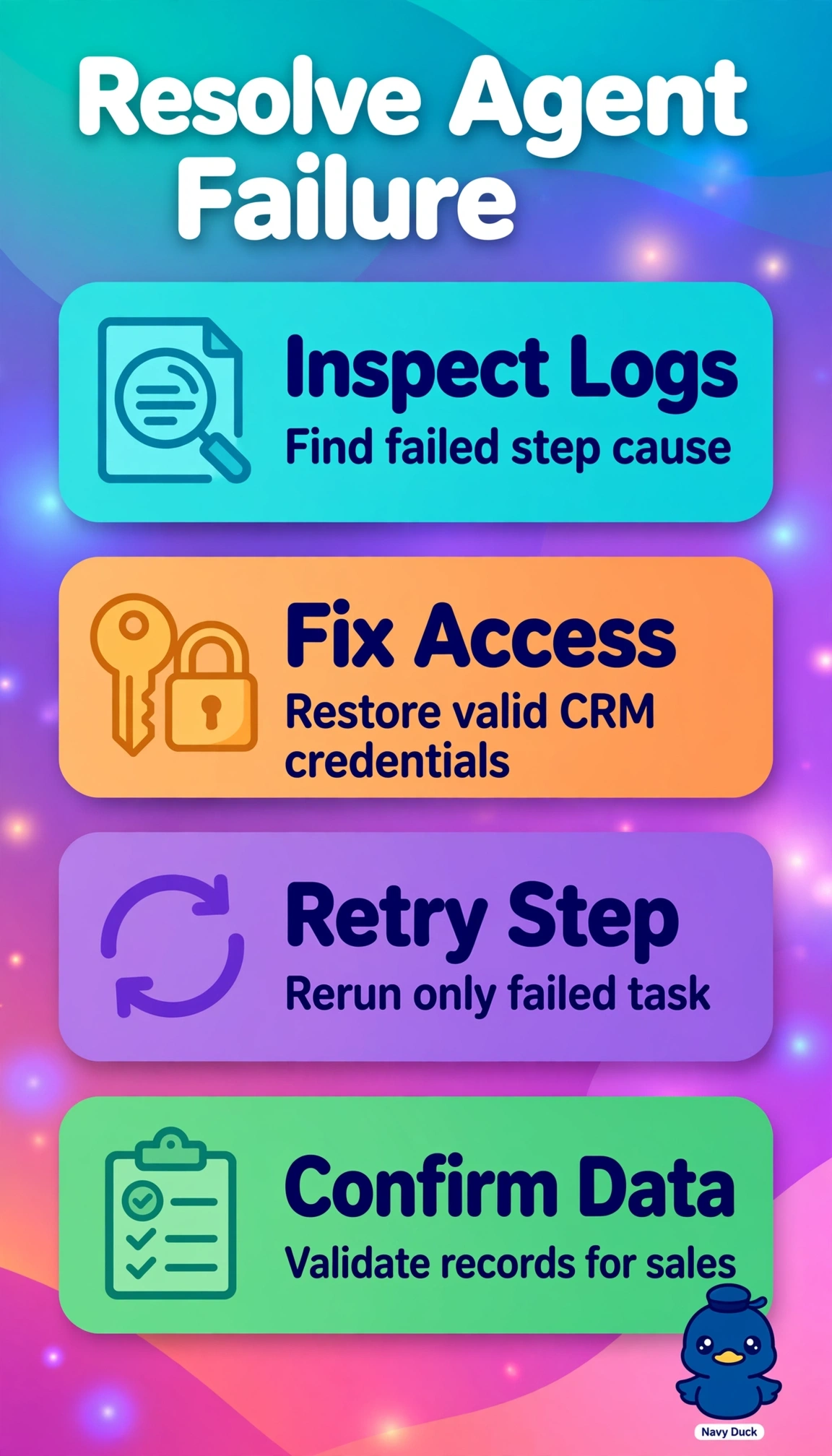
You're doing focused triage under a morning deadline. Targeted recovery is like replacing one flat tire instead of buying a new car. Fix the credential at the failed step and let queued work flow.
Full Explanation
The correct response succeeds because it applies targeted human-in-the-loop recovery: reviewing the failed CRM step logs confirms the 3 a.m. authentication errors stem from token rotation rather than data or logic errors, restoring valid credentials in the vault remediates that root cause, and retrying only that failed step preserves completed enrichment work and lets the already-queued downstream steps proceed in time for the 9 a.m. sales deadline. The full-restart approach fails on efficient resumption by discarding overnight progress and reprocessing all 500 records, which wastes compute and API quota and jeopardizes the SLA for consistency that checkpointed retry already provides. The backup-source approach fails on credential remediation by working around rather than fixing the rotated CRM token, leaving the authorized CRM path broken and risking schema, provenance, and compliance gaps in sales data. The immediate restore-and-retry approach fails on diagnosis by refreshing credentials and resuming without inspecting logs, so a misconfigured scope, rotated endpoint, or repeated rotation could cause another failure. For exams, favor scoped resume over full rerun when steps are queued and time-boxed, even if full reruns feel safer. In practice, verify the new token in the vault, test with one record, then release the queued step while watching auth success rate and queue drain before 9 a.m.