
A mid-size furniture retailer wants an agentic workflow for warehouse restocking that must split demand forecasts into purchasing, shipping, and staffing subtasks, order them by dependency, and replan quickly when shipment delays occur. Which design pattern should the designer select to align the workflow with these coordination needs?
Select an answer to reveal the explanation.
Short Explanation
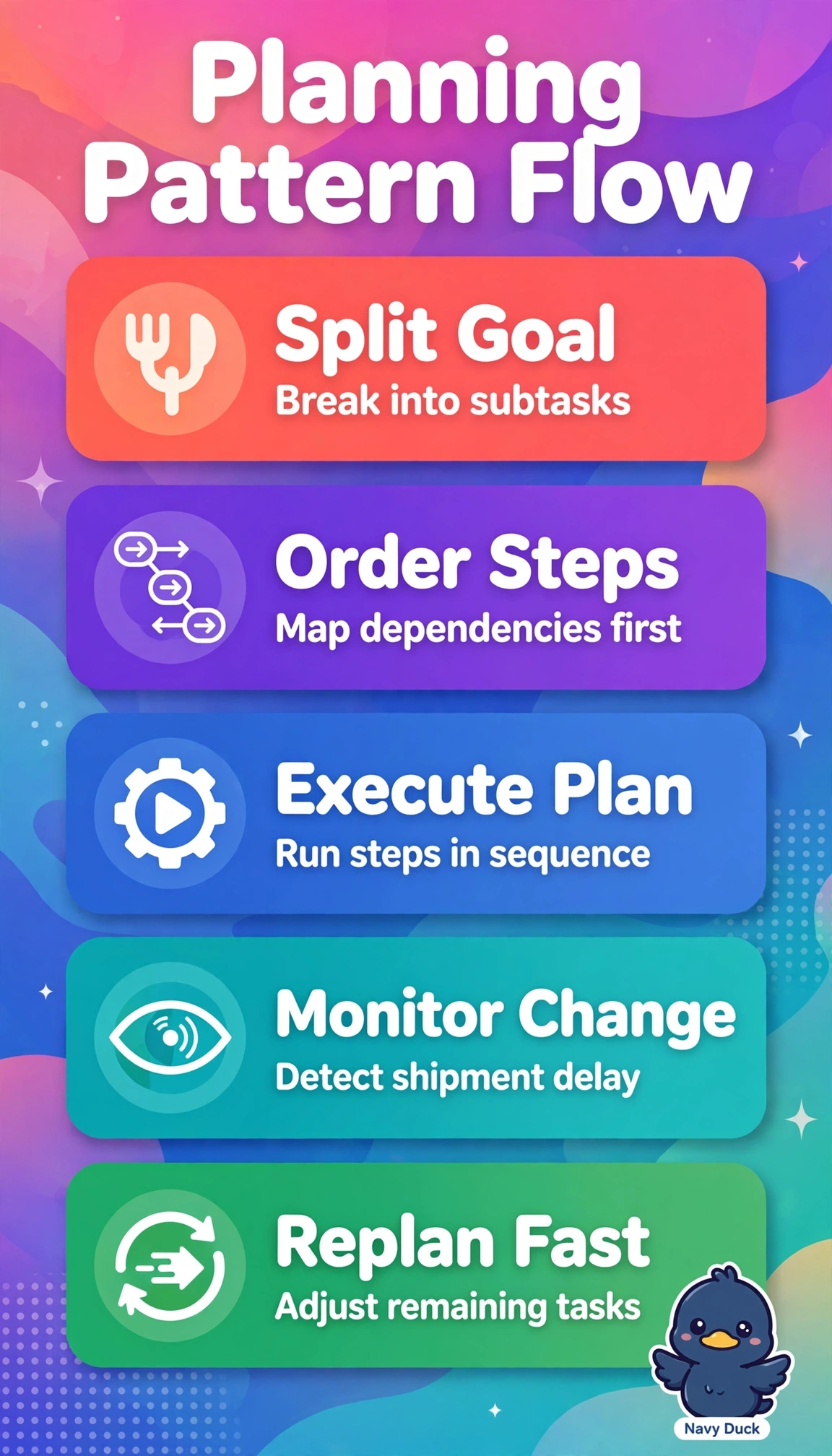
You've got a conductor job here, not just a soloist, since you're sequencing dependent work and replanning on the fly. That's exactly what the planning pattern handles best, breaking goals apart and reordering steps when reality shifts.
Full Explanation
The planning design is correct because the retailer needs all three coordination behaviors at once: decomposing demand forecasts into purchasing, shipping, and staffing subtasks, sequencing them by dependency so downstream work waits for prerequisites, and replanning quickly when shipment delays invalidate the sequence. The reflection design fails by concept because critiquing and revising drafts improves forecast quality but provides no mechanism for dependency ordering or event-triggered replanning, satisfying accuracy while missing orchestration. The tool-use design fails by concept because querying live inventory and tracking data improves grounding in current facts but does not decompose goals, order subtasks, or revise sequences, satisfying observability while missing coordination. The parallel multi-agent design fails by concept because assigning specialists to run purchasing, shipping, and staffing concurrently improves division of labor but replaces dependency-ordered sequencing and centralized replanning with independent parallel execution. An exam caveat is to avoid choosing a pattern only because it addresses one attractive restocking concern like accuracy, live data, or specialization; all three requirements of split, order, and replan must be met together. A practical check is to demand a visible dependency graph and inject a simulated shipment delay to verify downstream tasks automatically reorder.