
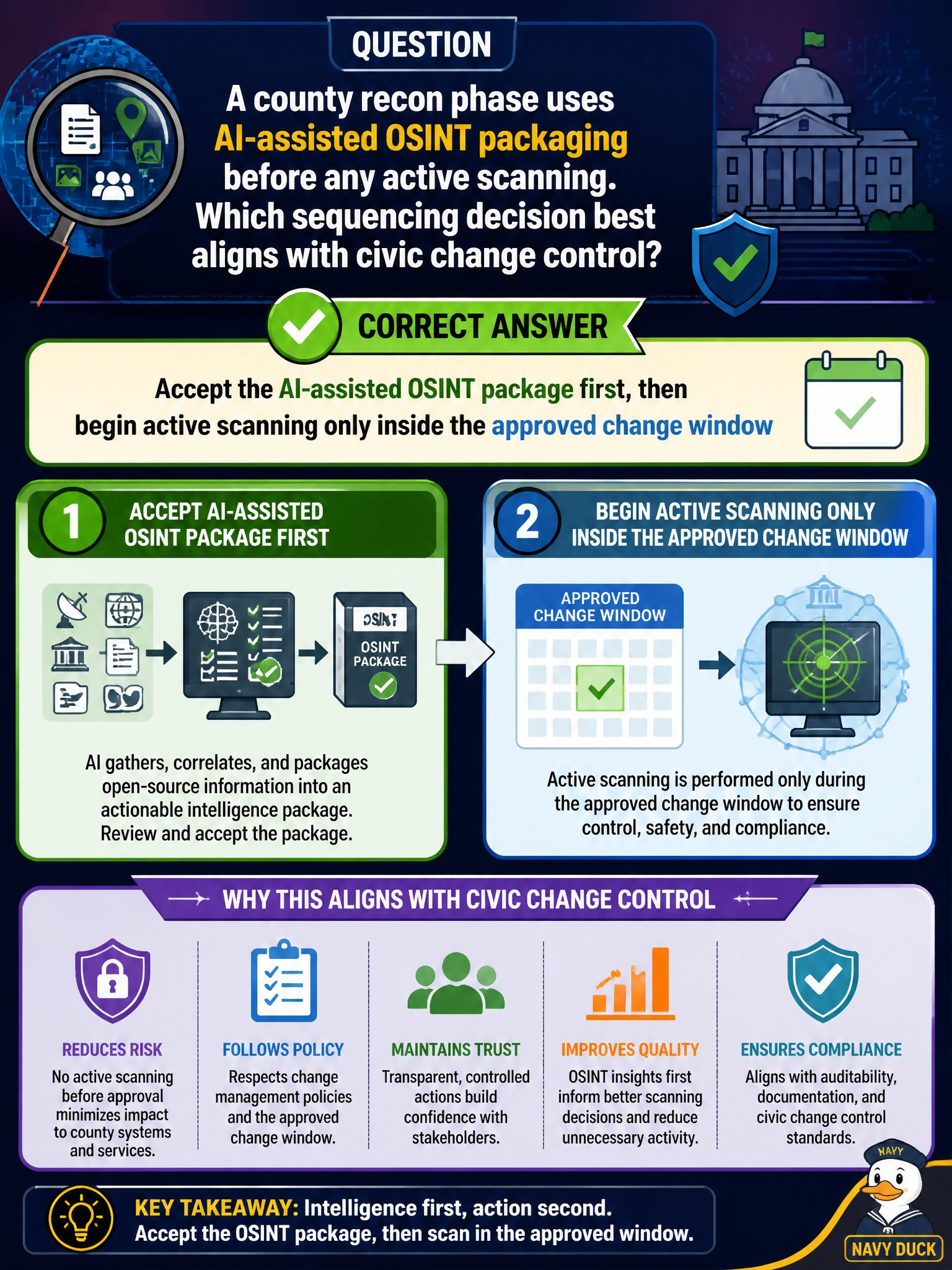
A county recon phase uses AI-assisted OSINT packaging before any active scanning. Which sequencing decision best aligns with civic change control?
Select an answer to reveal the explanation.
Short Explanation
Finish the homework before you knock on live doors. Get the AI-assisted OSINT package accepted, then scan only when change control says the window is open. Parallel 'save time' scanning is how counties surprise themselves.
Full Explanation
County recon sequencing under civic change control separates passive or authorized OSINT packaging from active scanning. AI-assisted OSINT can accelerate packaging, but it does not authorize network intrusion. The correct decision accepts the AI-assisted OSINT package first, then begins active scanning only inside the approved change window. That order keeps stakeholders aligned, preserves change tickets, and prevents 'we were just drafting OSINT' from becoming unauthorized live probing.
Starting aggressive port scans during OSINT drafting to save calendar time collapses phases and bypasses change control—calendar pressure is not authorization. Skipping the OSINT package to jump straight to production exploitation windows abandons scoping and intelligence that change boards and owners expect before intrusive work. Treating AI OSINT summaries as authorization to scan any cloud tenant citywide misreads both AI output and scope: a model summary is not a signed change ticket or a blank check across tenants.
Exam caveat: civic sequencing items reward finish-OSINT-then-scan-in-window patterns and punish parallel aggressive scanning justified by speed. Operational check: obtain package acceptance, confirm the change window and in-scope tenants, then start active scanning—and stop if the window or scope is unclear.