
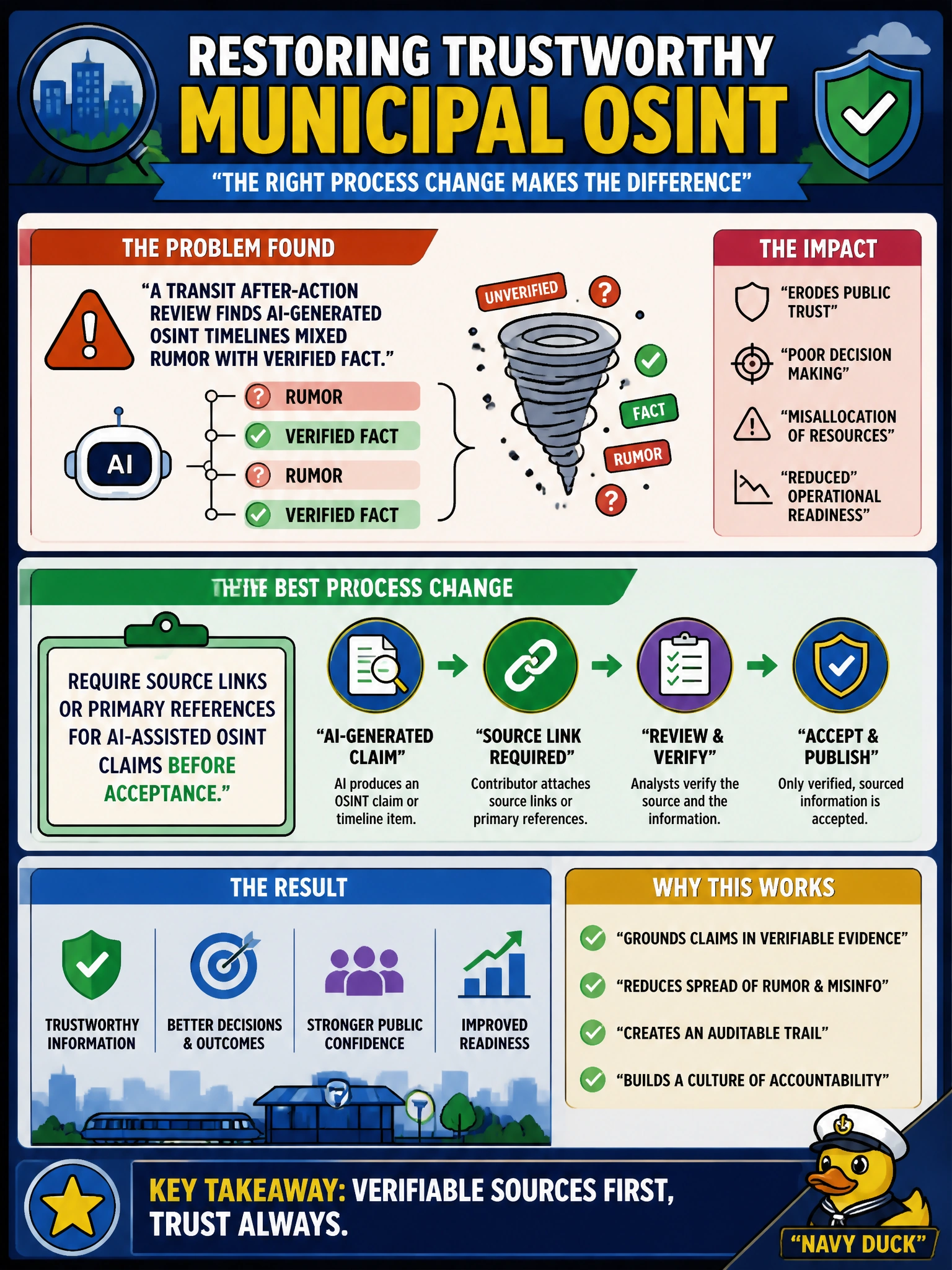
A transit after-action review finds AI-generated OSINT timelines mixed rumor with verified fact. Which process change best restores trustworthy municipal OSINT?
Select an answer to reveal the explanation.
Short Explanation
AI timelines love a good story—and rumor rides shotgun. Make every claim earn a source link before it hits the transit after-action deck. Confidence scores and snappy executive narratives are not evidence.
Full Explanation
Transit after-action products must separate verified fact from rumor, especially when AI-generated OSINT timelines are in the mix. Models are good at narrative continuity and weak at provenance; they will happily stitch compelling but unverified claims into a single timeline. The correct process change requires source links or primary references for AI-assisted OSINT claims before acceptance. That gate restores trustworthiness for municipal leadership briefings and prevents rumor from becoming institutional memory inside transit operations.
Accepting rumor because the narrative is compelling for executives fails evidence standards: executive interest does not convert gossip into fact. Disabling citation fields so reports stay short trades auditability for brevity and makes later challenge or correction nearly impossible. Trusting model confidence scores alone without checking origin documents fails because confidence is not citation—models can be confidently wrong about open-source claims.
Exam caveat: AI OSINT reliability questions typically hinge on mandatory sourcing before acceptance, not on narrative polish or confidence meters. Operational check: for every AI-assisted timeline claim in a transit AAR, require a clickable source or primary reference, mark unverified items clearly, and refuse to brief unverified rumor as fact.