
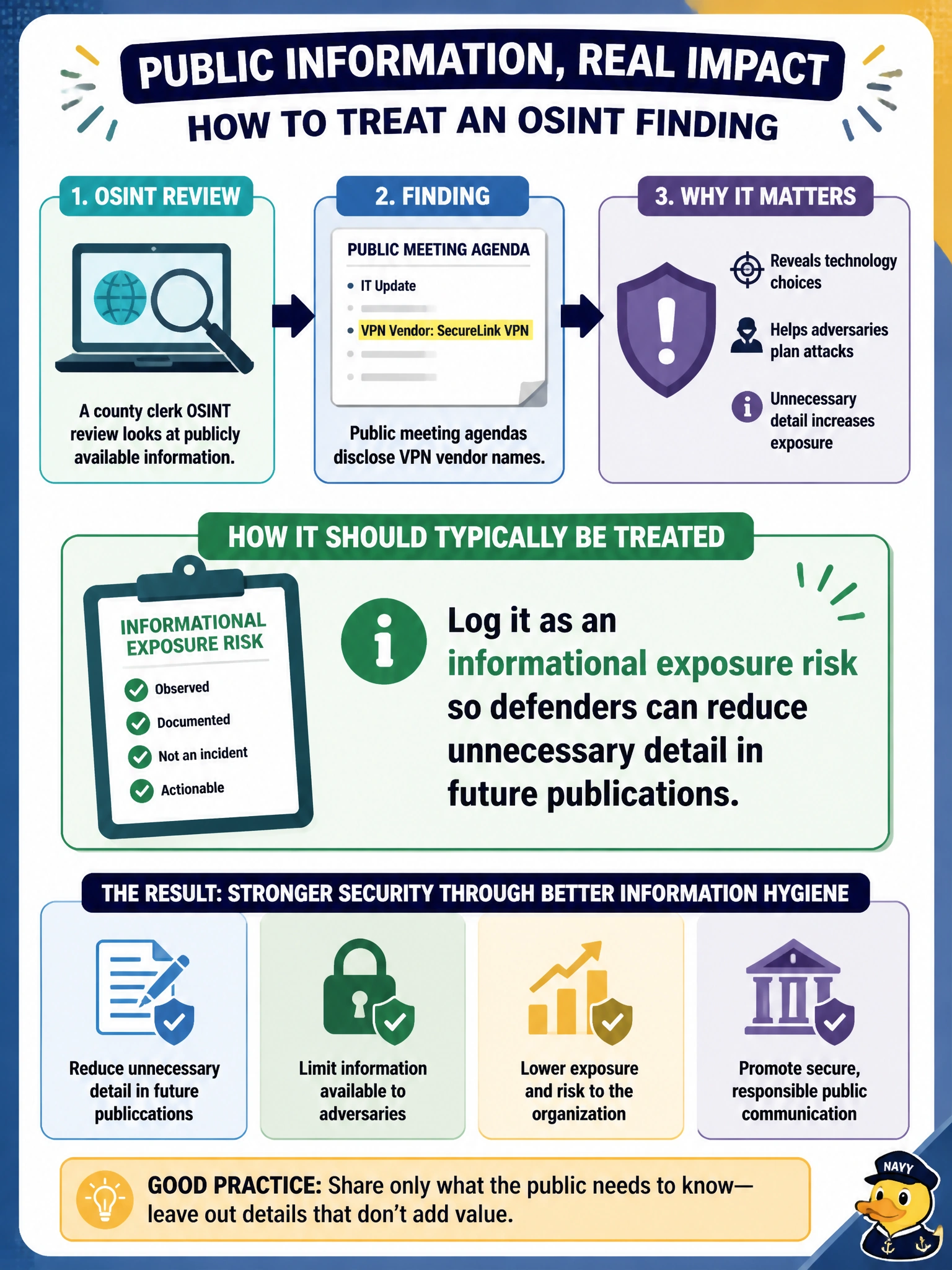
A county clerk OSINT review finds public meeting agendas that disclose VPN vendor names. How should that finding typically be treated?
Select an answer to reveal the explanation.
Short Explanation
Public agendas that name your VPN vendor are free intel for someone else's recon notebook. Log the exposure and tighten what you publish—don't pretend sunshine has no risk.
Full Explanation
When county clerk OSINT finds public meeting agendas that disclose VPN vendor names, the typical authorized handling is to log the item as an informational exposure risk so defenders can reduce unnecessary technical detail in future publications. Public civic documents can unintentionally enrich adversary recon notebooks. The assessment value is defensive publication hygiene, not a green light to attack production VPN infrastructure.
Ignoring the finding because public documents can never create security risk fails by concept: transparency and risk can coexist, and stack disclosure has operational value to adversaries. Immediately exploiting the named VPN in production without further authorization jumps from OSINT to unauthorized or out-of-phase attack. Deleting public agendas from the clerk website without process may violate records rules and skips governed remediation.
Exam caveat: Not every vendor name in a public PDF is equally sensitive; prioritize actionable overexposure such as VPN products, gateway hostnames, and diagram internals, and recommend redaction or abstraction standards. Remediation belongs to records and communications owners working with security—not unilateral silent deletion by testers. OSINT findings should cite the public document version and date.
Operational check: Open an informational finding with the agenda citation and recommended publication standard that omits product names where not required for public understanding; confirm IT and clerk stakeholders acknowledge the ticket; and verify a later agenda template removes unnecessary VPN stack detail.