
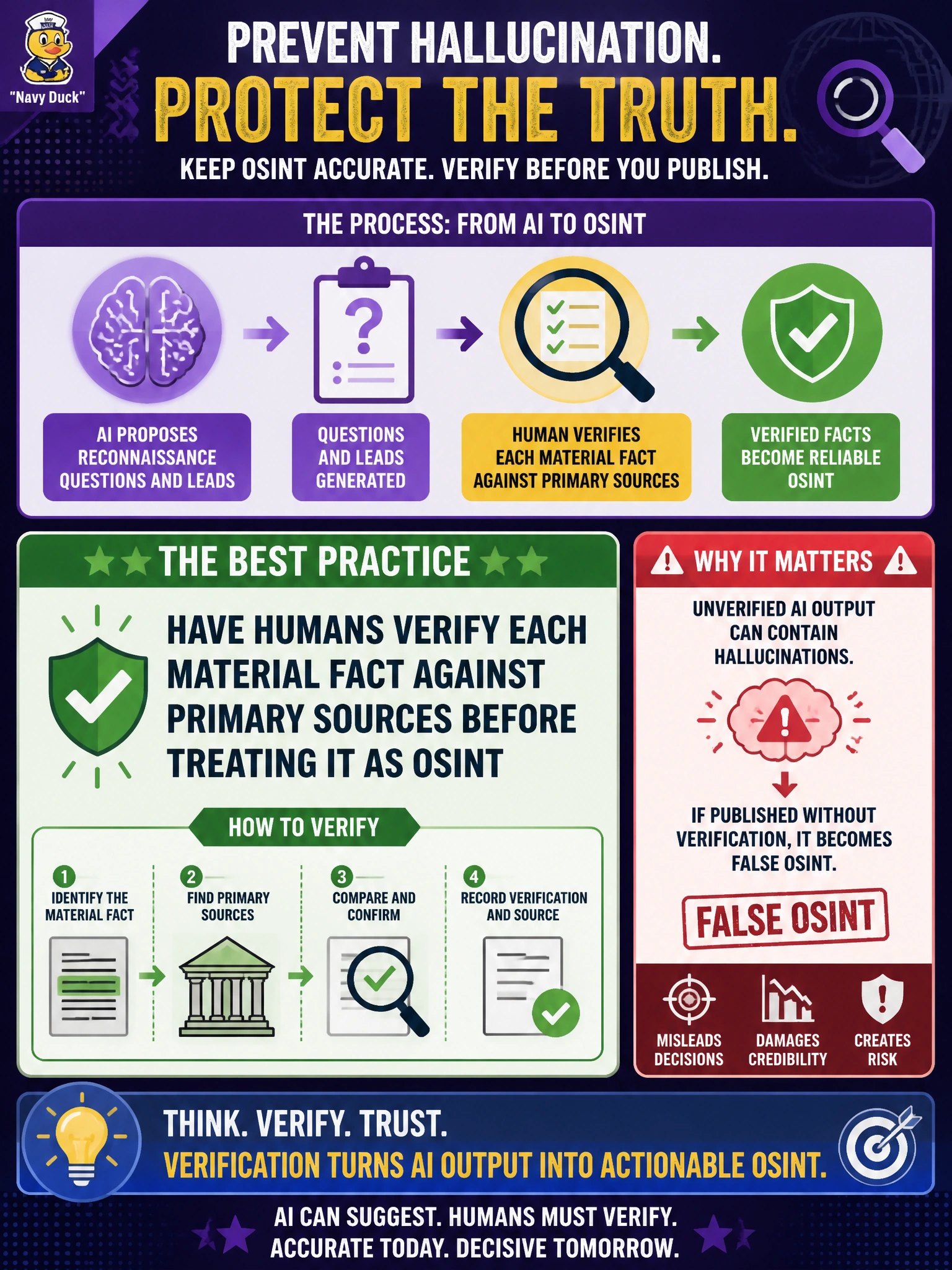
A transit purple team uses AI to propose reconnaissance questions and leads. Which practice best prevents hallucination from becoming false OSINT?
Select an answer to reveal the explanation.
Short Explanation
Treat the model like a junior intern with a creative streak—great for question lists, terrible as the final citation. Humans check primary sources before anything hits the report.
Full Explanation
AI can usefully propose reconnaissance questions and leads for a transit purple team, but models may hallucinate vendors, systems, relationships, or citations. The practice that prevents hallucination from becoming false OSINT is human verification of each material fact against primary sources before the claim is treated as a finding. Speed gains from AI drafting do not replace evidential discipline in civic assessments.
Accepting every AI claim as authoritative without citation fails by concept: it imports fiction into the intelligence record. Disabling all human review to hit reporting deadlines institutionalizes error. Preferring hallucinated vendor names because they sound sophisticated rewards fabrication and can misdirect expensive defensive work.
Exam caveat: Verification burden scales with decision impact—claims that drive active testing or public disclosure need stronger primary-source proof. AI may still help brainstorm query lists and cluster documents after humans anchor facts. Distinguish hypothesis for investigation from confirmed OSINT finding in notes and reports.
Operational check: For every AI-suggested entity or relationship that would appear in the report, require a link or screenshot of a primary public source; reject unsourced items; and spot-audit a sample of findings for fabricated URLs or vendors before client delivery.