
A city authorized assessment plans its reconnaissance phase. Which approach best places OSINT correctly before more active techniques?
Select an answer to reveal the explanation.
Short Explanation
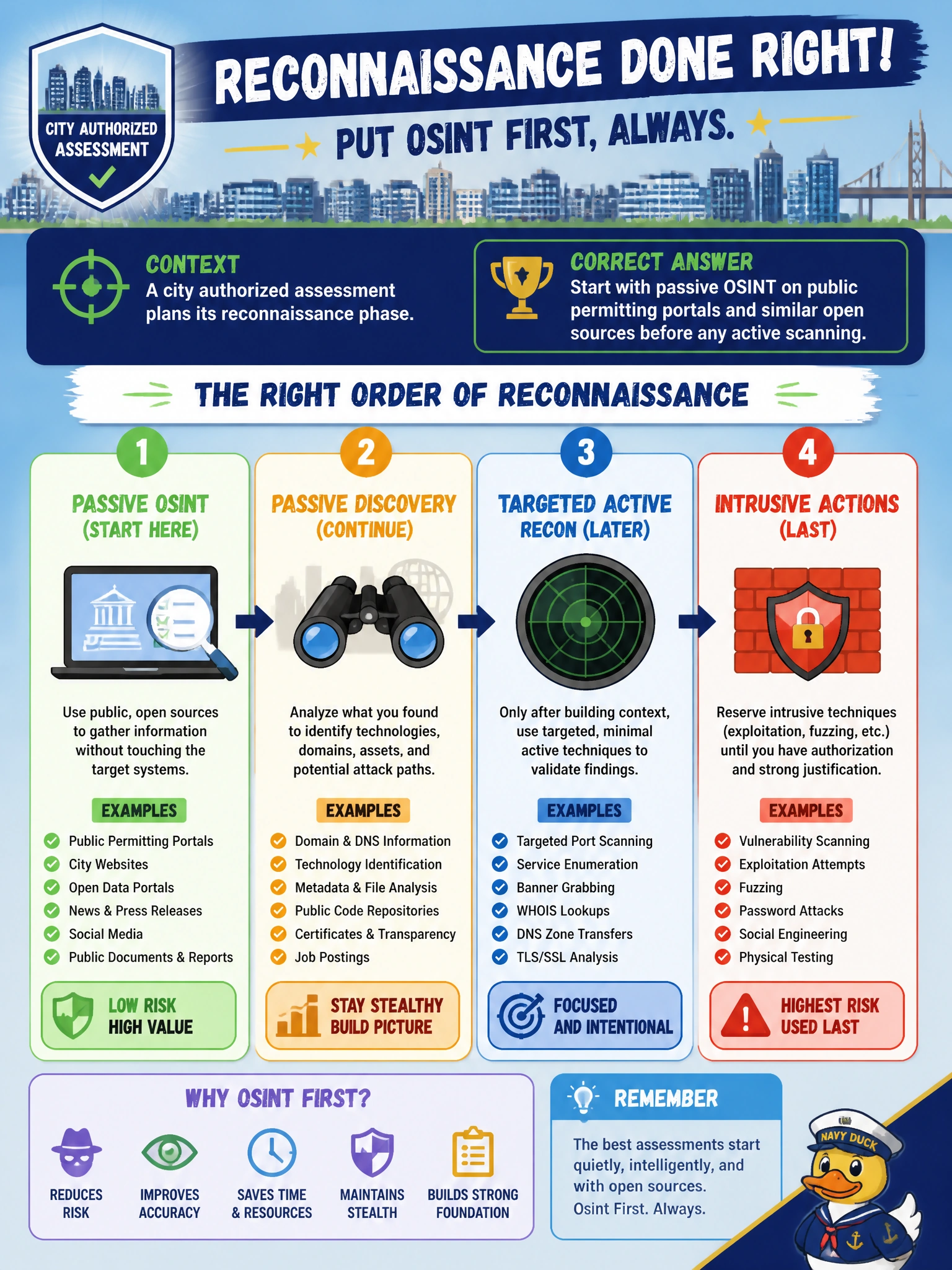
Look through the public windows before you knock on locked doors. Passive OSINT on permitting sites and open records comes first; active scanning waits for the ROE green light.
Full Explanation
Municipal authorized assessments typically sequence reconnaissance by starting with passive OSINT on public sources—permitting portals, transparency sites, published documents, and similar open material—before any active scanning or exploitation. That order reduces unnecessary interaction with production systems, clarifies what is already exposed, and informs later authorized techniques under ROE. Placing OSINT correctly at the front of recon is core to safe civic methodology and to GOAA-style use of AI for OSINT.
Beginning with aggressive exploitation of production databases then gathering public OSINT afterward inverts the methodology and maximizes harm and legal risk. Skipping recon to jump straight to web exploitation on live citizen portals abandons information-driven testing and endangers public-facing services. Treating OSINT as optional decoration after the final report is published denies defenders timely exposure findings and wastes the recon phase.
Exam caveat: Passive first does not mean infinite passive collection of resident PII or violation of platform rules. Some DNS or service queries sit near the passive/active boundary and still need ROE clarity. Citizen portals may be production critical—active testing against them requires explicit authorization and often change windows even after OSINT.
Operational check: In the assessment plan, list passive OSINT tasks and sources first, gate active scanning behind ROE checkpoints, and require that exploitation only proceeds in a later authorized phase with documented targets. Review early findings for public exposures that defenders can remediate without any exploit attempt.