
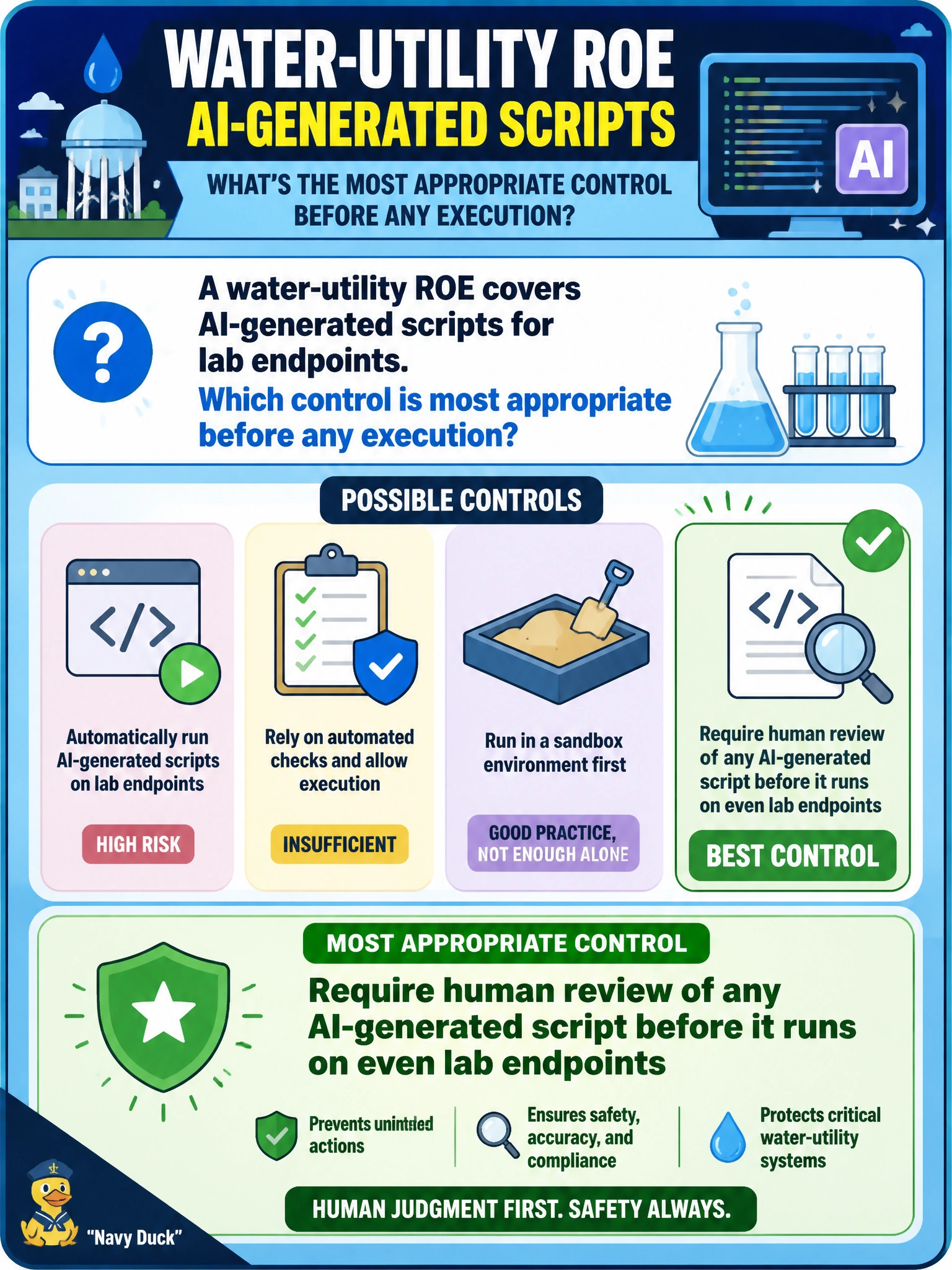
A water-utility ROE covers AI-generated scripts for lab endpoints. Which control is most appropriate before any execution?
Select an answer to reveal the explanation.
Short Explanation
AI drafts; humans green-light. Even on water-utility lab boxes, someone eyeballs the script before it runs. Auto-pilot into SCADA jump hosts is how you get a bad day at the plant.
Full Explanation
Water-utility ROE covering AI-generated scripts for lab endpoints should require human review of any AI-generated script before it runs—even on lab systems. Models can emit incomplete, hallucinated, or unexpectedly destructive logic; a human check confirms the script matches the authorized test intent, contains no surprise destructive calls, and will not pivot toward production-like SCADA interfaces. Human-in-the-loop is the primary pre-execution control.
Allowing the model to auto-run outputs on lab VMs without inspection trades safety for speed and can damage shared lab infrastructure or leak into poorly segmented networks. Emailing generated scripts to the entire utility staff for crowdsourced approval spreads potentially dual-use code and creates uncontrolled copies. Committing AI outputs directly to production SCADA jump hosts for 'realism' is a severe OT safety and integrity violation.
Exam caveat: most appropriate before any execution is mandatory human review—not auto-run, mass email, or production SCADA deployment.
Operational check: water-utility lab checklists should include reviewer signature, static inspection notes, allowed host list, and rollback steps before any AI-authored script executes; forbid promotion paths from lab folders into SCADA jump-host repositories.