
A transit blue team reviews threat reports describing AMSI-related bypass themes affecting Windows fleets. How should civic defenders treat that information at a concept level?
Select an answer to reveal the explanation.
Short Explanation
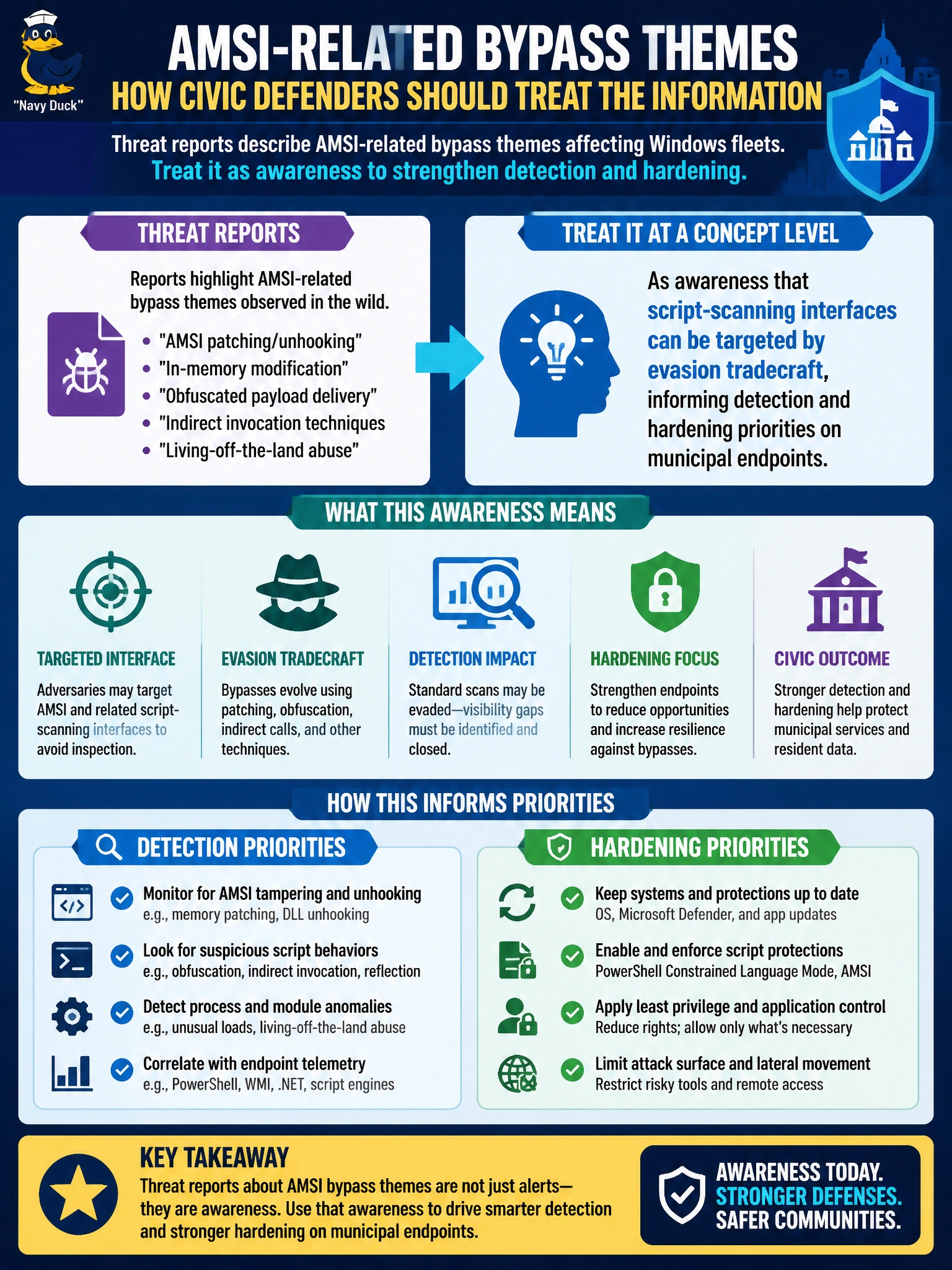
AMSI is one of the windows looking into script mischief; attackers try to pull the blinds. Defenders need the concept so they can hunt and harden—not a copy-paste bypass kit on the intranet. Keep the lesson at recognition and control improvement.
Full Explanation
Transit blue teams should treat AMSI-related bypass themes in threat reports as awareness that script-scanning interfaces can be targeted by evasion tradecraft, informing detection and hardening priorities on municipal endpoints. Antimalware Scan Interface visibility into script content is a defensive control surface; adversaries research ways to reduce that visibility. Concept-level defender response is to prioritize telemetry, attack-surface reduction, constrained language modes where appropriate, and behavioral detections—not to redistribute bypass implementations.
Publishing working AMSI bypass source code on the transit intranet turns a defensive briefing into an unauthorized how-to kit and exceeds responsible awareness scope. Banning PowerShell from all change-management runbooks is a blunt overreaction that can break legitimate municipal automation without addressing behavioral detection gaps. Dismissing AMSI as mainframe-only is factually wrong for Windows endpoint fleets.
Exam caveat: concept-level AMSI items want defensive awareness and hardening priorities, not exploit publication or absolute PowerShell bans.
Operational check for transit blue teams: inventory script execution paths; ensure AMSI-related telemetry reaches the SIEM where available; apply ASR and application control; brief leadership without distributing bypass code; and validate detections in isolated labs under ROE rather than on production buses and operations hosts.