
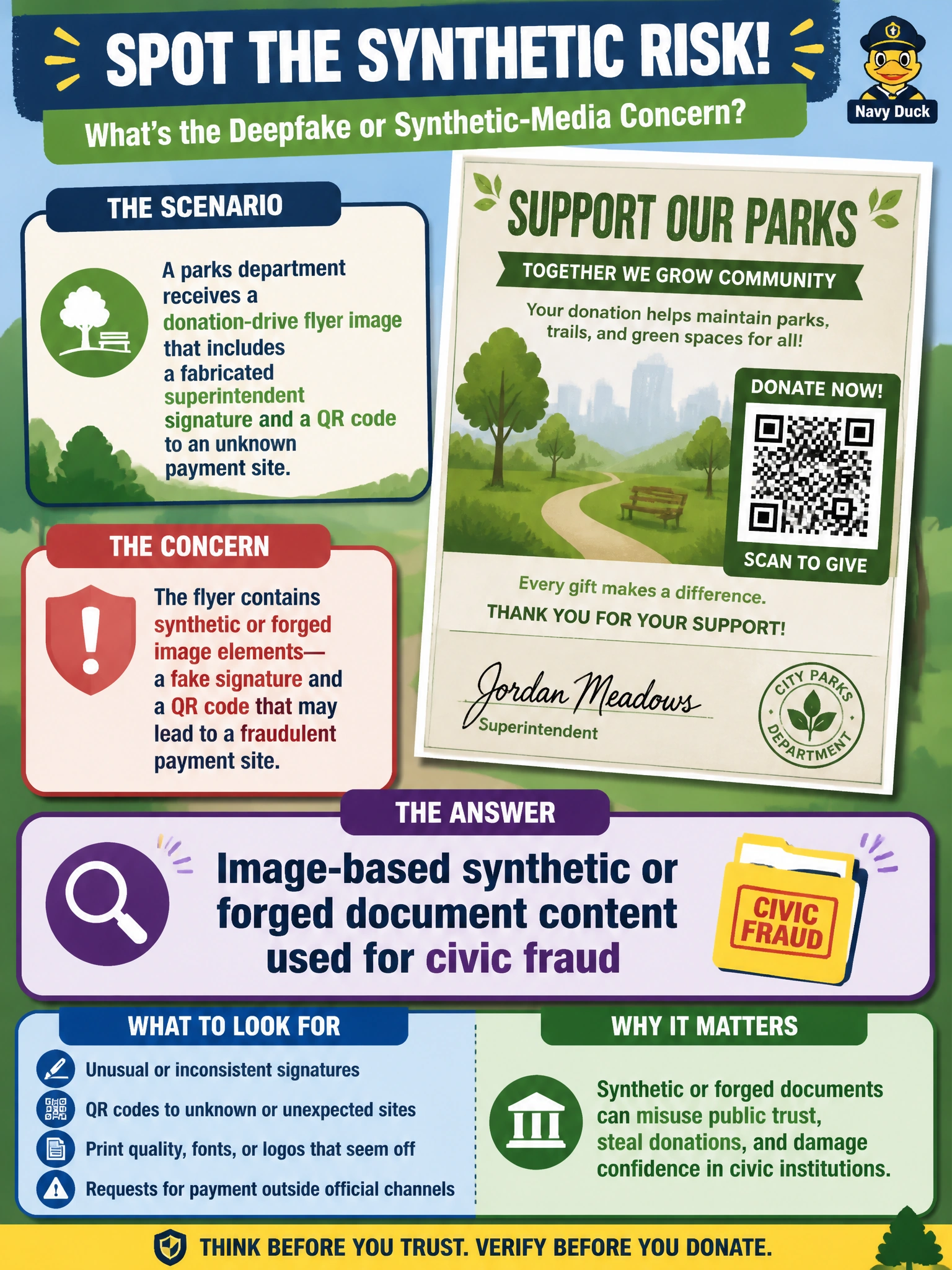
A parks department receives a donation-drive flyer image that includes a fabricated superintendent signature and a QR code to an unknown payment site. Which deepfake or synthetic-media concern does this primarily illustrate?
Select an answer to reveal the explanation.
Short Explanation
A glossy flyer with a fake signature is still a deepfake-adjacent fraud trick—just on paper (or pixels) instead of a talking head. Image synthesis and forged document graphics can push residents toward bad donation links. Treat unexpected payment artwork as a verify-the-source problem.
Full Explanation
A parks-department donation-drive flyer that includes a fabricated superintendent signature and a QR code to an unknown payment site primarily illustrates image-based synthetic or forged document content used for civic fraud. Synthetic-media and deepfake-adjacent risks are not limited to talking heads: still-image manipulation, signature fabrication, and branded graphic forgery can push residents toward fraudulent payment destinations while looking official. The modality here is image/document synthesis supporting social engineering, distinct from live video or radio-audio cloning.
Live lip-sync video of the superintendent at a council meeting would be a talking-head video deepfake scenario, which the stem does not describe. Audio cloning of a weekly radio segment is an audio modality problem, not a flyer with a forged signature and QR code. In-memory process injection against park kiosk PCs is an endpoint defense-evasion technique and does not explain forged fundraising artwork.
Exam caveat: synthetic-media questions span modalities. Candidates who always pick 'video deepfake' miss image-based document fraud that is equally relevant to municipal communications and parks fundraising.
Operational check for parks and municipal communications teams: validate unexpected donation materials through official channels; avoid scanning untrusted QR codes; compare branding and payment URLs to known-good portals; preserve the flyer for analysis; and publish guidance so residents confirm fundraising appeals on the city's authenticated website before sending money.