
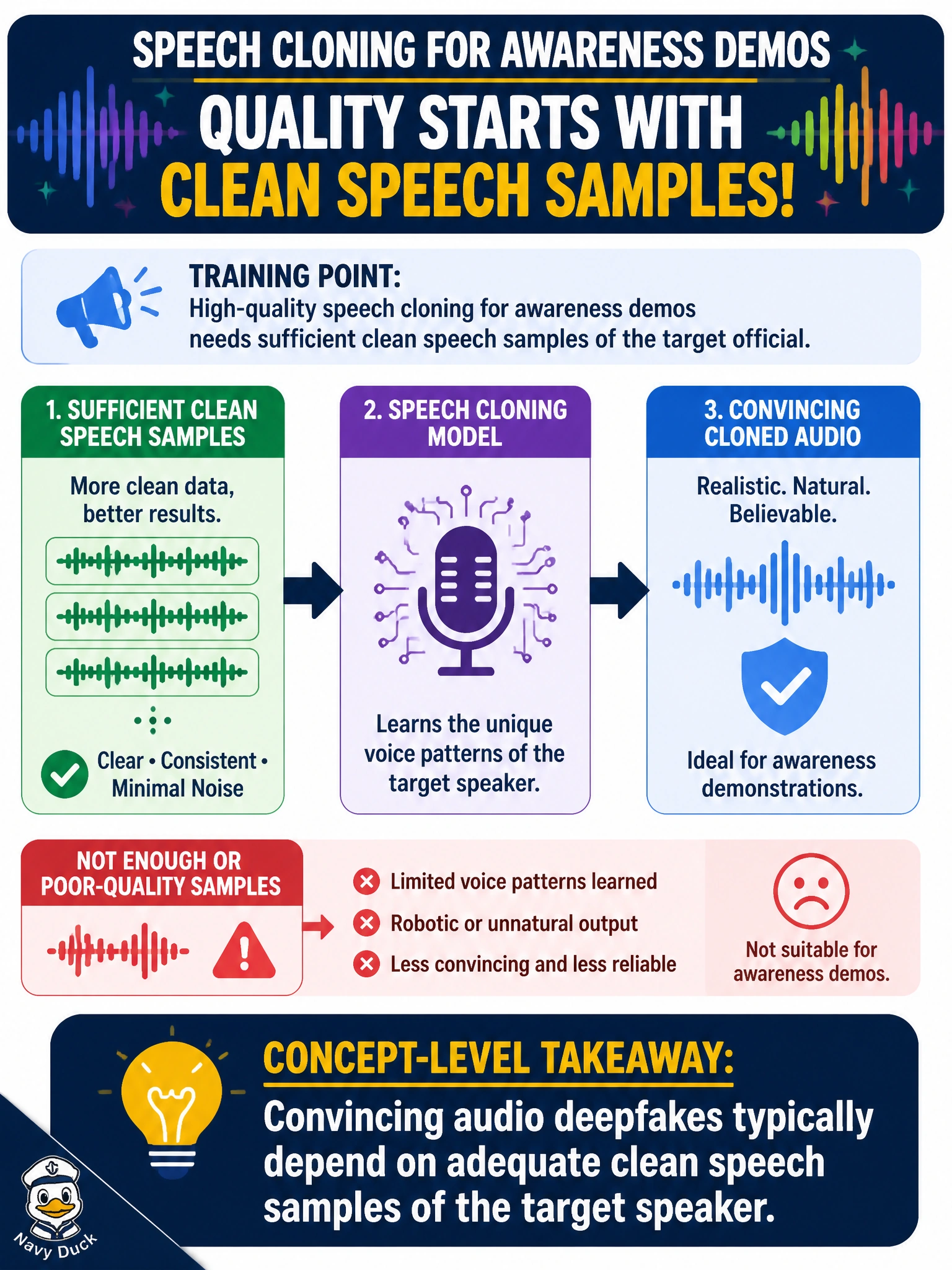
A county clerk training explains that high-quality speech cloning for awareness demos needs sufficient clean speech samples of the target official. Which concept-level takeaway is correct?
Select an answer to reveal the explanation.
Short Explanation
Voice clones aren’t magic from a passport photo—they depend on enough clean speech from the real speaker. As you train clerks, understanding this dependency helps you recognize why public speeches and hearings can become training-day risks.
Full Explanation
County clerk training correctly emphasizes that convincing audio deepfakes typically depend on adequate clean speech samples from the target speaker. Public speeches and hearings can supply that audio, making them a training-day risk; understanding the sample dependency matters more than learning production recipes. The claim that speech cloning never needs audio samples and works from silent still photos alone confuses modalities: photos do not substitute for speech in audio cloning. The claim that only encrypted VPN logs are required invents an irrelevant data source. The claim that clean speech samples are irrelevant because modern systems generate voices without learning a speaker’s distinctive traits denies the conceptual role of speaker modeling. Exam caveat: audio deepfake quality conceptually depends on clean target speech samples—not still photos alone, VPN logs, or voices generated without learning speaker traits. Practical check: teach clerks the sample-dependency concept without publishing cloning recipes, reduce unnecessary high-quality speech publishing where policy allows, use consented or synthetic voices for demos, and pair awareness with verification procedures for voice-authorized actions in clerk and finance workflows.