
A court-clerk modernization team maps ‘assistant’ tools that call ticketing APIs versus pure chat summarizers. What distinction should they document?
Select an answer to reveal the explanation.
Short Explanation
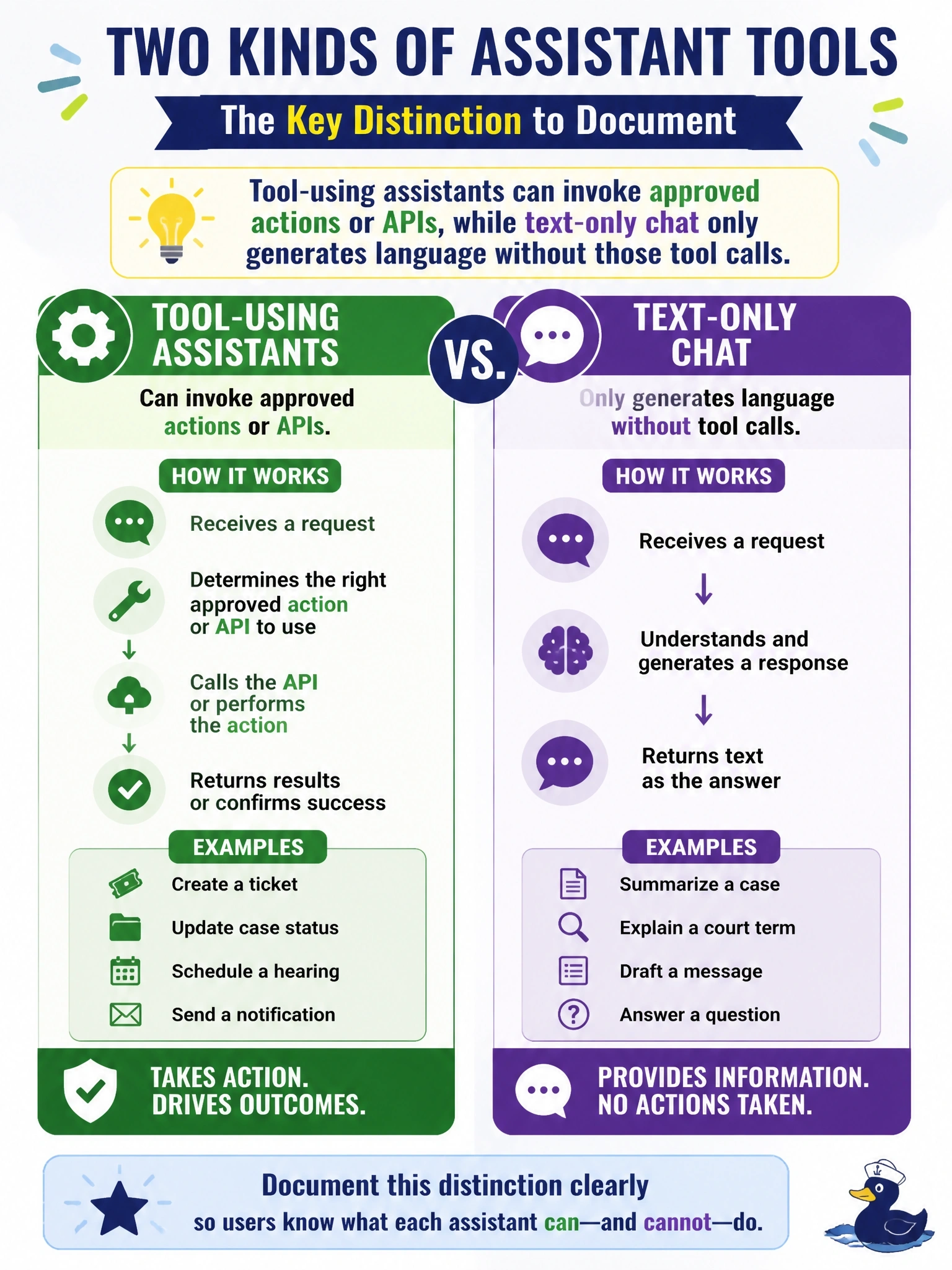
You should document that summarizers talk, while tool-using assistants can also press the ‘open ticket’ button. Write that difference down before someone expects a chat box to update case status by magic.
Full Explanation
The distinction to document is that tool-using assistants can invoke approved actions or APIs, while text-only chat only generates language without those tool calls. Summarizers condense or answer in prose; tool-using assistants can open tickets, update case status, or call governed endpoints when permissions allow. Clerks need that distinction before expecting a chat box to mutate records by magic.
The claim that API-calling assistants are illegal for all municipal clerks under every jurisdiction is an overbroad false absolute and not the conceptual distinction requested. The claim that text-only chat always executes database writes that assistants cannot perform reverses the actual capabilities. The claim that assistants and summarizers are identical because both require deepfake video engines invents an irrelevant media dependency.
Exam caveat: modernization items contrast language-only generation with tool/API-calling assistants; legality absolutes and deepfake requirements are distractors.
Operational check: catalog which clerk workflows need summarization only versus ticket/API actions, gate tool calls behind role-based auth and audit logs, require human confirmation for status-changing actions, and update training so staff do not assume every chatbot can write to the case-management system.