
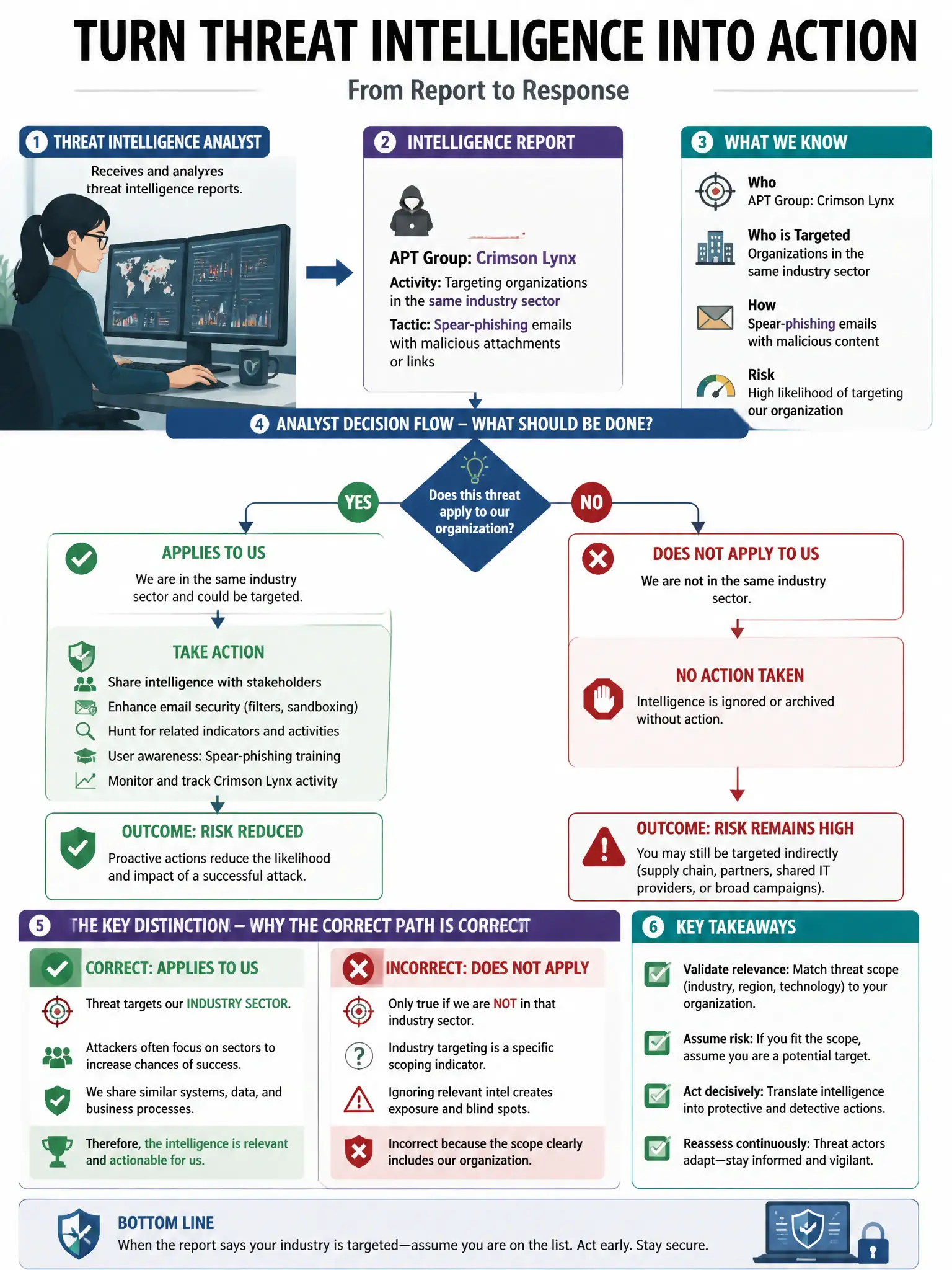
A threat intelligence analyst receives a report indicating that a specific APT group is targeting organizations in the same industry sector using spear-phishing emails with malicious PDF attachments. How should a defensive SOC operationalize this intelligence?
Select an answer to reveal the explanation.
Short Explanation
Here's the deal — you operationalize threat intel by turning the report into real defenses: pull out indicators like sender domains, PDF hashes, and IPs, then feed them into SIEM rules, email filters, and blocklists. You also brief users on that exact spear-phishing style so they know what to spot.
Full Explanation
The correct approach is to extract actionable indicators such as email sender domains, PDF hash signatures, and infrastructure IPs, then add them to SIEM detection rules, email security filters, and network blocklists while briefing users on the specific spear-phishing style. This is correct because operationalizing threat intelligence means converting threat reports into concrete defensive actions: extracting technical indicators for automated detection, updating email security controls, adding known malicious domains or IPs to blocklists, and conducting targeted user awareness to recognize the specific attack style described. Publishing the report on the company intranet and waiting for the attack is wrong because simply publishing a report without extracting actionable controls provides no defensive benefit. Contacting the APT group directly is wrong because contacting threat actors directly is not a defensive strategy and is potentially dangerous. Immediately shutting down all email systems is wrong because shutting down email eliminates a critical business communication channel; targeted controls are more appropriate than blanket disruption.