
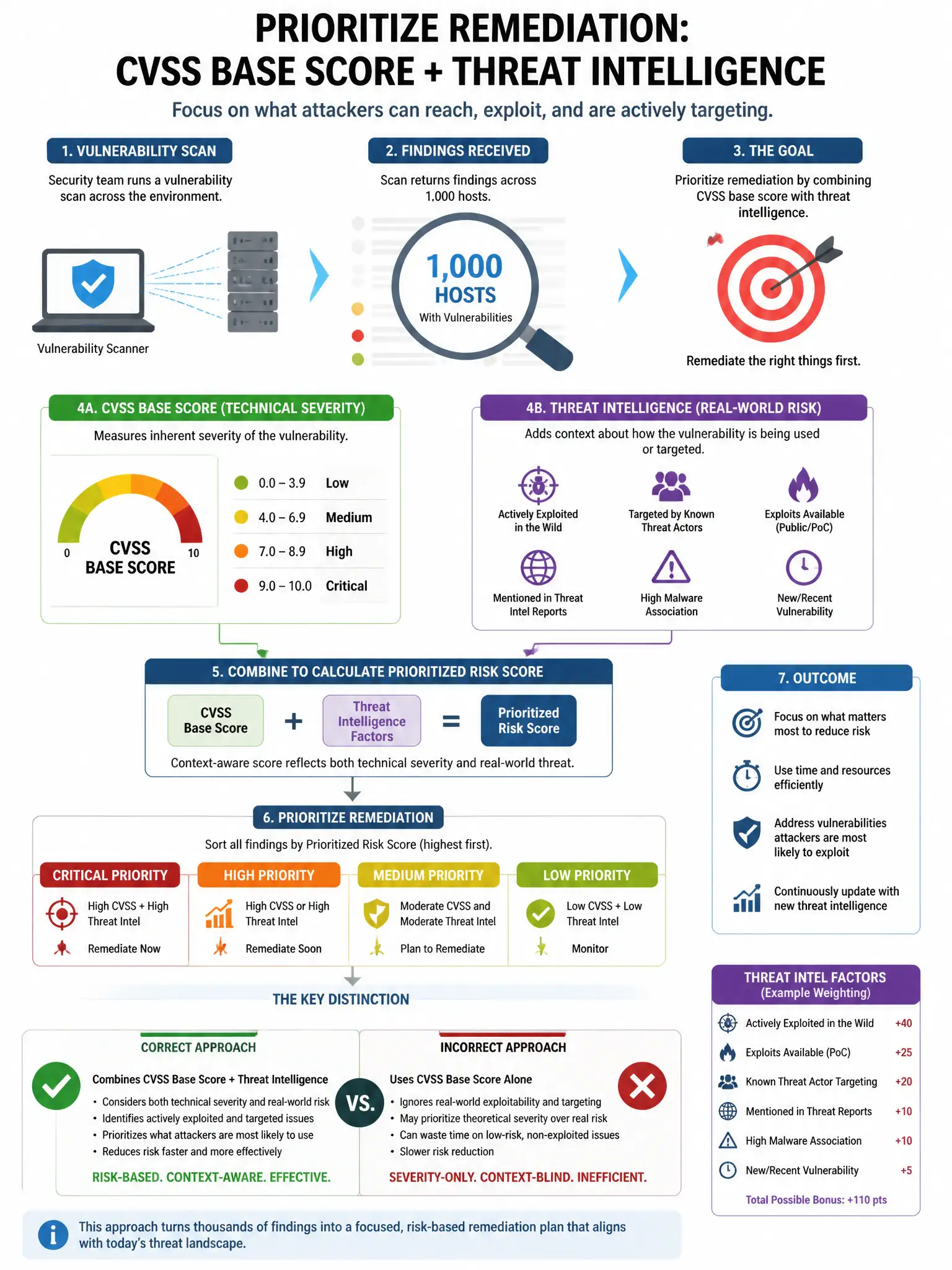
A security team conducts a vulnerability scan and receives findings across 1,000 hosts. They want to prioritize remediation using the CVSS base score combined with threat intelligence. Which CVSS 3.1 metric most influences exploitability?
Select an answer to reveal the explanation.
Short Explanation
Here's the deal — when you're prioritizing remediation, Attack Vector is the metric that most influences exploitability because a network-based attack path lets attackers reach the flaw from far away, expanding the attacker pool and risk. Scope, Integrity Impact, and Privileges Required alone don't answer how easily you can reach and exploit the vulnerability.
Full Explanation
The Attack Vector metric is correct because it is a critical exploitability metric; a Network value for Attack Vector means the vulnerability is exploitable over the internet without physical or network adjacency requirements, dramatically increasing the attacker pool and risk. The Scope metric is wrong because it affects the potential impact breadth but is an impact factor, not the primary exploitability factor. The Integrity Impact metric is wrong because it describes potential consequences but is an impact metric, not an exploitability metric. The Privileges Required alone option is wrong because Privileges Required is one of several exploitability metrics but alone does not determine overall exploitability; Attack Vector, Attack Complexity, User Interaction, and Privileges Required all contribute.