
A parks department tunes Defender alert suppression for known vulnerability-scanner noise. What operational practice is that?
Select an answer to reveal the explanation.
Short Explanation
Known vuln-scanner chatter shouldn't bury real parks alerts—tune suppression for that noise, not for the whole city. Blanket mute and 'turn Defender off for pen-test week' are how real hits get missed. Filter the false friends.
Full Explanation
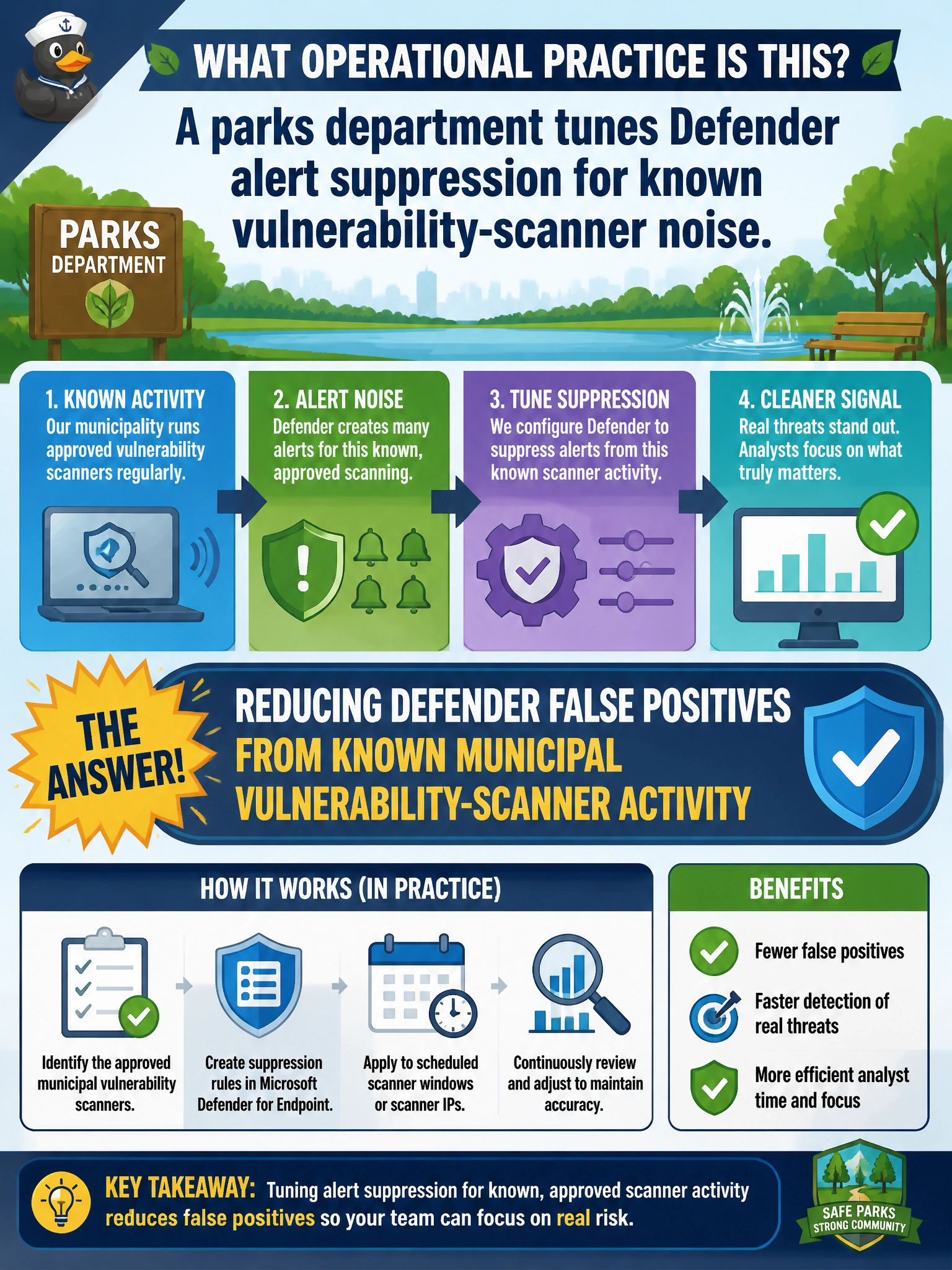
Tuning Defender alert suppression for known vulnerability-scanner noise is an operational practice that reduces false positives from authorized municipal scanner activity so parks analysts can see real threats. Scheduled scanners generate predictable signatures (port sweeps, web probes, credentialed checks from known scanner subnets). Documented suppressions scoped to those sources and time windows cut noise without globally muting Defender. The goal is signal quality for the parks department SOC queue, not the absence of tickets.
Suppressing all Defender alerts citywide so parks never sees another ticket fails monitoring: citywide mute hides ransomware, identity attacks, and misconfigurations across every department. Allowlisting every Internet IP the scanner might ever use without review fails change control—scanner egress can change, and overly broad allowlists become attacker cover if hijacked or misdocumented. Turning off Defender for Cloud during annual penetration-test week fails continuity: pen-tests are exactly when you want detection validation; prefer coordinated test windows with temporary, scoped suppressions and detection efficacy checks rather than disabling the product.
Exam caveat: Suppression is not the same as fixing root causes or accepting risk formally. Over-suppression creates blind spots; under-documentation makes audits fail. Prefer suppressions tied to rule ID, source IP/ASN, resource scope, and expiry—with owners who must renew.
Operational check: Inventory authorized parks/city scanners and their source ranges; create scoped Defender suppressions with ticket references and review dates; after the next scan cycle, confirm noisy alerts dropped while a known-good detection still fires; and report suppression inventory in operational reviews so mute lists do not grow forever.
Prefer to study offline? Printable PDF study book + test engine ($7.50, unofficial). These questions stay free here.