
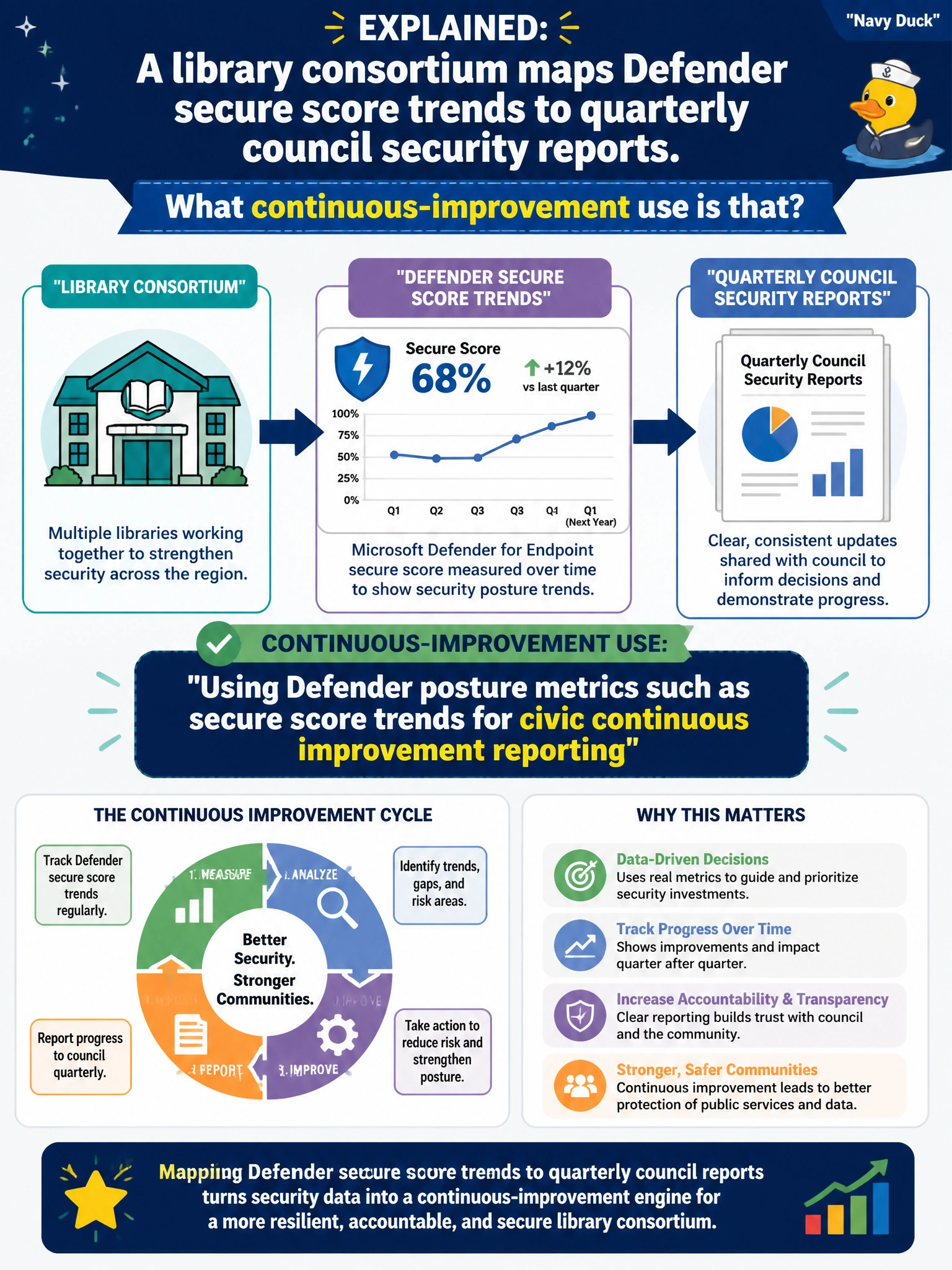
A library consortium maps Defender secure score trends to quarterly council security reports. What continuous-improvement use is that?
Select an answer to reveal the explanation.
Short Explanation
Council wants a trend line, not vibes—map Defender secure score over quarters for the library tenant. Mislabeling secure score trends as threat alerts, vulnerability findings, or identity signals isn't your council continuous improvement reporting. Posture metrics tell the story.
Full Explanation
Mapping Defender secure score trends to quarterly council security reports uses posture metrics for civic continuous improvement. Secure score and related recommendation trends show whether the library consortium's Azure controls are strengthening, stagnating, or regressing over time. Council and library boards need trend lines tied to remediation programs—not a single snapshot—so funding and priorities track measurable posture change across member libraries and shared subscriptions. Using Defender threat detection alerts such as secure score trends for civic continuous improvement reporting mislabels posture metrics as alert investigation; threat detection tracks active attacks rather than posture metric trends and does not measure council security improvement. Checking Defender vulnerability findings such as secure score trends for civic continuous improvement reporting confuses finding-level backlog with posture metrics; vulnerability details list specific remediation items rather than overall posture metric trends for council security reporting. Monitoring Defender identity signals such as secure score trends for civic continuous improvement reporting mistakes authentication activity for posture metrics; identity signals track sign-in activity rather than Defender posture metrics for council security reporting. Exam caveat: Secure score is a useful directional metric but is not a complete risk register. Weight findings by asset criticality (ILS, patron PII, payment systems) and do not chase score points that do not reduce material risk. Also explain score methodology changes so trend breaks are not misread as sudden compromise or sudden perfection. Operational check: Export or workbook secure score monthly; chart quarterly trends for council packets with top open recommendations, owners, and ETA; include all production library subscriptions in the aggregate; and annotate major IaC or Defender enablement projects so leadership can correlate investment with posture movement.
Prefer to study offline? Printable PDF study book + test engine ($7.50, unofficial). These questions stay free here.