
A transit fusion center compares keyword regex enrichment versus semantic similarity over ticket text. Which contrast is most accurate?
Select an answer to reveal the explanation.
Short Explanation
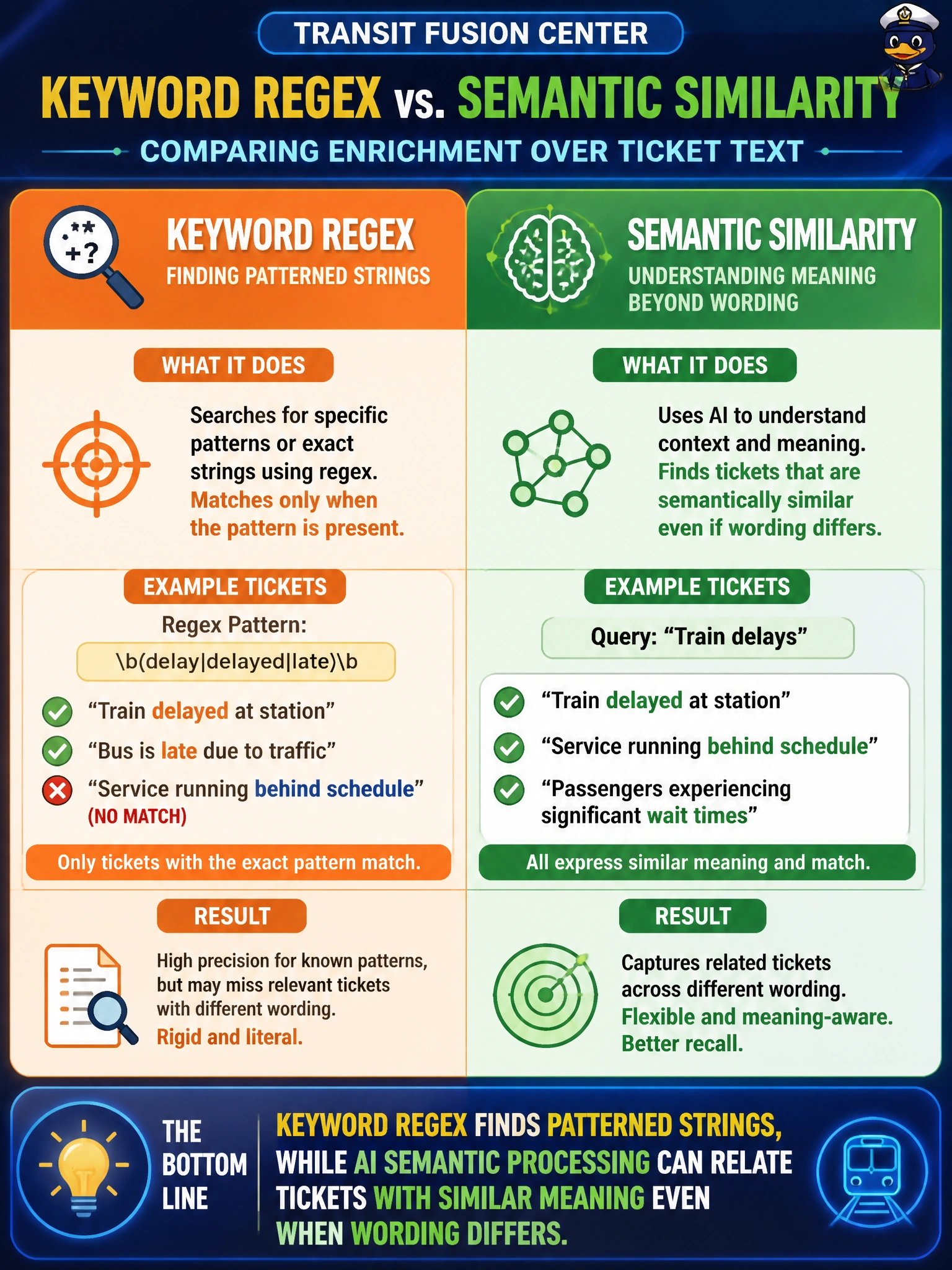
Regex is the exact badge number check; semantic similarity is recognizing two incident write-ups mean the same mess even if the wording differs. You'll spot the flip because regex stays for patterns like plates and semantics stays for meaning when wording differs.
Full Explanation
A transit fusion center comparing keyword regex enrichment with semantic similarity over ticket text should treat them as different tools: keyword regex finds patterned strings, while AI semantic processing can relate tickets with similar meaning even when wording differs. Regex excels at badge numbers, IDs, and fixed formats in civic tickets; semantic similarity helps cluster paraphrased incident narratives. Accurate contrast prevents replacing one with the other wholesale.
Why the other options fail by concept: Claiming keyword regex relates tickets with similar meaning, while semantic processing finds patterned strings even when wording differs is backwards—regex finds patterned strings, while semantic processing relates tickets with similar meaning even when wording differs. Claiming keyword regex groups tickets by vector distance, while semantic similarity matches exact route codes with patterned expressions swaps the tools—grouping by vector distance is semantic similarity, while matching exact codes with patterned expressions is keyword regex. Saying keyword regex interprets paraphrased fare reports, while semantic processing extracts plate numbers using regular expressions is wrong—interpreting paraphrases across different wording is semantic similarity, while extracting plate numbers with regular expressions is keyword regex work.
Exam caveat: semantic matches can group unrelated tickets if similarity thresholds are loose; regex can miss paraphrases—fusion centers often need both with human review. Operational check: for transit ticket enrichment, keep regex for stable IDs and formats, use semantic similarity for narrative clustering with tuned thresholds, and sample false groupings before automating escalation.
Prefer to study offline? Printable PDF study book + test engine ($7.50, unofficial). These questions stay free here.