
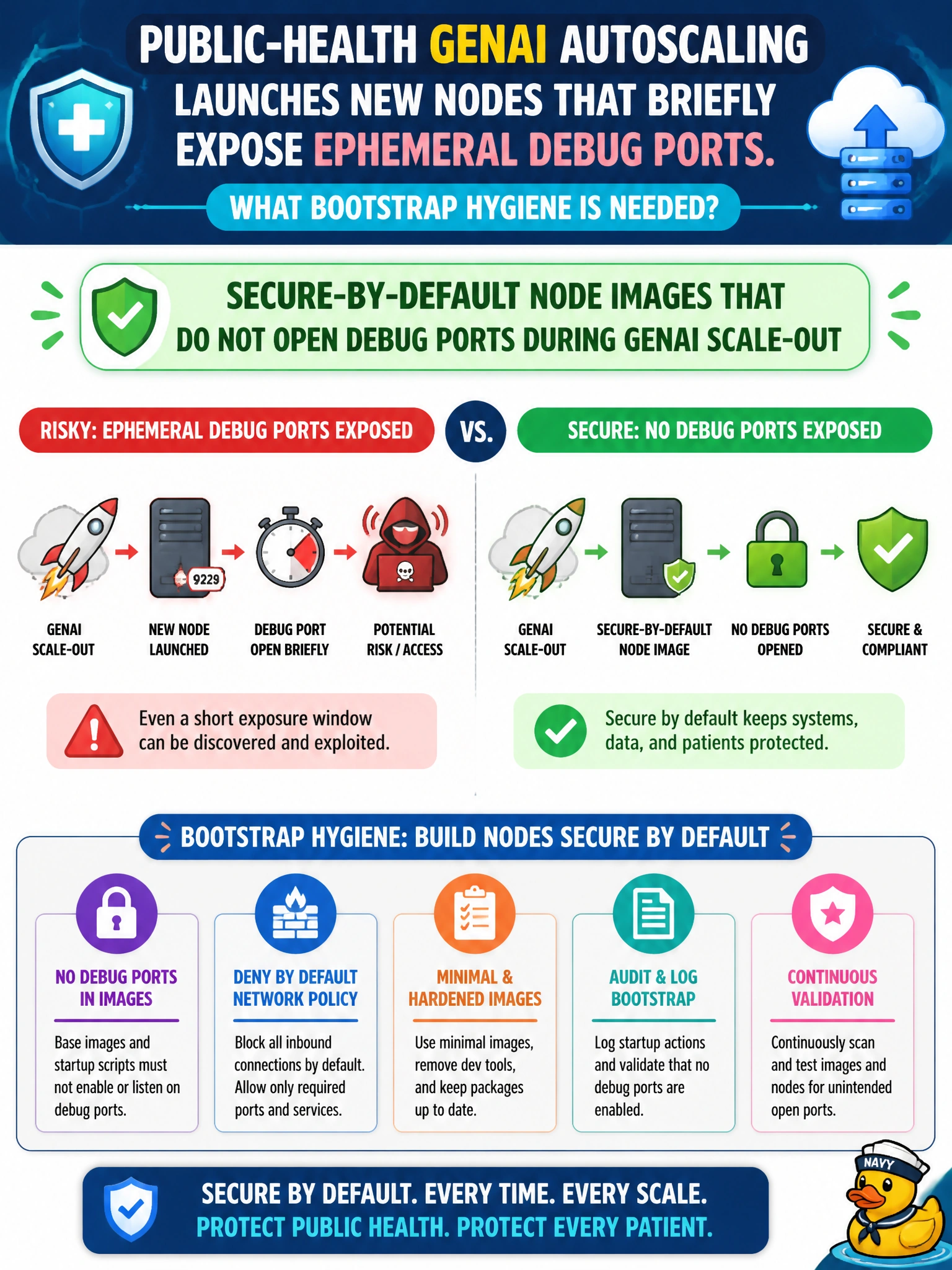
Public-health GenAI autoscaling launches new nodes that briefly expose ephemeral debug ports. What bootstrap hygiene is needed?
Select an answer to reveal the explanation.
Short Explanation
Autoscaling should not birth nodes with open debug doors flapping in the wind. Bake secure defaults into the image. Waiting for the first query, publishing port maps, or delaying security groups invites trouble.
Full Explanation
Public-health GenAI autoscaling that launches nodes briefly exposing ephemeral debug ports creates a bootstrap race: attackers or scanners may hit debug interfaces before late-applied controls. Needed hygiene is secure-by-default node images that do not open debug ports during GenAI scale-out—bake hardened defaults into the AMI or image and bootstrap scripts so new municipal inference capacity is closed by construction from first boot.
Leaving debug ports open until the first resident query completes extends the vulnerable window into live traffic and ties hardening to application readiness rather than infrastructure defaults. Publishing debug port maps on the county open-data portal advertises attack surface to the world. Relying on security groups only after a week of production traffic delays network policy far past the initial exposure of freshly launched GenAI nodes.
Exam caveat: temporary break-glass debug access should be explicit, authenticated, time-bound, and logged—not a default open port on every scale-out node in a public-health GenAI pool. Operational check: launch a scale-out event in a test subnet, port-scan new nodes immediately after creation, confirm images ship without listening debug services, and verify security groups deny unexpected ingress from first boot.